
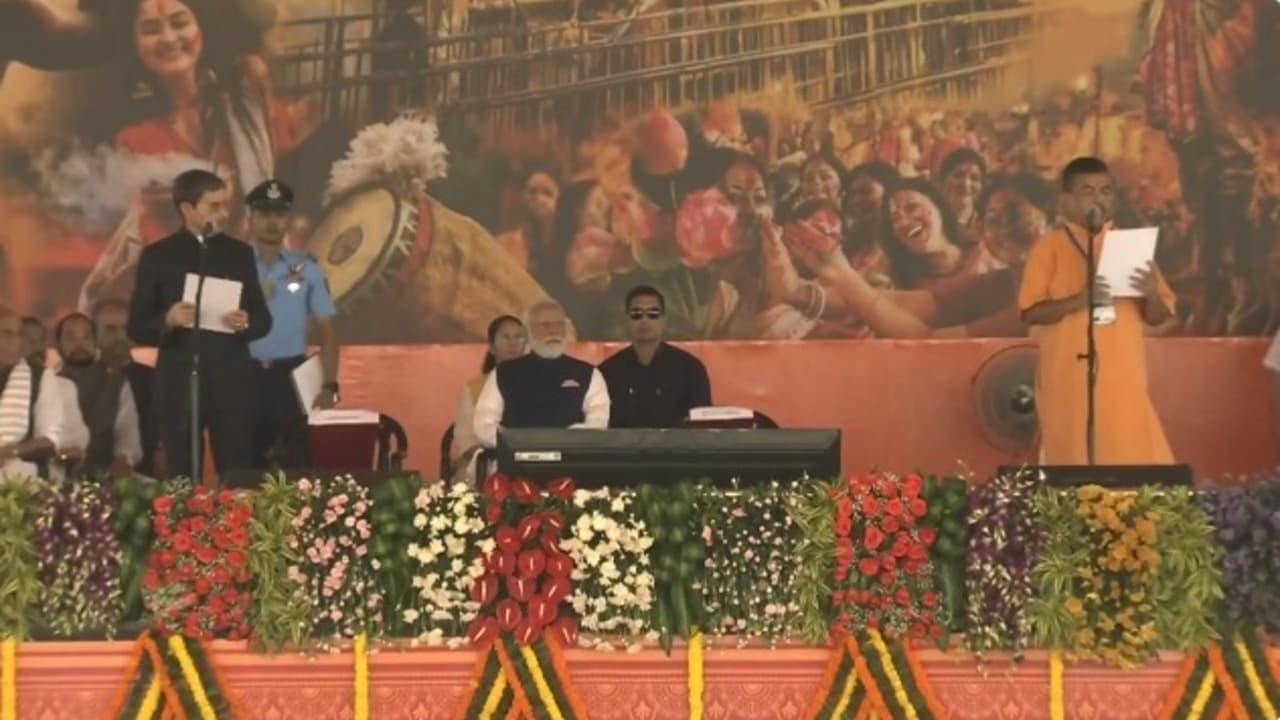
The Bharatiya Janata Party (BJP) has formed its first government in West Bengal, ending the Trinamool Congress’s 15-year rule after a decisive victory in the 2026 Assembly elections. Suvendu Adhikari, a former Trinamool leader, was sworn in as the new Chief Minister.
West Bengal witnessed one of the biggest political transformations in its modern history on Friday as the Bharatiya Janata Party formed its first-ever government in the state, ending the Trinamool Congress’ 15-year rule. BJP leader Suvendu Adhikari took oath as Chief Minister at a high-profile ceremony in Kolkata attended by Prime Minister Narendra Modi, senior NDA leaders and thousands of party supporters.
The swearing-in ceremony marked the culmination of BJP’s stunning rise in a state long dominated by the Left Front and later Mamata Banerjee’s Trinamool Congress. BJP secured a decisive victory in the 2026 Assembly elections, crossing the majority mark comfortably and paving the way for its first government in Bengal since Independence.
Adhikari’s appointment as Chief Minister carries enormous symbolic importance. Once a key Trinamool Congress leader and a major architect of Mamata Banerjee’s rise during the Nandigram movement, he later switched to the BJP and emerged as the saffron party’s strongest face in Bengal politics. His victory over Mamata Banerjee in Bhabanipur became one of the defining moments of the election.
The new cabinet reflects BJP’s attempt to balance experience, organisation strength and regional representation. Veteran BJP leader Dilip Ghosh and party firebrand Agnimitra Paul were sworn in as Deputy Chief Ministers, signalling the party’s intention to combine old guards with newer faces.
Dilip Ghosh, a former West Bengal BJP president and one of the leaders credited with expanding the party’s grassroots network in the state, remains one of BJP’s most recognisable Bengal faces. His aggressive political campaigns over the years helped the BJP transform from a marginal force into the principal opposition before eventually capturing power.
Also Read: Suvendu Adhikari takes oath as first BJP Chief Minister of West Bengal
Agnimitra Paul’s inclusion added another dimension to the cabinet. A former fashion designer turned politician, she emerged as a prominent BJP woman leader in Bengal over the last few years. Known for her outspoken attacks on the Trinamool Congress and her strong presence during election campaigns, Paul represents BJP’s push to strengthen its appeal among women and urban voters.
Other leaders sworn into the ministry included Nisith Pramanik, Ashok Kirtania and Kshudiram Tudu, showcasing BJP’s focus on caste, tribal and regional representation within the state government. The cabinet composition also highlighted the party’s strategy of accommodating leaders from northern Bengal, Junglemahal and industrial belts.
The BJP leadership described the new government as the beginning of a “new era” for West Bengal. Party supporters celebrated the moment as a historic breakthrough after years of political struggle in the state. Social media platforms were flooded with congratulatory messages, videos from the oath ceremony and posts calling the victory a “turning point” in Bengal politics.
Political observers believe the formation of the Adhikari-led government could significantly reshape Bengal’s political landscape ahead of future national elections. The BJP now faces the challenge of translating electoral success into governance while fulfilling promises related to jobs, industry, law and order and infrastructure development.
For Suvendu Adhikari, the oath ceremony represented more than a personal milestone — it marked the BJP’s arrival as Bengal’s ruling force after decades of political resistance in one of India’s most fiercely contested states.
Also Read: Who Is Suvendu Adhikari? Lesser-Known Facts About West Bengal CM, BJP Leader
