
The DS-SAR satellite is a collaborative effort between Singapore's Defence Science and Technology Agency (DSTA), representing the Government of Singapore, and ST Engineering. Once successfully deployed and operational, it will serve the satellite imagery requirements of various governmental agencies in Singapore.
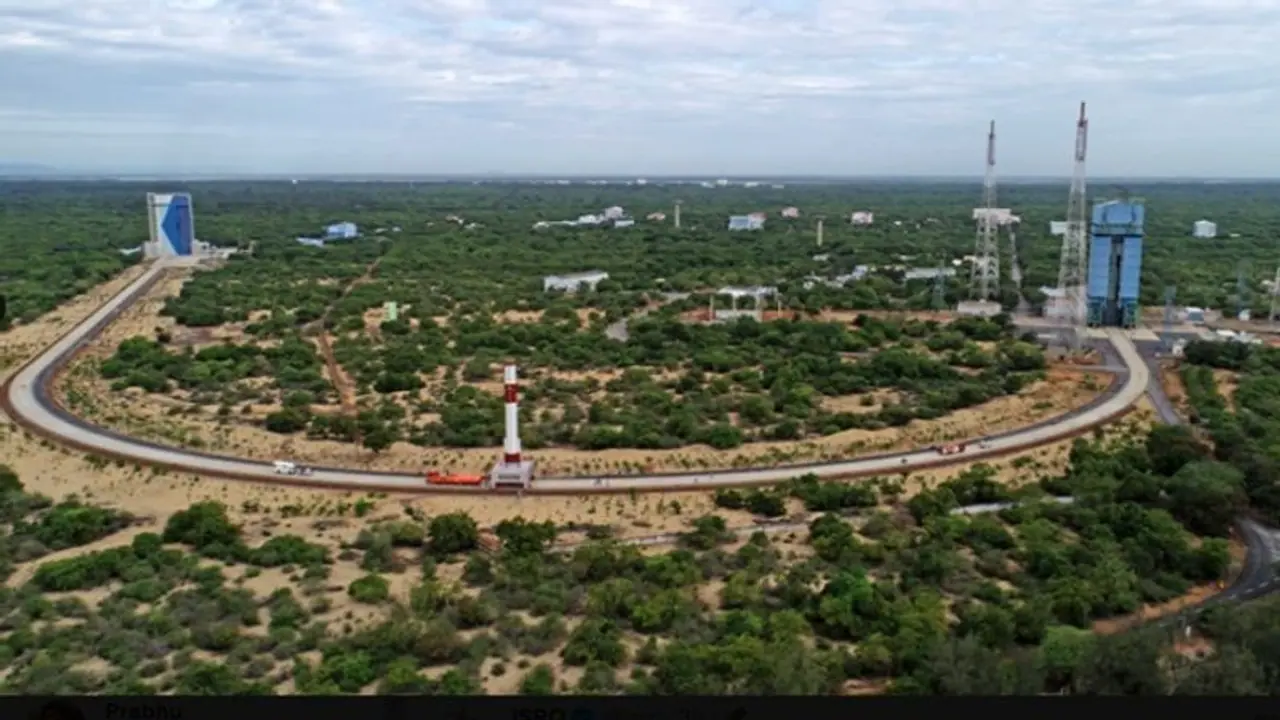
India is set to launch the PSLV-C56 mission, carrying the DS-SAR satellite from Singapore, along with six co-passenger satellites, from ISRO's Sriharikota spaceport on July 30. The scheduled launch is planned from the first launchpad at 6.30 am, as stated by the space agency.
The DS-SAR satellite is a collaborative effort between Singapore's Defence Science and Technology Agency (DSTA), representing the Government of Singapore, and ST Engineering. Once successfully deployed and operational, it will serve the satellite imagery requirements of various governmental agencies in Singapore.
Monsoon session: Amit Shah says Centre 'ready for Manipur discussion', takes a swipe at Opposition
Additionally, ST Engineering will utilize the DS-SAR satellite to provide multi-modal and higher responsiveness imagery and geospatial services to their commercial customers. This joint endeavor signifies a significant step in strengthening space cooperation between India and Singapore.
The DS-SAR satellite is equipped with a state-of-the-art Synthetic Aperture Radar (SAR) payload developed by Israel Aerospace Industries (IAI). This advanced technology enables the DS-SAR to deliver high-quality imaging capabilities under all weather conditions, including day and night coverage. Moreover, the satellite is capable of capturing imagery at a remarkable one-meter resolution with full polarimetry.
The procurement of the PSLV-C56 launch vehicle was facilitated by NewSpace India Limited (NSIL), a central public sector undertaking under the Department of Space. NSIL will deploy the 360-kg DS-SAR satellite, developed in collaboration with DSTA & ST Engineering from Singapore. This significant development was highlighted by the Indian Space Research Organisation (ISRO) in their recent tweet, reaffirming their commitment to furthering space exploration and cooperation.
Gyanvapi mosque case: Supreme Court puts ASI survey on hold till July 26; check details
Bengaluru-headquartered ISRO revealed the details of the six co-passenger satellites accompanying the DS-SAR on the PSLV-C56 mission. These satellites include:
- VELOX-AM: A technology demonstration microsatellite.
- Atmospheric Coupling and Dynamics Explorer (ARCADE): An experimental satellite.
- SCOOB-II: A 3U nanosatellite carrying a technology demonstrator payload.
- NuLIoN by NuSpace: An advanced 3U nanosatellite facilitating seamless IoT connectivity in urban as well as remote locations.
- Galassia-2: A 3U nanosatellite that will orbit at a low earth orbit.
- ORB-12 STRIDER: A satellite developed through international collaboration.
The PSLV-C56 launch vehicle is configured in its core-alone mode, similar to the previous PSLV-C55 mission. This configuration signifies the continuous progress and efficiency of ISRO's launch capabilities.
