
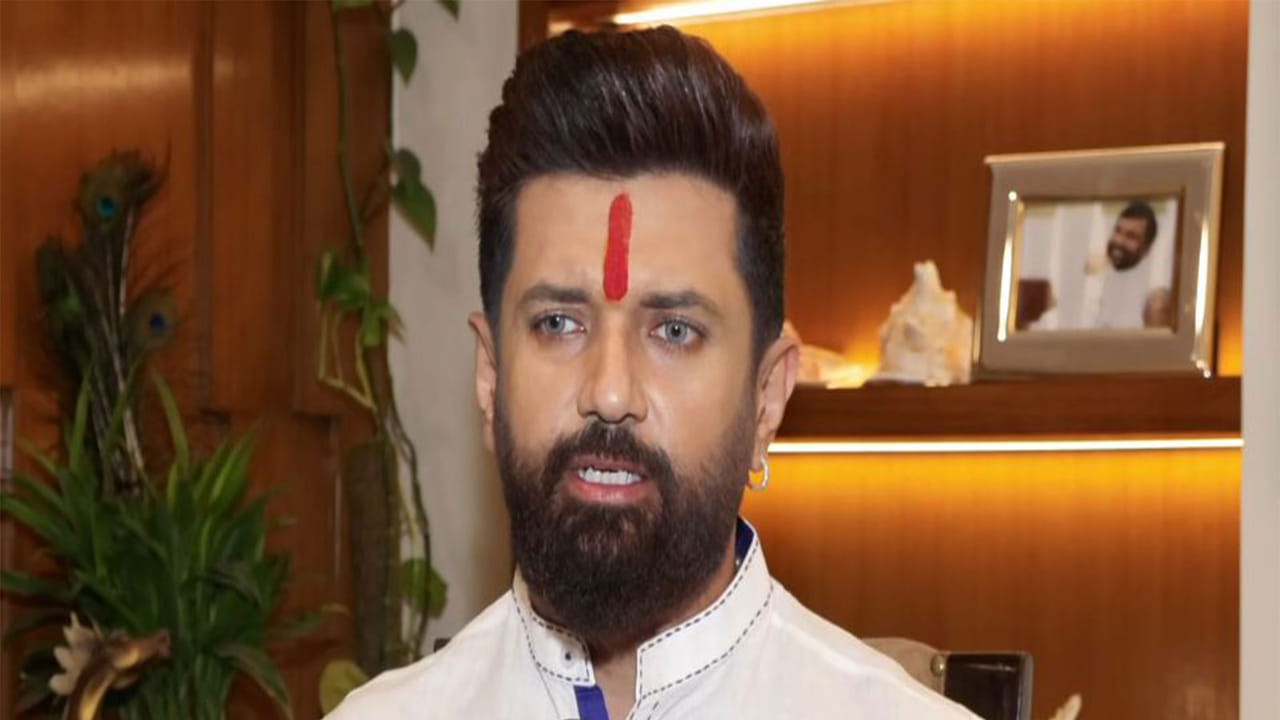
Union Minister Chirag Paswan is advancing his 'Bihar First, Bihari First' vision, leveraging ₹34,000 crore in government projects while focusing on regional cooperation between Bihar and Uttar Pradesh to boost local employment and growth.
New Delhi [India], November 29 (ANI): Union Minister Chirag Paswan said he is striving to advance the interests of Uttar Pradesh, Bihar, and Jharkhand together, noting that his "'Bihar First, Bihari First'" vision is "gradually taking shape" with support from the government, Bihar Chief Minister Samrat Choudhary, and ₹34,000 crore worth of projects recently dedicated to Bihar by the Prime Minister. Highlighting the significance of the region, Paswan pointed out that Bihar and Uttar Pradesh together account for 120 parliamentary seats—40 from Bihar and 80 from Uttar Pradesh—representing a vast segment of India's population in Parliament. He said that by acting as partners, the two states can perform much more effectively, while stressing that youth from these states must have access to opportunities in education, employment, and entrepreneurship within their own districts and villages.
Reaffirming that translating the "'Bihar First, Bihari First'" vision into ground-level reality remains his top priority, the Union Minister credited the state and central leadership for backing the initiatives. "I receive full support from the current government, as well as from Bihar’s Chief Minister, Samrat Choudhary. During the Prime Minister’s recent visit, he dedicated projects worth ₹34,000 crore to the people of Bihar—including the establishment of a food processing cluster and the development of an 'Electronic City' in my own constituency, Hajipur. We are pursuing similar initiatives in Gaya as well. I believe that the 'Bihar First, Bihari First' vision is gradually taking shape," he told ANI.
Referring to today's episode of "'Mann Ki Baat'", Paswan noted that the Prime Minister spoke about the importance of food processing and the export potential of products like chocolates. "I believe that Bihar possesses the potential—specifically in the realm of processing—to prioritise Bihar and its people. Simultaneously, I am making similar efforts in Uttar Pradesh, as elections are approaching there," he added.
Paswan said his party is working to build its organisation in Punjab and Uttarakhand and has granted state units the autonomy to decide on contesting upcoming elections—including in Manipur—either independently or as part of an alliance. "We are working on building our organisation in Punjab in parallel, and we are doing the same in Uttarakhand. I have given the state units in all these regions the autonomy to decide whether they wish to contest, how many seats they want to vie for, and whether they prefer to contest as part of an alliance or independently; my party is prepared to contest either way. In states like Uttarakhand, Punjab, and Manipur, and indeed any state where elections are due in the near future, we will certainly participate, provided there is support from our respective state units. Furthermore, our vision extends beyond these specific states; we are focused on the broader expansion of the party...", he said.
Earlier, Union Minister Chirag Paswan hit out at the Congress and the Samajwadi Party (SP) over an INDIA bloc delegation's scheduled meeting with DMK's MK Stalin and NCP-SCP's Sharad Pawar today, alleging that the Congress leadership never attempted an "honest dialogue" with its alliance partners and accusing both parties of having blocked the Women's Reservation Act in the past. Reacting to the INDIA bloc delegation's outreach, Paswan questioned when the opposition leaders had last stepped out of their "air-conditioned rooms" or made a genuine effort to talk to their allies. Targeting Rahul Gandhi, the Union Minister alleged that the Congress leader never kept the doors of communication open with alliance partners and left interactions to his team instead of establishing direct contact. Referring to past political developments in Tamil Nadu, Paswan asked why the Congress had not engaged with Stalin during government formation in the state. "If they had maintained such communication, for instance, when a government was being formed in Tamil Nadu, why didn't they engage with Stalin then? They effectively stabbed a party in the back, a party that had stood by them through thick and thin," he said. (ANI)
