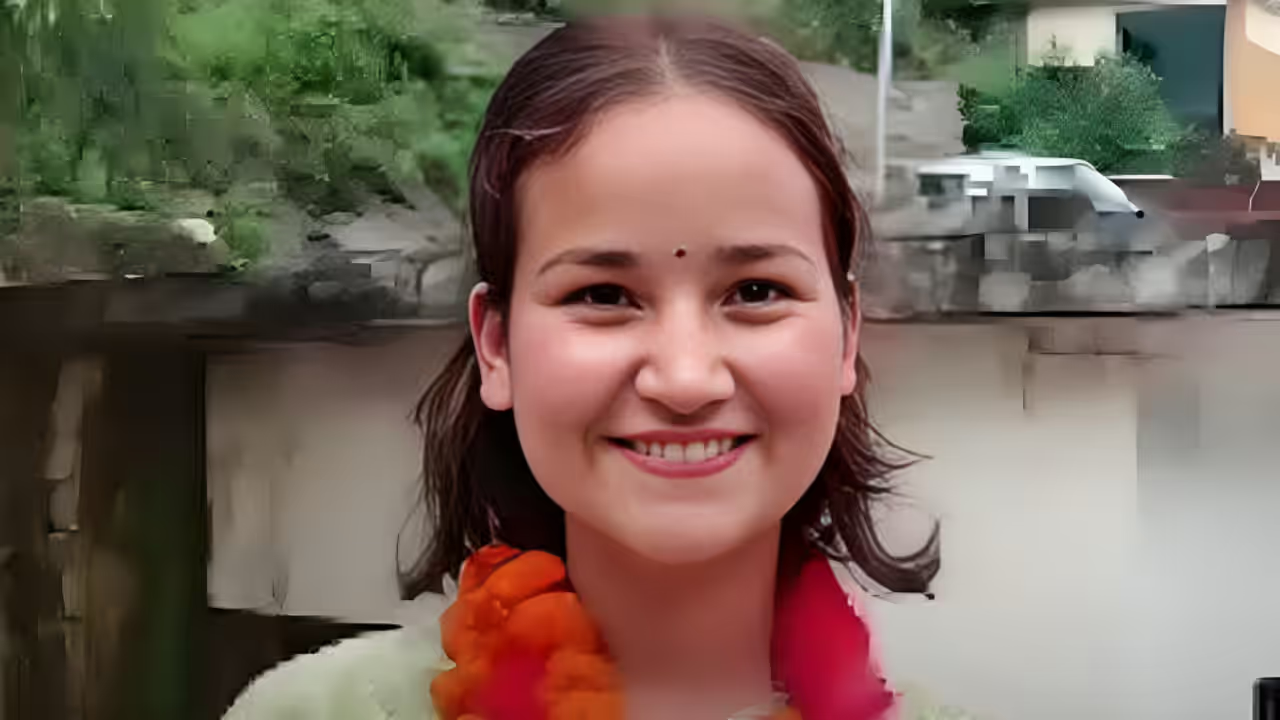
22-year-old Sakshi Rawat has become Gram Pradhan of Kui village in Uttarakhand’s Pauri. Choosing her village over a city career, she focuses on stopping migration, improving farming, empowering women, and solving grassroots problems.
When Sakshi Rawat was handed the keys to her village office in Kui, a small village in Uttarakhand's Pauri Garhwal district, she did not celebrate. She did not see the moment as a prize or a symbol of power. At just 22 years old, she saw it as a responsibility.
Months after her election as Gram Pradhan, people far beyond her village are beginning to take notice. Sakshi is young, highly educated, and deeply rooted in her community. At a time when many rural youths leave for cities, she chose to return home, not to rest, but to rebuild.
Choosing home over a city career
Sakshi Rawat holds a BTech degree in biotechnology. Like many graduates with similar qualifications, she had the option to move to a city and build a well-paid career. Instead, she made a choice that surprised many around her.
Related Articles

She returned to Kui village, determined to work at the grassroots level and improve daily life for people she grew up with. Her family stood firmly by her decision, especially her father, who encouraged her to step into public life with confidence.
Her election was not only a personal achievement. It reflected a shift in rural thinking, where education and leadership are beginning to come together.
Education meets village governance
At first glance, biotechnology and village administration may seem unrelated. Sakshi disagrees. She believes her education has given her tools that are useful far beyond laboratories.
She applies analytical thinking, problem-solving skills, and a scientific approach to village issues. Instead of temporary fixes, she looks for long-term solutions that are practical and sustainable.
Her focus is clear: development that creates opportunity without forcing people to leave their village.
Stopping migration, creating livelihoods
One of Sakshi’s main goals is to stop youth migration. Like many hill villages, Kui has seen young people leave in search of work.
To counter this, she is encouraging exotic fruit farming, floriculture, and better use of land and local resources. These projects aim to increase income while keeping young people engaged at home.
She believes farming should not be seen as a last option, but as a modern livelihood supported by knowledge, planning, and technology.
Tackling real village problems head-on
Sakshi’s work is not limited to ideas alone. She spends time understanding problems at the ground level. From water shortages and poor road conditions to education, healthcare, and digital access, she addresses each issue step by step. She listens first, then acts.
One serious challenge in the hills is crop damage by wild animals. Sakshi is working on community-based and modern solutions to reduce losses faced by farmers, combining local experience with new methods.
Empowering women and girls
A key part of Sakshi’s leadership is her focus on women’s participation. She wants women to be active decision-makers, not silent observers.
Her presence as a young woman leader has already had an effect. Girls in the village now see leadership as something they too can aim for. Confidence among young women has grown, and their voices are being heard more clearly in village meetings.
Leadership shaped by experience
Sakshi’s understanding of village life did not begin after her election. During her college years in Pauri, she worked closely with rural communities.
She observed daily struggles, listened to people’s concerns, and learned how deeply small problems affect everyday life in hill villages. These experiences taught her that leadership must be close, empathetic, and active.
She does not believe in distant governance. She believes change happens when leaders stay connected.
Challenging old ideas about leadership
At 22, Sakshi Rawat challenges the idea that leadership belongs only to older or more experienced people.
Her election shows that vision, commitment, and intelligence can matter more than age. For the people of Kui, she represents a new style of governance, informed, practical, and inclusive.
She is not leading through authority alone, but through trust and engagement. Sakshi’s journey reflects a broader change happening in rural India. More young people are choosing to return, innovate, and build from within rather than walk away.
Her story has begun to resonate across the country because it carries hope. It shows that villages do not have to wait for change from outside. Change can begin at home.
As Sakshi continues her work, she reminds people of a simple truth: leadership is not measured by age or titles, but by impact.
For Kui village, that impact has already begun.