
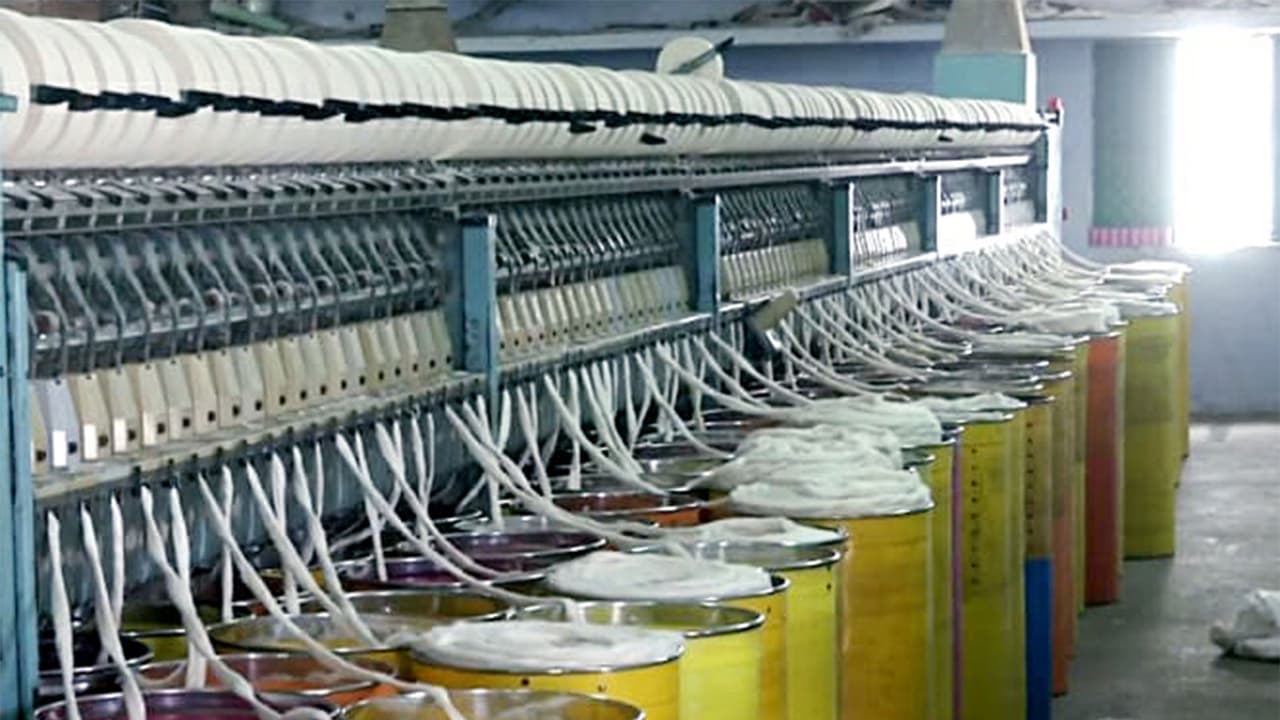
The US has reduced import duty on Indian textiles to 18% from 50%, a move expected to significantly boost exports. This will benefit textile hubs like Tiruppur and Karur, enhancing India's competitiveness in the US market and creating jobs.
The decision of the US government to reduce the import duty on Indian textile products from 50 per cent to 18 per cent will provide a significant boost to Indian textile exporters. As the import duty imposed on India is lower than that levied on the neighbouring countries, exports of the country's textile products to the United States are expected to increase manifold in the coming days.
According to a press release, this development will strongly benefit textile exporters in Tiruppur, Karur, and Erode, as well as the OE mills and spinning mills that supply yarn to them, enabling substantial growth across the sector.
The reduction in the US import duties, along with forthcoming duty-free trade agreements with the United Kingdom and European countries, will drive remarkable growth in the Indian textile industry. As a result, employment opportunities in the textile sector will multiply significantly.
Industry Applauds 'Historic' Agreement
"On behalf of OSMA, we express our heartfelt gratitude to Prime Minister Narendra Modi, Union Minister for Commerce and Industry Piyush Goyal, Defence Minister Rajnath Singh, Union Finance Minister Nirmala Sitharaman, and Tamil Nadu Chief Minister MK Stalin, for facilitating this historic and landmark agreement that will transform the Indian textile sector," said G Arulmozhi, President, OSMA.
Earlier, the Confederation of Indian Textile Industry (CITI), a key textile organisation, welcomed the reduction in the US tariff on Indian goods to 18 per cent.
CITI Chairman Ashwin Chandran said that the reduction in tariff will ensure India's textile and apparel exporters are once again in a position to compete effectively in the US market, the single-largest market for India's textile and apparel exports.
"The Confederation of Indian Textile Industry (CITI) heartily welcomes the announcement of the trade deal between the US and India and the reduction in the US tariff on Indian goods to 18 per cent. CITI would like to express its sincere gratitude to both the US President Donald Trump and Indian Prime Minister Narendra Modi for this trade deal," he said.
"This reduction in tariff will ensure our textile and apparel exporters are once again in a position to compete effectively in the US market, the single-largest market for India's textile and apparel exports. This deal will also ensure that factories can run at full steam once more and job creation can get back to previous levels," Chandran added.
PM Modi Thanks President Trump
PM Modi on Monday said that it was wonderful to speak with his "dear friend President Trump" and expressed delight that Made in India products will now have a reduced tariff of 18 per cent.
"Wonderful to speak with my dear friend President Trump today. Delighted that Made in India products will now have a reduced tariff of 18 per cent. Big thanks to President Trump on behalf of the 1.4 billion people of India for this wonderful announcement," PM Modi said in a post on X.
The Prime Minister said that when two large economies and the world's largest democracies work together, it benefits our people and unlocks immense opportunities for mutually beneficial cooperation.
"President Trump's leadership is vital for global peace, stability, and prosperity. India fully supports his efforts for peace. I look forward to working closely with him to take our partnership to unprecedented heights," PM Modi said.
Background of the Tariff Reduction
The US government had first imposed 25 per cent tariffs on India and later increased them to 50 per cent, citing India's import of Russian oil. President Trump on Monday said he and PM Modi "have agreed to a Trade Deal" between the United States and India, whereby the United States will charge a reduced Reciprocal Tariff, lowering it from 25 per cent to 18 per cent. (ANI)
(Except for the headline, this story has not been edited by Asianet Newsable English staff and is published from a syndicated feed.)