
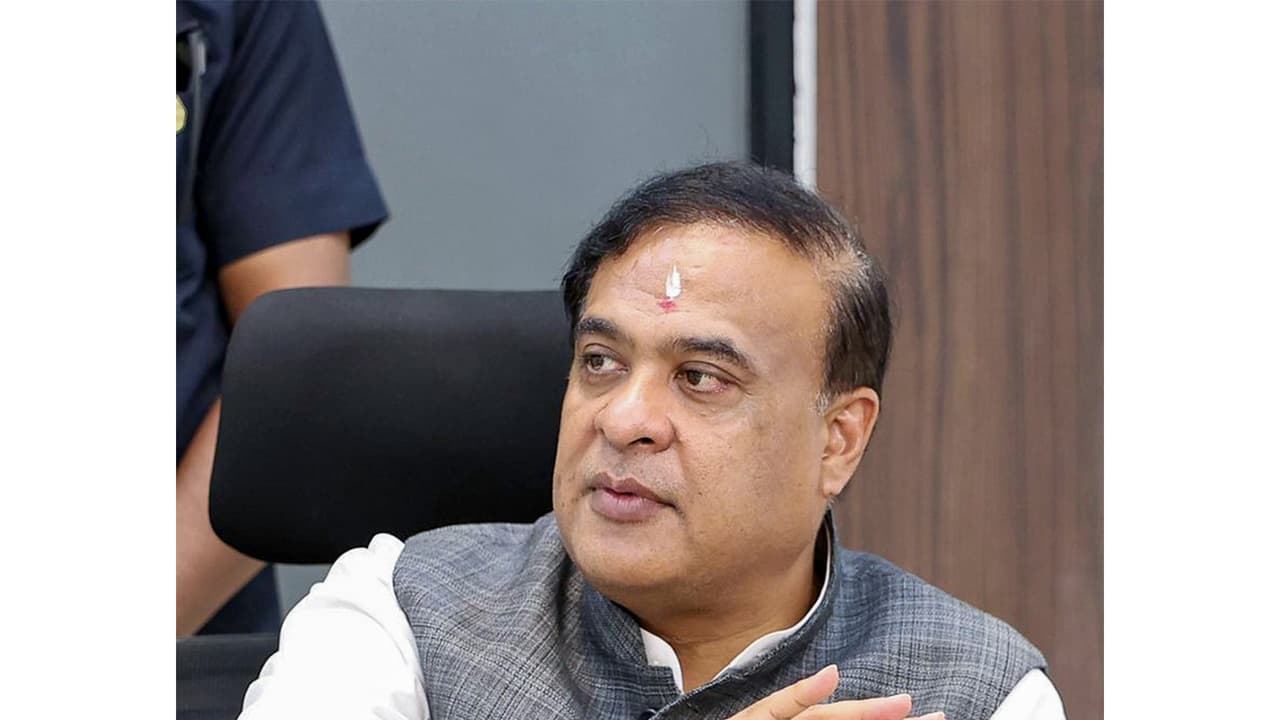
The Assam government has introduced the Uniform Civil Code (UCC) Bill, 2026, in the state assembly. The legislation proposes a ban on polygamy, makes registration of marriages and live-in relationships compulsory, and sets penalties for non-compliance.
After Uttarakhand and Gujarat, the Assam government on Monday introduced a Uniform Civil Code (UCC) Bill in the state assembly, proposing a ban on polygamy and making registration of live-in relationships compulsory.
State Cabinet Minister Atul Bora introduced the Uniform Civil Code Assam Bill 2026 in the Assembly on behalf of Chief Minister Himanta Biswa Sarma.
Speaking to the reporters, Bora said, "I have tabled the UCC Bill on behalf of the CM today in the house. The CM committed that if he comes to power again, the Bill will be tabled in the first session, and that has happened today."
With this, Assam has become the first state in the Northeast and the third BJP-ruled state in the country to introduce such legislation. Uttarakhand was the first state to pass a Uniform Civil Code (UCC) Bill in February 2024, followed by Gujarat, which cleared the legislation with a majority voice vote after a marathon debate lasting over seven hours in March 2026.
The BJP had promised to bring in the UCC in Assam in its manifesto ahead of the 2026 Assembly elections. The state Cabinet had approved the Bill in its first meeting held on the 13th of this month. The Bill is expected to be taken up for discussion and passage on May 27.
Key Features of the Assam UCC Bill
The Uniform Civil Code, Assam, 2026 Bill establishes a single civil legal framework for all residents governing marriage, divorce, succession and live-in relationships, according to the state government.
Registration Requirements
The draft bill proposes mandatory registration of marriages and live-in relationships, while setting defined timelines and penalties for non-compliance.
As per the draft, marriages are required to be registered within 60 days of the ceremony, while live-in relationships must be registered within 30 days.
Deliberate failure to register marriage or divorce within the stipulated 60-day period will attract a penalty of Rs 10,000, a statement said.
Prohibitions, Exemptions, and Cultural Safeguards
The bill excludes Scheduled Tribes from its purview to preserve their constitutional protections, while replacing religion-based personal laws to "ensure absolute equality and gender justice. "The introduced bill prohibits polygamy, while setting a standardised legal age of 21 years for grooms and 18 years for brides."
Crucially, the legislation safeguards cultural diversity by granting full freedom of ritual, allowing marriages to be solemnised through any existing religious ceremony or custom, including Vedic Bibah, Ahom Chaklong, Saptapadi, Ashirvad, Nikah, Holy Union, Anand Karaj," the statement by the Assam Information Centre read.
Divorce, Custody and Statewide Registration
The bill further proposes a statewide registration of all marriages and divorces, with couples required to submit a memorandum to the Sub-Registrar within 60 days of the ceremony.
"Furthermore, the Bill codifies uniform grounds for divorce - such as cruelty, desertion, or mutual consent - and ensures early childhood custody of children under five ordinarily remains with the mother," the statement read.
Protections for Live-in Relationships
Regarding live-in relations, the bill proposes to have regulations which mandate registration of such couples within one month. "It protects vulnerable individuals by declaring that any child born out of a live-in relationship is fully legitimate, and by granting a deserted live-in partner the explicit legal standing to claim financial maintenance through the courts," the statement read.
Inheritance Laws
Regarding inheritance laws, the bill creates a "uniform, gender-equal order of preference for intestate inheritance among Class-1 heirs". This group includes the spouse, children, and parents of the deceased.
"For testamentary succession, any adult of sound mind is granted the legal right to execute a written, witnessed Will," the statement added.
Penalties for Non-Compliance
With the aim of preventing exploitation, fraud and unlawful practices in personal relationships, the bill has proposed to have upto 7 years of imprisonment under Section 82 of Bhartiya Nyaya Sanhita (BNS), 2023, for any instances of polygamy or bigamy.
Similarly, for child marriages and marriages done through force or deception, the statement added, "Child marriage and marriage without valid consent shall attract imprisonment up to two years or fine or both, as per the Prohibition of Child Marriage Act, 2006. Fraudulent or deceptive marriages through force, coercion or concealment shall be punishable with imprisonment up to seven years, along with a fine."
Similarly, violating the divorce procedure through the illegal dissolution of marriage will be punishable upto 3 years and a fine.
"While compelling a divorced person to fulfil unlawful conditions before remarriage shall attract three years imprisonment and a penalty of Rupees One Lakh," the statement read.
Marriage within prohibited relationships, unless protected by valid customs, shall be punishable with imprisonment up to six months and a fine of up to Rupees Fifty Thousand.
Submission of forged or fabricated documents during registration shall invite imprisonment up to three months or fine up to Rupees Twenty-Five Thousand or both.
Similarly, failure to register a live-in relationship within one month shall attract imprisonment up to three months or a fine upto Rupees Ten Thousand.
Repeal of Existing Legislation
The Bill also proposes to repeal the Assam Compulsory Registration of Muslim Marriages and Divorces Act, 2024, to streamline the state's statutory architecture. However, a savings clause in the bill is included to "ensure that any polygamous marriage solemnised prior to the enforcement of this UCC."
Nearly two weeks after the Assam Cabinet approved the bill, the state government introduced the Uniform Civil Code (UCC) in the Assam Assembly on Monday.
On behalf of Assam Chief Minister Himanta Biswa Sarma, Assam Parliamentary Affairs Minister Atul Bora on Monday tabled "The Uniform Civil Code, Assam, Bill, 2026" in the Assam assembly. (ANI)
(Except for the headline, this story has not been edited by Asianet Newsable English staff and is published from a syndicated feed.)