
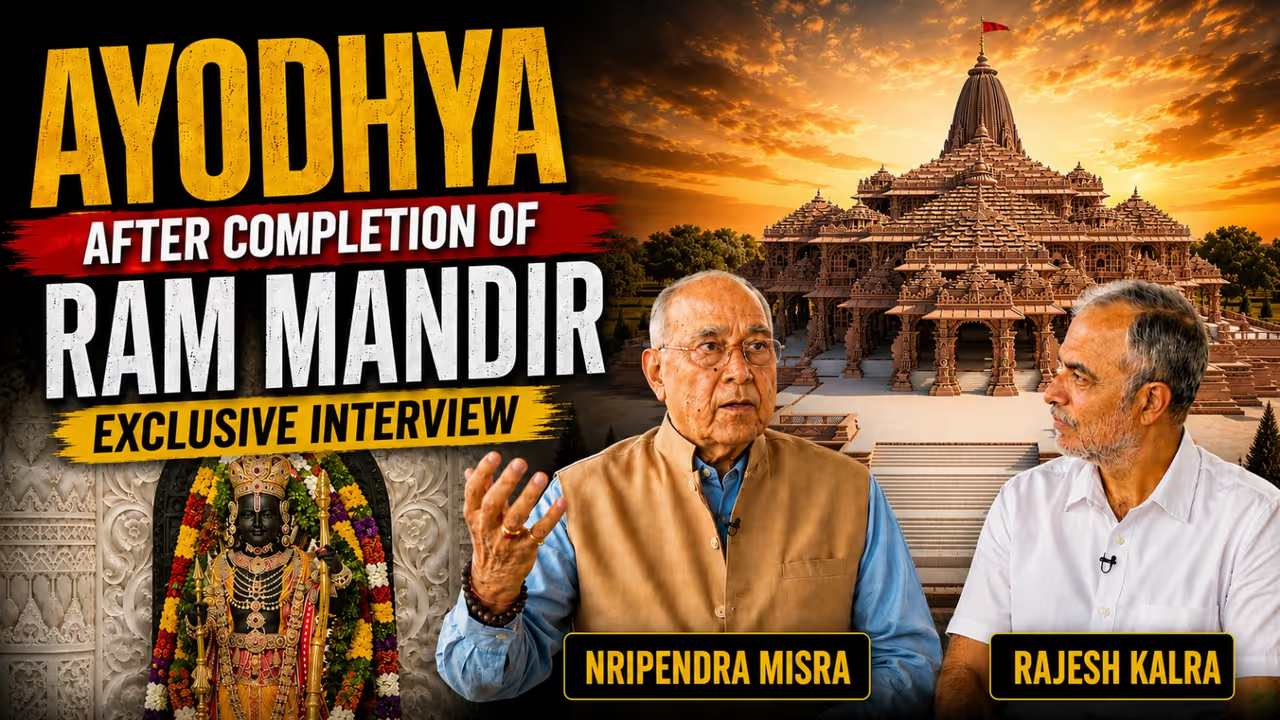
Nripendra Misra, Chairman of the Ram Mandir Construction Committee, detailed the project's significant engineering and administrative challenges. Funded by nationwide donations, the temple was designed with spiritual experts to reflect the broader Sanatan Dharma.
In a rare and wide-ranging conversation, Nripendra Misra, Chairman of the Ram Mandir Construction Committee and former Principal Secretary to Prime Minister Narendra Modi, takes viewers behind the scenes of one of independent India's most significant religious and engineering projects. Speaking exclusively to Asianet Newsable, Misra details the enormous technical, administrative and spiritual effort that has gone into building the Ram Mandir in Ayodhya, while also revealing what still remains to be completed before the pilgrimage experience becomes truly world-class.

Ram Mandir's Biggest Challenges
Misra says the completed temple may appear effortless today, but every stage of construction presented complex engineering and management challenges. One of the biggest technical hurdles involved titanium components used in the project. Engineers found that the manufacturing process resulted in material losses exceeding 52 per cent, prompting the committee to seek opinions from multiple experts, including specialists from the private sector, before arriving at a technically sound and financially responsible solution.
Calling the Ram Mandir "a dream realised in stages", Misra credits the vision not to any individual but to generations of devotees, saints and scholars who envisioned how Lord Ram's temple should be built. Every artistic decision—including the bronze murals depicting saints—was taken only after consulting experts in the Vedas, Puranas and Indian spiritual traditions. A panel of scholars selected 79 saints and personalities whose lives reflected the ideals of Maryada Purushottam Shri Ram.
When asked whether he is satisfied with the completed temple, Misra offers a candid assessment. "My satisfaction will come from the expressions on the faces of devotees," he says. According to him, the project should not be judged solely by its architecture but by how comfortably pilgrims experience their visit.
Also Read: World's Costliest Mango 'Miyazaki' Offered to Lord Ram in Ayodhya
Improving the Pilgrim Experience
He estimates that, from a pilgrim's perspective, the temple ecosystem is currently "around 60 per cent complete." Several improvements remain in the pipeline, including better multilingual signage, more drinking water points, shaded pathways, improved shoe collection systems, seamless entry and exit routes, and additional facilities to assist elderly devotees and visitors from across India.
Misra also reveals that Prime Minister Narendra Modi had given one clear direction during the planning process—that the Ram Mandir must never appear to be only a North Indian temple. Instead, it should reflect the broader spirit of Sanatan Dharma, welcoming devotees from every region, language and tradition.
The exclusive interview also offers an inside look at the temple's rapidly expanding 71-acre complex. Future developments include an immersive 3D Ram Katha museum, a large auditorium for religious and cultural programmes, enhanced horticulture, additional pilgrim amenities, improved cooling systems using landscaped water bodies, and memorials honouring the countless kar sevaks who sacrificed their lives during the Ram Janmabhoomi movement.
Misra explains that natural cooling techniques, covered walkways, drinking water stations and shaded canopies are being incorporated to make pilgrimages comfortable even during Ayodhya's extreme summer temperatures. Feedback from visitors continues to guide improvements, making the project an evolving process rather than a finished monument.
Also Read: Rare 250-year-old Ramayan manuscript acquired for Ayodhya museum
Nripendra Misra's Spiritual Journey
Reflecting on his own journey, Misra says the Ram Mandir project transformed him personally. After decades in public administration, including his tenure as Principal Secretary to the Prime Minister, he admits he once viewed accomplishments through the lens of individual achievement. However, five years of working on the temple taught him humility.
He recalls a message from spiritual leader Mata Amritanandamayi, who reminded him that every individual is merely "an instrument" chosen by God to fulfil a divine responsibility. That message fundamentally changed his perspective on leadership and service.
Perhaps the most remarkable aspect of the project, according to Misra, is the spirit of collective participation. Engineers, contractors, artisans and technology companies came forward not merely as professionals but as devotees. Several organisations voluntarily waived their professional fees, considering their work an offering to Lord Ram. The temple itself was funded through donations collected from more than 10 crore families across over four lakh villages, generating approximately Rs 3,200 crore.
For Misra, the greatest responsibility was safeguarding what he repeatedly describes as "God's money." Every expenditure, he says, was scrutinised with accountability and reverence because the temple belongs to millions of devotees.
As construction enters its final phase, the Ram Mandir is emerging not only as an architectural masterpiece but also as a living symbol of faith, service and national participation. In this exclusive conversation with Asianet Newsable, Nripendra Misra makes it clear that while the temple structure is nearing completion, the mission of creating the ideal pilgrimage experience for every devotee has only just begun.
