
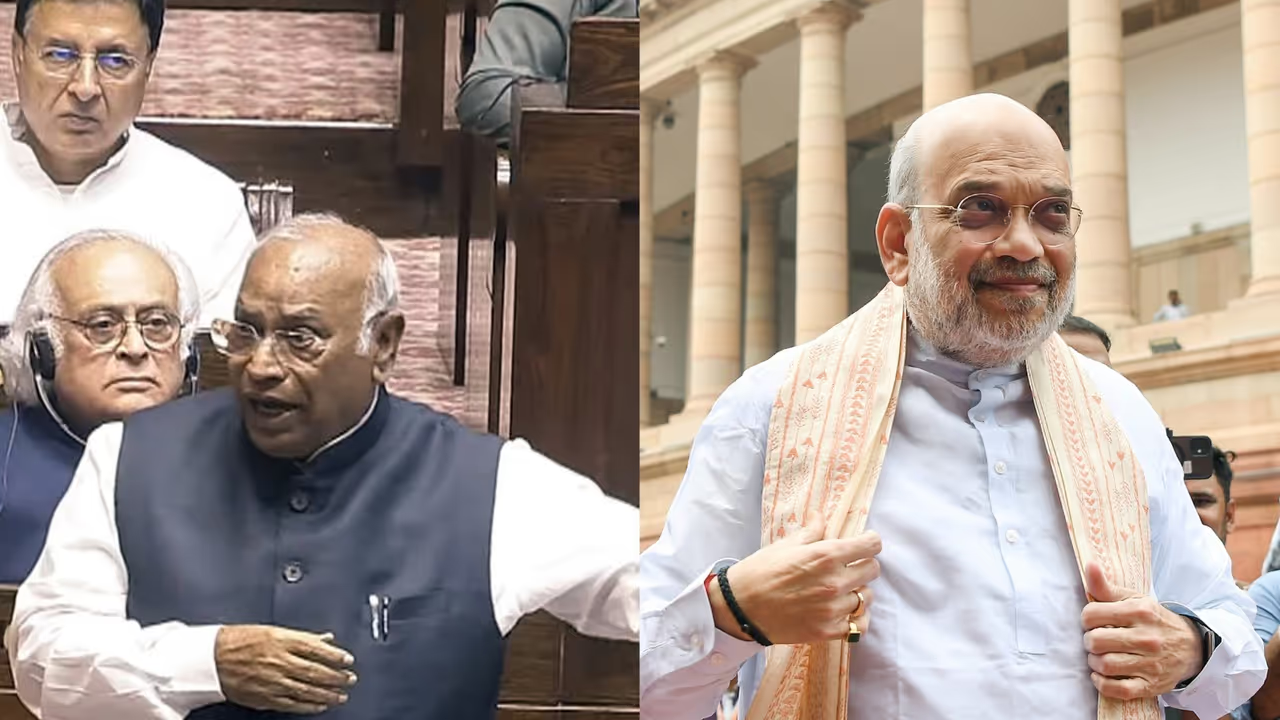
The Public Examinations (Prevention of Unfair Means) Amendment Bill, 2026, is set to be tabled in the Rajya Sabha. This follows its Lok Sabha passage and a heated debate over paper leaks and police action against student protesters.
The Public Examinations (Prevention of Unfair Means) Amendment Bill, 2026, is likely to be tabled in the Rajya Sabha on Thursday, a day after it was passed by the Lok Sabha following a marathon debate marked by sharp exchanges between the Treasury and Opposition benches over paper leaks and the police action against student protesters.
The discussion on the Bill is likely to begin at 2 pm and is expected to continue for nearly seven hours. Congress President Mallikarjun Kharge and senior party leader Mukul Wasnik are among the Opposition members expected to participate in the debate.
Opposition Slams Centre Over Police Action
Ahead of the discussion, Kharge on Wednesday launched a sharp attack on the Centre over the police action during the July 20 student protests, backing Leader of Opposition Rahul Gandhi's demand for accountability from Union Home Minister Amit Shah.
In a post on X, Kharge said, "Pellet gun fire was used against our youth, against our students. Either this happened with the authorisation of Home Minister Amit Shah, or it happened without his top-down direction. Both scenarios reflect the irresponsibility of the Home Minister or the Prime Minister. This is exactly what Shri @RahulGandhi is saying in the Lok Sabha. The BJP is guilty of launching a lethal attack on the youth--this is the truth."
His remarks came after Rahul Gandhi alleged that Amit Shah was either "culpable or incompetent" over the alleged police action on students protesting at Jantar Mantar, saying the Home Minister must explain his role in Parliament.
Key Provisions of the Bill
The Bill seeks to strengthen the legal framework against examination-related malpractices by increasing penalties for offenders. It proposes imprisonment of not less than five years, extendable up to ten years, and raises the maximum fine for individuals from Rs 10 lakh to Rs 50 lakh.
For organised examination-related crimes, the proposed legislation enhances the minimum imprisonment to seven years, extendable up to ten years, while increasing the maximum fine from Rs 1 crore to Rs 10 crore.
It also provides for the constitution of a Special Task Force to investigate paper leak cases, mandates completion of investigations within two months, and provides for Special Fast Track Courts to conclude trials within three months of filing the charge sheet.
The Lok Sabha passed the Bill on Wednesday after Union Minister Jitendra Singh defended the legislation as a significant step towards curbing paper leaks, while Opposition members argued that it focused primarily on harsher punishment rather than addressing systemic weaknesses in the examination process.
Other Business in Rajya Sabha
According to the Rajya Sabha's List of Business, the House is also scheduled to consider and pass the Micro, Small and Medium Enterprises Development (Amendment) Bill, 2026.
The House will begin proceedings with the laying of papers by ministers representing the Ministries of Culture, Earth Sciences, Communications, Labour and Employment, Environment, Forest and Climate Change, and External Affairs.
The Upper House will also table two reports of the Department-related Parliamentary Standing Committee on External Affairs and hear statements from Union Ministers Jitendra Singh and Gajendra Singh Shekhawat on the implementation of parliamentary committee recommendations.
(Except for the headline, this story has not been edited by Asianetnews Editorial staff and is published from a syndicated feed.)