Low GI, High Protein: Lab Grown Rice Could Tackle India’s Carb Problem | EXPLAINER
CSIR has developed 'Designer Rice,' a lab-engineered grain with a low glycaemic index and high protein content, using extrusion technology. This innovation aims to combat health issues linked to high carbohydrate diets in India.
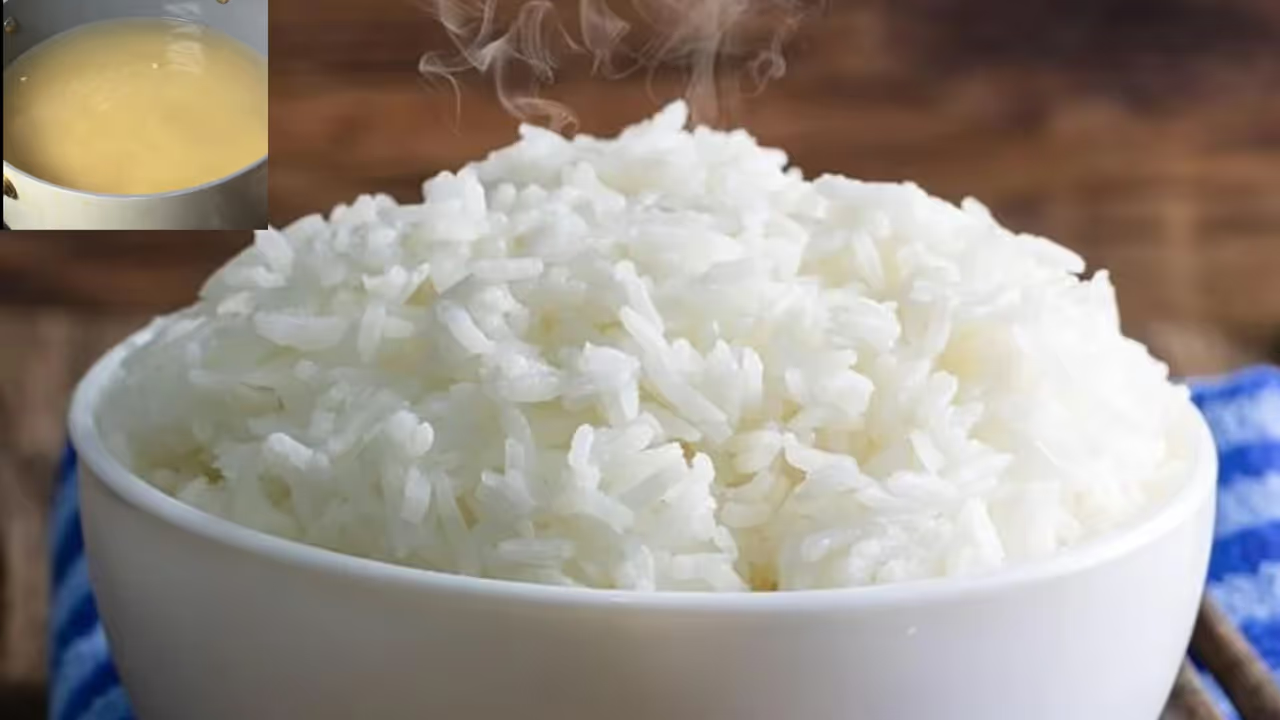
India's long-standing reliance on rice as a daily staple might be about to change because to technology advancements. At the heart of it is a lab-engineered grain known as "CSIR Designer Rice," which was created utilising extrusion technology to achieve a reduced glycaemic index and increased protein content.
However, while the science promises metabolic advantages, nutrition experts worry that it might still be ultra-processed food.
According to India Today report, C Anandharamakrishnan, director of the Council of Scientific and Industrial Research-National Institute of Science, Technology, and Innovation Studies (CSIR-NSIIT), who led the research, described the innovation as a deliberate attempt to re-engineer one of India's most popular foods while maintaining its familiarity on the plate.


According to the experts behind the experiment, this is not a naturally grown rice type. They began with rice flour and rice protein, combined them, and then used twin-screw extrusion to rebuild them into rice-shaped grains.
The goal, according to the developers, was to preserve rice's sensory experience while increasing its nutritional profile.
According to a 2025 research conducted by the Indian Council of Medical Research - Madras Diabetes Research Foundation (ICMR-MDRF), carbs account up 62% of the average Indian diet, which is one of the highest proportions internationally. This high carbohydrate intake – mostly from refined grains and white rice – is linked to elevated rates of type 2 diabetes and obesity.
How Did They Make The Grain?
The method underlying "CSIR Designer Rice" differs significantly from traditional agriculture. Researchers start with milled rice flour, which is then supplemented with rice-derived protein. This blend serves as the basis "feed mixture" for extrusion, a high-temperature, high-pressure mechanical technique commonly employed in food processing.
The technique at the core of this invention is twin-screw extrusion, which works by driving the mixture through a dye (a metal tool) and shaping it into homogeneous, rice-like kernels. The technique cooks, texturises, and restructures the material at the same time, producing grains with the size and look of polished rice.
Anandharamakrishan told India Today that the technique does not use chemical additions and instead relies on physical transformation. "It is a straightforward mixing and extrusion procedure. "No external additives are used to bind or shape the grains," he explained.
What Is Different In This Rice?
The distinguishing feature of CSIR "Designer Rice" is its low glycaemic index (GI), which measures how rapidly food elevates blood glucose levels. Conventional polished white rice has a high GI, which contributes to rapid blood sugar spikes - a cause for concern in a country with a growing diabetes population.
The technique underlying decreasing the GI in this modified rice is based on protein fortification. By incorporating concentrated rice protein into the flour foundation, researchers changed the grain's nutritional makeup.
In essence, the additional protein serves as a metabolic buffer. It delays stomach emptying and starch digestion, resulting in a more gradual release of glucose into the circulation.
Traditional rice contains just 6-8 per cent protein, however the designer variation increases this proportion by up to 20% by integrating rice protein isolates.
These are extracted, purified protein forms produced from rice, assuring that the product is plant-based and allergen-free.
How Will It Place Itself in Market?
The journey of "CSIR Designer Rice" has now progressed outside the laboratory. The technology has been licensed to Tata Consumer Products and Chennai-based SS Soul Foods, who will manage marketing, pricing, and distribution.
Anandharamakrishnan explained that the institute's responsibilities are confined to research and development. "The commercial decisions will be made by our licensees. "Our focus has been on developing a viable technology platform," he explained.
This transition raises further questions about accessibility and positioning.
Will the product be marketed as a health food for urban customers, or will it be distributed through public distribution systems in areas where diabetes is prevalent? Pricing is likely to decide its reach.
Explore the latest Lifestyle News covering fashion, wellness, travel, Food and Recipes, and more. Stay updated with trending Health News, fitness tips, and expert insights to inspire your daily living. Discover personalized lifestyle trends that keep you stylish and informed. Download the Asianet News Official App from the Android Play Store and iPhone App Store for everything that adds value to your everyday life.