Da Hong Pao: Why the World's Most Expensive Tea Is Worth 30 Times More Than Gold
Da Hong Pao, a rare Oolong tea from China's Wuyi Mountains, is regarded as the world's most expensive tea. With only six original mother trees remaining, its leaves are worth more than gold by weight, making it a prized treasure.
Why Da Hong Pao Is the World's Most Expensive Tea?
A cup of tea usually costs between ₹12 and ₹20, although the price may be higher depending on the café, the quality of the tea, or the brand.
However, would you believe that just 20 grams of tea can cost more than ₹1 lakh? This is the case with Da Hong Pao, a rare variety of Oolong tea from China that is widely regarded as the world's most expensive tea.
Renowned for its rarity, rich heritage, and centuries-old history, Da Hong Pao is considered a prized treasure among tea connoisseurs and collectors.


What Is Da Hong Pao?
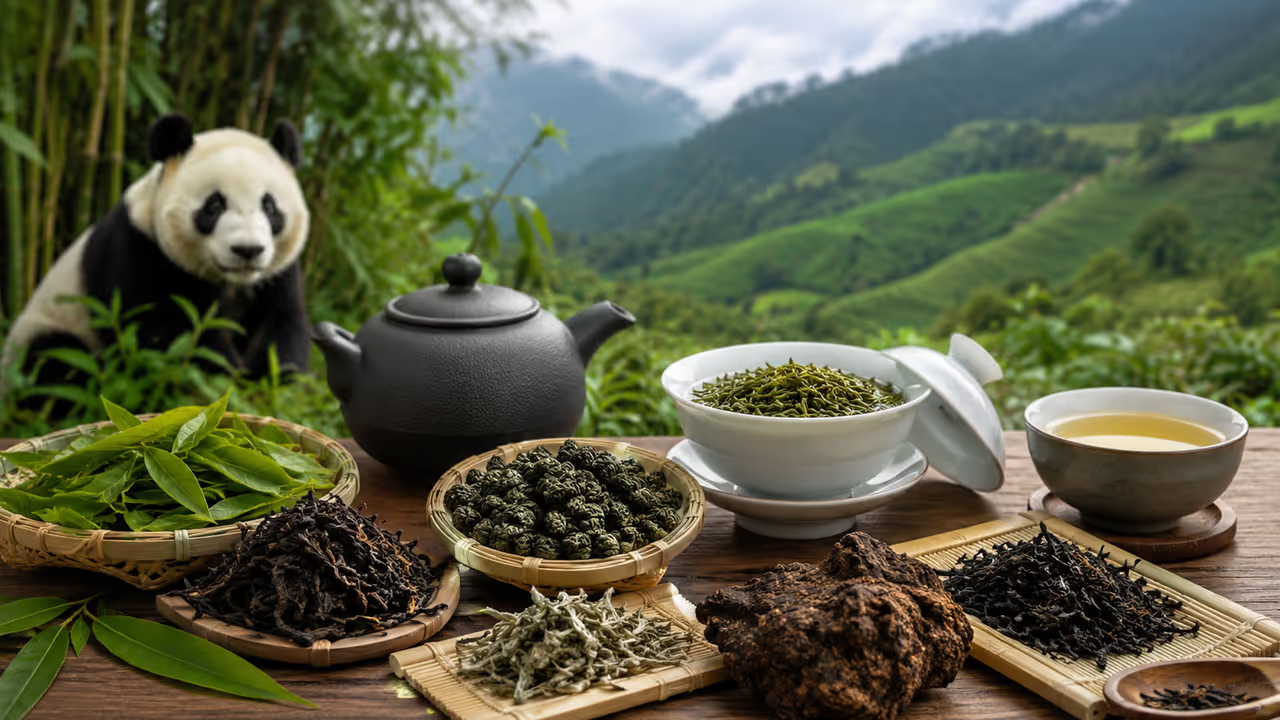
Da Hong Pao, which means "Big Red Robe" in Mandarin Chinese, is one of the world's rarest and most prized Oolong teas. It is grown in the Wuyi Mountains of Fujian Province, China, a UNESCO World Heritage Site renowned for its unique tea-growing conditions.
Oolong teas offer a distinctive balance between the freshness of green tea and the richness of black tea.
Da Hong Pao is renowned for its floral orchid fragrance, delicate fruity notes, and a smooth, lingering sweetness that remains on the palate long after each sip.
The Secret Behind Da Hong Pao's Extraordinary Price
Da Hong Pao is regarded as the world's most expensive tea because of its extreme rarity and historical significance.
Only six original "mother trees" of this tea are believed to survive on the rocky cliffs of the Wuyi Mountains in Fujian Province, China. These centuries-old trees are considered a national treasure.
Its rarity is reflected in its extraordinary value. At one auction, 20 grams of Da Hong Pao tea leaves were sold for 208,000 yuan (approximately ₹1.23 lakh).
According to a BBC report, one gram of leaves harvested from the original mother trees is worth more than 1,400 US dollars (around ₹1.2 lakh). By weight, the tea is estimated to be around 30 times more valuable than gold.
A single cup brewed using leaves from the original mother trees can reportedly cost about ₹8.5 lakh.
China Banned Harvesting From the Original Tea Trees in 2006
To preserve these rare tea trees for future generations, the Chinese government banned the harvesting of leaves from the six original Da Hong Pao mother trees in 2006.
The trees are also protected by an insurance cover worth 100 million yuan (approximately ₹142 crore), reflecting their immense cultural, historical, and economic value.
The last batch of tea leaves harvested from the original mother trees is preserved at the Palace Museum in Beijing.
The Da Hong Pao tea available in the market today is produced from plants propagated from clones of the original mother trees or by blending them with other premium Oolong tea varieties.
The Legend Behind the Name 'Big Red Robe'
According to a popular Chinese folk tale, the name Da Hong Pao, which means "Big Red Robe", dates back several centuries. The story tells of a young scholar who fell seriously ill while travelling through the Wuyi Mountains on his way to Beijing.
A monk from a nearby temple brewed tea using leaves from a special tea plant growing on a rocky cliff and offered it to him. According to the legend, the scholar recovered soon after drinking the tea.
The story further says that when the emperor later fell ill, the scholar prepared the same tea for him, and the emperor also recovered. In gratitude, the emperor draped his red ceremonial robe over the tea plant as a mark of honour and appreciation.
According to the legend, this is how the tea came to be known as Da Hong Pao, or "Big Red Robe".
How Is Da Hong Pao Tea Prepared?
Traditionally, Da Hong Pao is brewed by pouring water heated to 95°C to 100°C into a small Chinese clay teapot or a gaiwan, a traditional Chinese lidded brewing bowl.
Unlike ordinary tea bags, the same tea leaves are not discarded after a single use. Instead, they can be brewed multiple times.
Tea connoisseurs believe the tea's richest sweetness, aroma, and flavour emerge during the third or fourth infusion.
Explore the latest Lifestyle News covering fashion, wellness, travel, Food and Recipes, and more. Stay updated with trending Health News, fitness tips, and expert insights to inspire your daily living. Discover personalized lifestyle trends that keep you stylish and informed. Download the Asianet News Official App from the Android Play Store and iPhone App Store for everything that adds value to your everyday life.