Mumbai vs Navi Mumbai Airport: How India's Busiest Airport Gets Relief
Mumbai airport is set to get relief as Navi Mumbai International Airport opens on December 25. With phased expansion, new terminals, runways and strong connectivity, dual-airport system will support long-term growth and improve safety & efficiency.
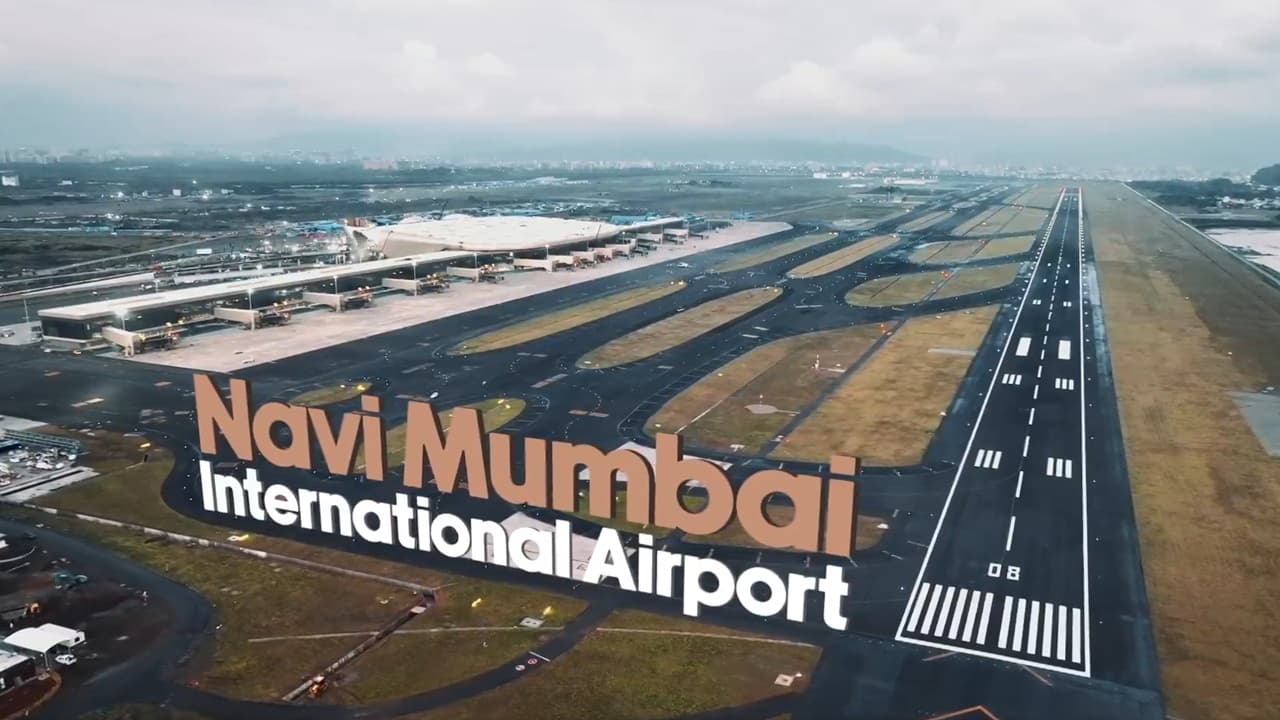
Two Airports, One Plan: How Navi Mumbai Will Ease Mumbai's Congestion
Mumbai's airport is one of the busiest and most crowded in India. For years, it has handled far more flights than it was designed for, often pushing safety limits during peak hours. Now, with the Navi Mumbai International Airport (NMIA) set to begin passenger operations, aviation authorities are preparing a careful plan to share flights between the two airports and ease pressure on Mumbai.
The idea is simple but important: two airports, one system, and a gradual shift that avoids chaos while preparing the region for massive future growth.
Two airports, one shared strategy
Mumbai airport and Navi Mumbai airport are both operated by the same company, Adani Airports Holdings Limited. This gives the operator full control to plan how flights will be divided between the two facilities.
Officials say there will be no sudden transfer of flights. Instead, the goal is to slowly move a small number of flights to Navi Mumbai, mainly during the busiest hours. This approach is meant to reduce congestion at Mumbai airport while allowing airlines and passengers to adjust smoothly.


Navi Mumbai airport opens on December 25
Navi Mumbai International Airport will begin handling commercial passenger flights from December 25. However, Mumbai airport will continue to remain the main hub for both domestic and international travel in the initial phase.
Only a limited number of flights will be shifted at first. Authorities want to ensure that operations at the new airport are stable before moving more traffic.
Only a few flights will move in the beginning
Officials have clarified that just one or two flights may be moved initially, especially those scheduled during peak hours. The aim is not to split traffic equally right away, but to provide immediate relief to Mumbai airport without disturbing existing flight schedules.
This slow transition will help airlines, passengers, and air traffic controllers adapt to the new dual-airport system.
Mumbai's single runway under heavy strain
Mumbai airport operates mainly on one primary runway, which is designed to handle 44 take-offs and landings per hour. However, this limit is frequently crossed during busy periods.
On December 12, official data showed that 52 flights landed within a single hour, far above the safe operating capacity. Such high movement increases pressure on air traffic control and raises concerns about operational safety.
Charter flights adding to congestion
One of the main reasons Mumbai airport crosses its runway limit is the heavy movement of charter aircraft. On several days, the airport handled 45 to 50 flights per hour multiple times, mainly due to unscheduled charter operations.
This puts extra stress on the runway system and makes congestion worse during peak travel hours.
Changes expected from the summer schedule
Major changes are likely to be introduced from the summer schedule, which starts in the last week of March and continues until October. The current winter schedule will remain unchanged.
Officials believe the summer schedule offers a better window to adjust flight timings, move some services, and introduce new routes from Navi Mumbai.
Navi Mumbai airport expansion to be fast-tracked
Plans are already underway to speed up the expansion of Navi Mumbai airport. Authorities are considering combining Phase 3 and Phase 4 of construction.
If implemented, this would raise the airport’s capacity to 50 million passengers per year by 2030. Design work has begun, and construction is expected to start in the coming months.
Flight timings may be spread out
Instead of adding more flights during peak hours, airlines may be asked to spread flights across non-peak times. Some services could be shifted to quieter hours to reduce pressure on Mumbai’s runway.
Airlines may also be encouraged to launch new routes directly from Navi Mumbai, helping balance overall traffic in the region.
More routes expected with two airports
For years, Mumbai’s aviation growth has been limited by its single-runway setup. With two airports now operating together, the region is expected to gain more domestic and international routes.
The dual-airport system removes a long-standing bottleneck and opens new opportunities for airlines to expand services.
Terminal 1 rebuilding planned later
Mumbai airport’s Terminal 1 at Vile Parle will eventually be demolished and rebuilt to increase capacity. However, this will only happen after Navi Mumbai’s next terminal becomes operational.
This careful timing ensures that Mumbai does not lose terminal capacity during the transition.
Adani Airports outlines long-term vision
Speaking to ANI, Jeet Adani, Director at Adani Airports Holdings Limited, shared details of the long-term plan for Navi Mumbai airport.
He said the first terminal, with a capacity of 20 million passengers, and the southern runway will be operational initially. As traffic grows, the airport will add three more terminals, another runway, and cross-field taxiways.
Multi-modal connectivity at Navi Mumbai
Jeet Adani said Navi Mumbai airport is being developed as a true multi-modal transport hub. Planned connections include:
- Metro links to Mumbai and Panvel
- Water taxi services
- Helipad facilities
He said every form of transport will be connected to make travel smooth and efficient.
Full build-out expected by 2038-2040
According to Adani Airports, the full development of Navi Mumbai airport will continue for the next 15 years. The entire project is expected to be completed between 2038 and 2040, making it one of the largest aviation hubs in Asia.
PM Modi inaugurated the airport in October
Prime Minister Narendra Modi inaugurated the Navi Mumbai International Airport on October 8, calling it a major milestone in India’s aviation journey.
He said Mumbai’s long wait for a second international airport was finally over and described NMIA as a key project to turn the region into Asia’s biggest connectivity hub.
A major PPP infrastructure project
Navi Mumbai International Airport has been developed under a public-private partnership (PPP) between:
- Mumbai International Airport Limited (MIAL), a subsidiary of Adani Airport Holdings
- City and Industrial Development Corporation (CIDCO)
The project supports the government’s Viksit Bharat 2047 vision for long-term infrastructure growth.
A careful step towards easing congestion
The launch of Navi Mumbai airport marks a turning point for India’s most congested aviation region. With a slow and planned shift of flights, improved connectivity, and long-term expansion, Mumbai is finally getting the breathing space it needs.
For passengers, airlines, and the city itself, the two-airport system promises a safer, smoother, and more sustainable future.
(With ANI inputs)
Stay updated with the Breaking News Today and Latest News from across India and around the world. Get real-time updates, in-depth analysis, and comprehensive coverage of India News, World News, Indian Defence News, Kerala News, and Karnataka News. From politics to current affairs, follow every major story as it unfolds. Get real-time updates from IMD on major cities weather forecasts, including Rain alerts, Cyclone warnings, and temperature trends. Download the Asianet News Official App from the Android Play Store and iPhone App Store for accurate and timely news updates anytime, anywhere.