
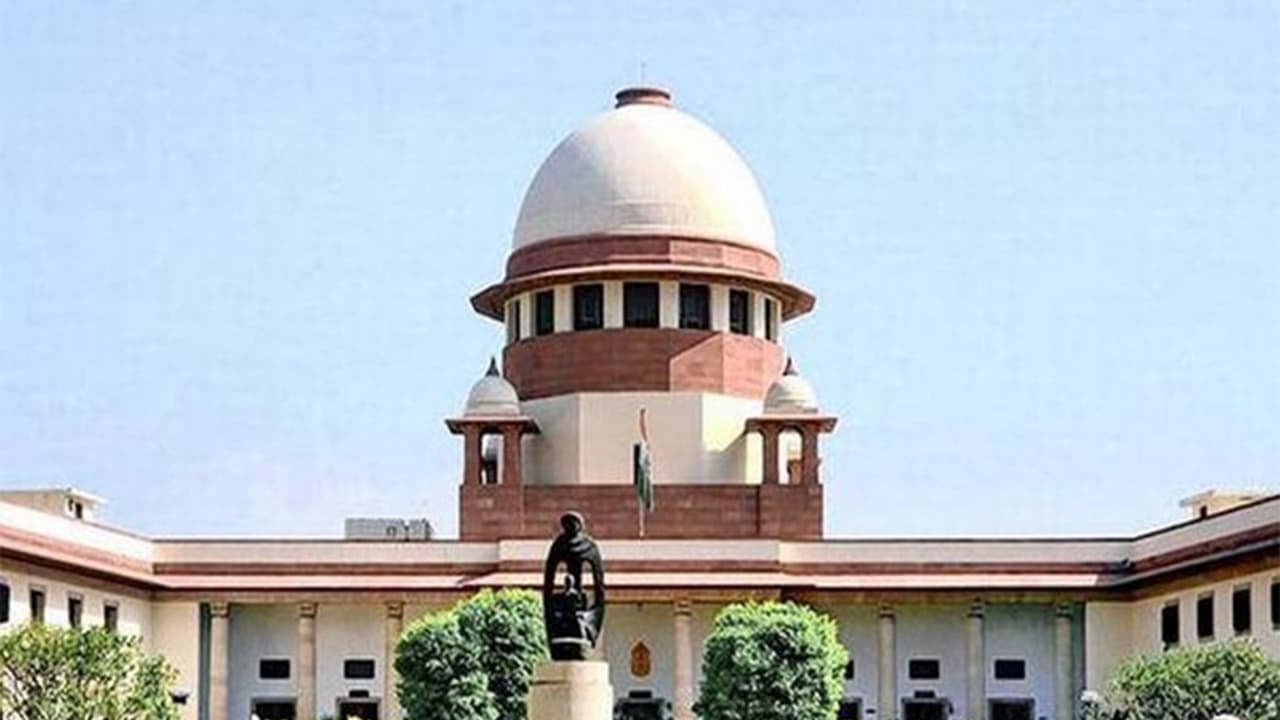
The Supreme Court has ordered the makers of the Netflix film 'Ghooskhor Pandat' to change its title, finding it denigrative of the Brahmin community. The court cited constitutional limits on free speech and the principle of fraternity.
SC's Observations on Free Speech and Fraternity
During the hearing, Justice Nagarathna made strong oral remarks underscoring constitutional limitations on free speech. "Why should you denigrate anybody. It's against morality and public order. Being woke is one thing. But creating this kind of unrest when there is already unrest in the country. We thought filmmakers, journalists etc. they are all responsible people and are aware of exceptions and reasonable restrictions of Article 19(1)(a) (Fundamental Right of Speech and Expression)," she observed.

Emphasising the principle of fraternity enshrined in the Constitution, the judge added that the framers were conscious of India's diversity of races, castes and communities. "No section of the society should be denigrated. As long as late 40s the framers of Constitution were aware of the multitude of races, castes etc. So they introduced concept of fraternity. If you use your freedom to denigrate any section of the society we can't permit it," Justice Nagarathna remarked.
PIL Alleges Stereotyping and Defamation
The PIL had sought to restrain the release of the Manoj Bajpayee-starrer, earlier titled 'Ghooskhor Pandat,' on the ground that the term 'Pandat' was being associated with corruption and bribery. The petitioner argued that such usage was defamatory and communally offensive, and that it undermined the dignity and reputation of the Brahmin community.
The plea was filed by Mahender Chaturvedi, who describes himself as an Acharya devoted to the study and teaching of Indian scriptures and spiritual traditions. Through Advocate Vineet Jindal, the petition contended that the term historically signifies scholarship, ethical conduct, spiritual guidance and moral authority, and that linking it with immoral conduct amounted to stereotyping and vilification. The petition further argued that while Article 19(1)(a) guarantees freedom of speech and expression, it is subject to reasonable restrictions under Article 19(2) and does not extend to defamation or content that may disturb communal harmony. It also alleged violations of Articles 14, 21 and 25 of the Constitution and raised concerns about the absence of an effective regulatory mechanism for OTT platforms.
Background: Delhi High Court Hearing
Earlier, on February 10, the Delhi High Court was informed by Netflix that the producer had taken a "conscious decision" to change the film's name in light of concerns raised. The Court subsequently disposed of the petition after noting that the petitioner's grievance was confined to the title, which stood resolved following the decision to adopt an alternate name. (ANI)
(Except for the headline, this story has not been edited by Asianet Newsable English staff and is published from a syndicated feed.)