
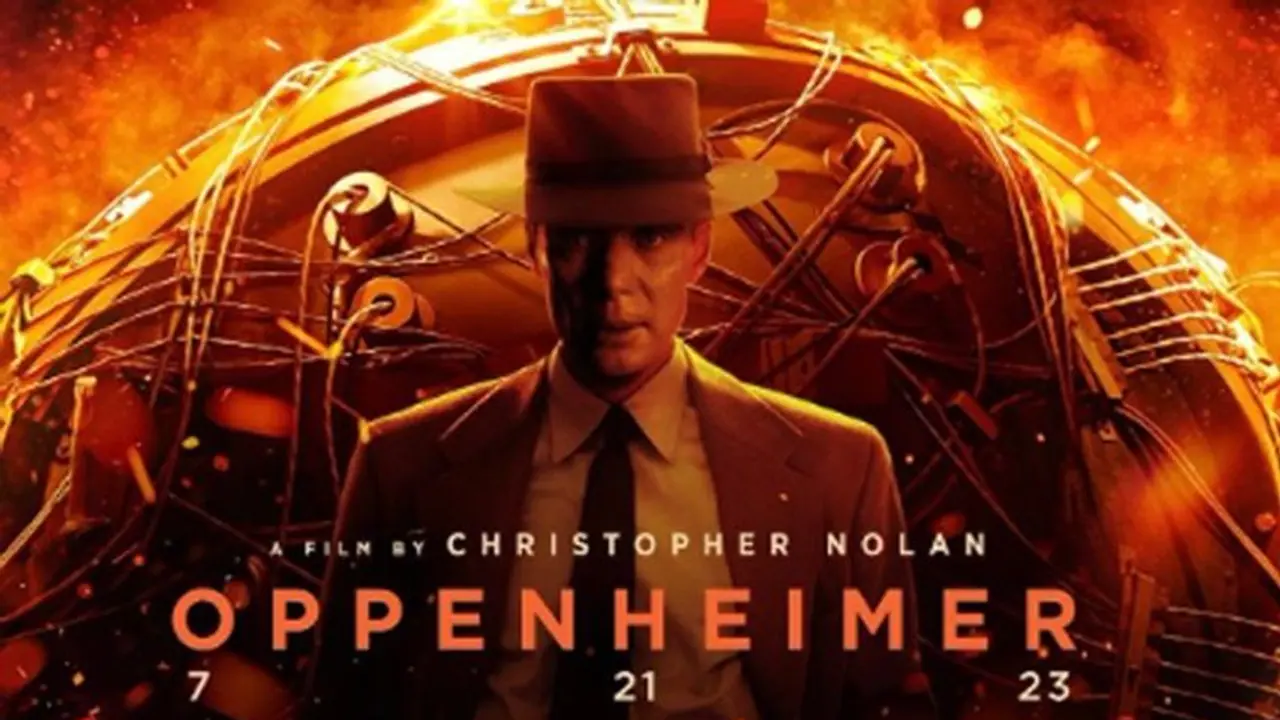
Apart from Bhagawat Gita, Robert J. Oppenheimer was also influenced by Kalidasa's Meghaduta and the Vedas. Cillian Murphy who plays the scientist's role too read the Bhagwat Gita in order to prepare himself for the role----by Amrita Ghosh
Due to the nature of the subject matter and the fact that famed director Christopher Nolan is attached to the project, considerable expectation has been developed for Oppenheimer. The life of J. Robert Oppenheimer, who is widely considered as the father of the atomic bomb, is the subject of this biographical film. His connection to the Bhagavad Gita and its famous sentence, "I am become death, the destroyer of worlds," which he maintained in his mind after the successful Trinity test in 1945 has riveted audiences. However, an article published in Time magazine in 1948 reveals that the scientist also drew inspiration from Meghaduta, a book written by Kalidasa, as well as the Vedas, the ancient scriptures of Hinduism. The article was published in 1948.
The Bhagavad Gita was reportedly one of Oppenheimer's favourite books, and he would read it for pleasure. He educated his friends at Berkeley on what he had learned from the Gita and even went so far as to study Sanskrit with Arthur W. Ryder, who was an authority on the language. Sanskrit was actually Oppenheimer's eighth language, which is an interesting fact.
J. Robert Oppenheimer would keep his brother Frank apprised of his progress in learning Sanskrit as well as the insights he received from reading a variety of texts through the medium of letter writing. Not only did it contain the Bhagavad Gita, but it also contained the Vedas and the Meghaduta.
ALSO READ: What if 'Oppenheimer' director Christopher Nolan made 'Hera Pheri 3'? AI-generated images spark imagination
“Only a very long letter can make up for my great silence and for the many sweet things for which I have to thank you, letters and benevolences stretching now over many months. Benevolences starting with the precious Meghaduta and rather too learned Veda. The Meghaduta I read with Ryder, with great delight, some ease and great enchantment; the Veda lies on my shelf, a reproach to my indolence,” he wrote in 1934.
In another letter, Oppenheimer made connections between the Bhagavad Gita’s philosophies and the context of war. He expressed his belief that discipline plays a crucial role in achieving calmness and preserving what is essential to our happiness, even in challenging situations.
“Therefore I think that all things which evoke discipline: study, and our duties to men and to the commonwealth, war… ought to be greeted by us with profound gratitude; for only through them can we attain to the least detachment; and only so can we know peace,” Oppenheimer added.
Following in the footsteps of J. Robert Oppenheimer, actor Cillian Murphy, who will be portraying the eminent scientist in Christopher Nolan's next film, recently recounted his experience of reading the Bhagavad Gita in order to prepare for the part. Christopher Nolan's film is scheduled to be released in the near future. Murphy voiced his enthusiasm for it and referred to it as stunningly gorgeous.
