
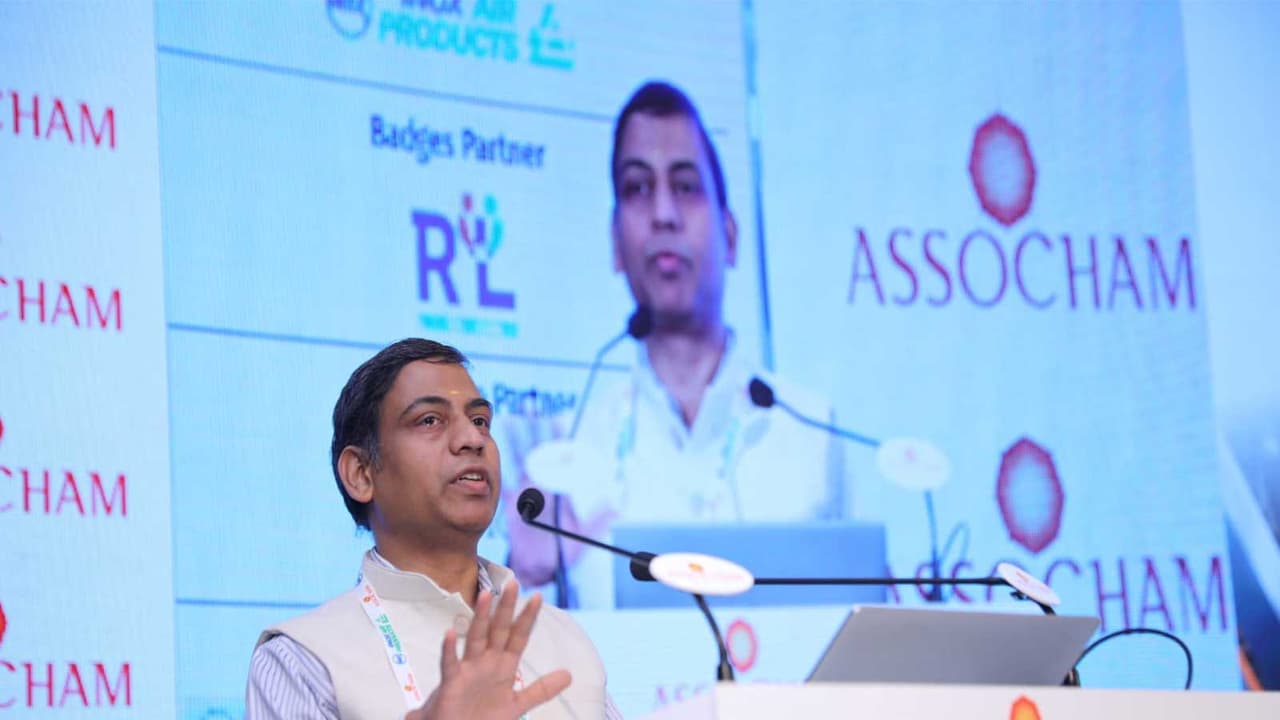
The Indian steel industry must accelerate decarbonisation, boost R&D, and diversify export markets to stay globally competitive, said Ashwini Kumar, Economic Advisor, Ministry of Steel, highlighting six key priorities for the sector's growth.
The Indian steel industry needs to speed up decarbonisation, strengthen technology and research and development (R&D), and diversify export markets to remain globally competitive amid changing global trade conditions, including carbon border measures and tariff actions, Ashwini Kumar, Economic Advisor, Ministry of Steel, said on Thursday.
Six Key Priorities for the Steel Sector
Addressing Industry body ASSOCHAM's India Steel Conclave 2026, Kumar said the sector should focus on six key priorities--accelerating decarbonisation, strengthening carbon measurement and reporting under the Carbon Credit Trading System, boosting technology and R&D, securing long-term availability of critical raw materials, diversifying export markets and embracing digital transformation through artificial intelligence (AI), machine learning and the Internet of Things (IoT).
Industry's Current Position and Domestic Advantage
Highlighting the industry's current position, Kumar said India's installed crude steel production capacity stands at around 220 million tonnes (MT), while crude steel production reached 168.4 MT and finished steel production was around 162 MT in FY26 against finished steel consumption of 163.7 MT. He said rising domestic demand, driven by infrastructure investment, urbanisation and consumption from sectors such as automobiles and white goods, provides India with an advantage over several major steel-producing countries facing weaker domestic demand.
Navigating Evolving Global Trade Regulations
Referring to evolving global trade regulations, Kumar said carbon border measures would increasingly influence market access for steel exporters. "CBAM essentially means that market access in high-value destinations will increasingly depend not only on the quality and price of the steel, but also on the carbon intensity of the production process," he said.
He added, "I would like to look at it with a positive lens -- an opportunity to modernise India's steel industry, improve technology and production processes, significantly reduce emissions and, at the same time, strengthen its long-term global competitiveness."
Kumar expressed confidence that with policy support, continuous innovation, investment in technology and close collaboration between the government and industry, the Indian steel sector would emerge stronger and more globally competitive while supporting the country's long-term manufacturing ambitions. (ANI)
(Except for the headline, this story has not been edited by Asianetnews Editorial staff and is published from a syndicated feed.)