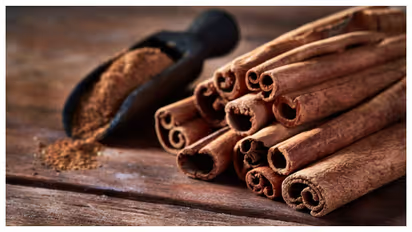
Real cinnamon or fake? Learn simple ways to identify genuine cinnamon before buying, including clues from its appearance, texture, aroma and labeling, so you can make a more informed choice.
The market sells two main types: one is Ceylon cinnamon, and the other is a similar variety from the same plant family. The easiest way to tell them apart is by looking at the layers. Real Ceylon cinnamon sticks have many thin, paper-like layers rolled into one. The other type is usually a single, thick, hard layer with very few swirls inside. So, always take a good look at the centre of the stick before buying.
You can also check the colour of the cinnamon. Ceylon cinnamon usually has a soft, light brown shade. The other variety might look darker, with a reddish-brown tint. But don't rely only on colour to decide. The drying and storage process can change the colour of the spice. So, you should always check the colour along with its thickness, layers, and smell.
Another good test is to try breaking it. Ceylon cinnamon is brittle and snaps easily. The other type is much tougher and you'll need more force to break it.
The aroma can also give you a clue. Ceylon cinnamon has a delicate, sweet fragrance. The other type has a much stronger, sharper smell. The taste is also quite different. Ceylon cinnamon has a mild, sweet flavour, while the other kind is more pungent and spicy.
But what about cinnamon powder? That's where it gets tricky. You can't identify the type just by its colour, smell, or taste when it's powdered. So, when buying powder, always check the packaging. Look for the product name, manufacturer details, and place of origin. It's best to choose a trusted brand that clearly labels its product as 'Ceylon cinnamon'.
Different types of cinnamon contain different amounts of a natural chemical called coumarin. Some thicker varieties of cinnamon can have high levels of it. Ceylon cinnamon, on the other hand, has very little coumarin. For most people, the small amount used in daily cooking is not a problem.
However, consuming large amounts of the high-coumarin variety for a long time can be a concern, especially for people with liver problems. So, don't just assume that 'more is better' when it comes to cinnamon.
You will find many 'home tests' on the internet, like dropping cinnamon in water to see what happens. But honestly, these methods are not 100% reliable for identifying the type.
For cinnamon sticks, the simplest and most effective way is to just look at the layers. If you're buying powder, your safest bet is to buy from a reputable brand and carefully read the details on the packet.
Let's be very clear about one thing. The thicker cinnamon isn't 'fake' cinnamon; it's just a different variety. Similarly, a light colour doesn't automatically mean it's Ceylon cinnamon. If you specifically want to buy real Ceylon cinnamon, you must check all the details together—its type, appearance, layers, and the information on the packet.
In short: for sticks, check the layers; for powder, trust the brand.