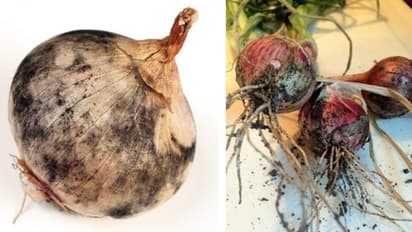
Onions are an absolute must in our daily cooking. We use them to boost the taste of curries, sambar, and poriyal. But many of us get confused when we see black mold on the onions we buy. Can we still use them?
Social media is full of rumors about this black mold. Some fake messages even claim a woman died after eating onions with black mold. This creates a lot of panic.
We will tell you exactly what happens if you eat moldy onions, when you can use them safely, and when you must throw them away completely.
Also read: Ahaan Panday To Rohit Saraf: Will These 5 New-Age Actors Be Next Big Thing Like Ranbir Kapoor?
You often see black powder or dark spots on the outer skin of onions or between the layers. This is actually a type of black mold called Aspergillus niger.
Also read: Bigg Boss 20: 11 Contestants In Danger, Gullu’s BIG Move Bring Twist in Nomination Game
The Aspergillus niger mold naturally lives in soil and decaying plant matter. The mold starts growing fast when farmers harvest or store onions in places with poor ventilation, high moisture, and high temperatures.
The Tamil Nadu Agricultural University and Indian agricultural management guidelines state that temperatures between 28 and 34 degrees Celsius and high humidity create the perfect setup for this black mold.
The mold also enters through cuts, scratches, or damage on the onion skin. Warehouses and cold storages see this problem a lot if they do not cure the onions properly for long-term storage.
Also read: Bigg Boss 20: Uditi Singh Calls Karan Wahi Breakup ‘Blessing In Disguise’, Reveals What Went Wrong
You must handle onions with black mold carefully.
The American USDA guidelines say you can completely peel off the dried outer layers if they have black mold, and safely use the good part inside.
But you must throw the whole onion away if the mold goes deep inside and makes the onion soft, watery, or rotten.
Do not think about the money you spent on buying them. Throwing away a rotten, moldy onion is much safer than eating bad food and ending up in a hospital.
People with allergies or asthma can face sneezing, coughing, and breathing issues if they inhale these black mold spores.
People with very low immunity can rarely get fungal infections like Aspergillosis.
Also read: Blood Cancer Warning Signs You Shouldn’t Ignore: Know Leukemia, Lymphoma, Myeloma Symptoms
Is this the Black Fungus disease?
Do not confuse this black mold with the deadly Black Fungus disease called Mucormycosis.
The CDC and WHO confirm that Mucormycosis fungi usually live in soil, dust, and rotting plants in the environment.
So, the black mold on your onion is not the same fungus that causes Mucormycosis.
Also read: Open-Heart Surgery: What Patients Should Know About Preparation, Procedure, Recovery Time
The FSSAI food safety standards also follow this strict safety approach of keeping food items free from mold.
How to store onions to prevent mold?
You should store onions in a dry, cool, and well-ventilated place to prevent mold. You must avoid packing them in tight plastic bags. You can keep them in mesh bags or open baskets where air flows easily. This stops moisture buildup and prevents mold and rotting.
Also read: Parenting Tips: Anger To Sleep Changes - Signs In Children That Should Stop Ignoring
Explore the latest Lifestyle NewsFood and RecipesHealth NewsAsianet News Official App