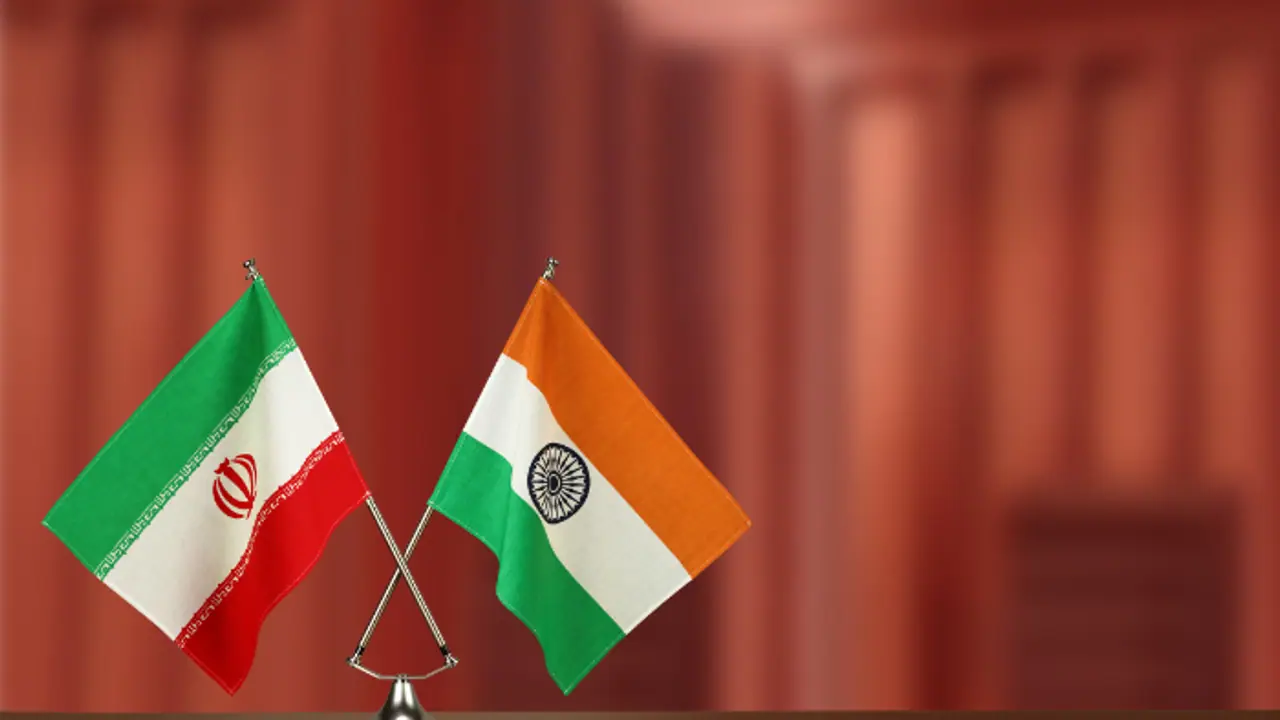
Political instability in Iran threatens India’s strategic interests by endangering the Chabahar Port, its key gateway to Central Asia, weakening Tehran’s role as a counterweight to Pakistan, and potentially expanding China’s regional influence.
Recent political turbulence in Iran driven by economic hardship, protests and rising external pressure has sparked serious strategic concern in New Delhi, as analysts warn that instability or a regime change in Tehran could hurt India’s geopolitical, economic and security interests.
India–Iran: A Long-Standing Strategic Partnership
For decades, India’s engagement with Iran has been shaped more by geography and strategic necessity than ideology. With Pakistan blocking India’s access to Afghanistan and Central Asia overland, Iran’s Chabahar Port has served as India’s primary route for westward connectivity, allowing New Delhi to bypass Islamabad entirely.
Built with significant Indian investment, Chabahar is seen as a gateway to landlocked Central Asian markets and an alternative to the China-Pakistan Economic Corridor (CPEC) anchored at neighbouring Gwadar Port. This infrastructural link is not only a commercial asset but also a symbol of India’s broader Asia connectivity strategy.
Related Articles

Yet, as Iran’s ruling clerical establishment struggles to contain protests and economic malaise, experts warn that any abrupt breakdown in political order could jeopardize long-term projects like Chabahar. A politically fragmented or unstable Iran could lack the coherence needed to ensure security guarantees, stable policy and continuity of commitments — all essential for multinational infrastructure.
Regional Balance and Pakistan
Tehran has historically acted as a strategic counterweight to Pakistan’s influence in the region, especially during phases like the 1990s and early 2000s when India and Iran were aligned against Taliban expansion in Afghanistan. Such a balancing role has quietly supported Indian interests in West Asia and beyond, particularly by resisting Pakistan’s attempts to monopolize influence across South and Central Asia.
If Iran were weakened or suffered internal fragmentation, Pakistan could indirectly benefit as one less counter-influence in Afghanistan and surrounding states, reducing regional pressure on Islamabad and altering delicate power equilibriums.
China’s Strategic Advantage
China already figures prominently in Tehran’s strategic calculus. The two countries signed a 25-year cooperation pact in 2021, deepening Beijing’s footprint across Iran’s economy, including energy and infrastructure. China was Iran’s largest trading partner in 2024–25, with Iranian oil and goods predominantly flowing to Beijing.
In a scenario of heightened instability or regime change, China is widely seen as better positioned than India to expand its influence, given its deeper economic interdependence and capacity for strategic investment. A weakened Iran may lean more on Chinese backing for security and reconstruction, further consolidating Beijing’s regional influence at India’s expense.
Economic and Energy Implications
While bilateral trade between India and Iran remains modest (around $1.3–$1.7 billion annually), its strategic value outweighs economic volume. India’s exports of agricultural goods, including basmati rice and pharmaceuticals, have historically found a reliable market in Iran. However, recent protests, economic instability, and fears of U.S. sanctions — including possible 25 % tariffs targeting Iran trade partners — have already stalled key exports and heightened risk aversion among Indian traders.
More broadly, Iran’s instability poses direct threats to India’s energy security. India relies on the broader West Asian region for roughly 60 % of its crude oil and petroleum supplies. Disruptions in Iranian supply, wider Gulf turmoil, or threats to transit chokepoints like the Strait of Hormuz could uplift global energy prices and supply costs, intensifying inflationary pressures on the Indian economy.
Security and Diplomatic Considerations
Apart from economic concerns, Iran’s potential political transformation carries implications for India’s non-aligned diplomatic strategy. Traditionally, India has balanced ties across rival blocs — engaging Tehran, Gulf states, Israel, and Washington simultaneously. A fragmented or hostile Iranian government could constrain New Delhi’s options, forcing harder choices and narrower alignments.
Moreover, Iran’s role in combating extremist threats such as ISIS and affiliated groups has indirectly supported Indian security interests. A weakened Tehran might offer these networks greater operational space, complicating regional counter-terrorism efforts.
Conclusion: Strategic Caution Needed
India’s policymakers face a complex dilemma: while a stable, reformist Iran might theoretically open new trade and diplomatic opportunities, chaos or sudden regime change could undercut decades of strategic planning. Analysts argue that for India, a predictable, if imperfect, Iranian regime may be less risky than a fragmented successor that could amplify Pakistan’s leverage and empower China’s regional dominance.
In this context, New Delhi is likely to adopt a measured wait-and-watch approach, safeguarding its diaspora, investments, and diplomatic channels, while continuously recalibrating its West Asia engagement to a rapidly shifting geopolitical landscape.