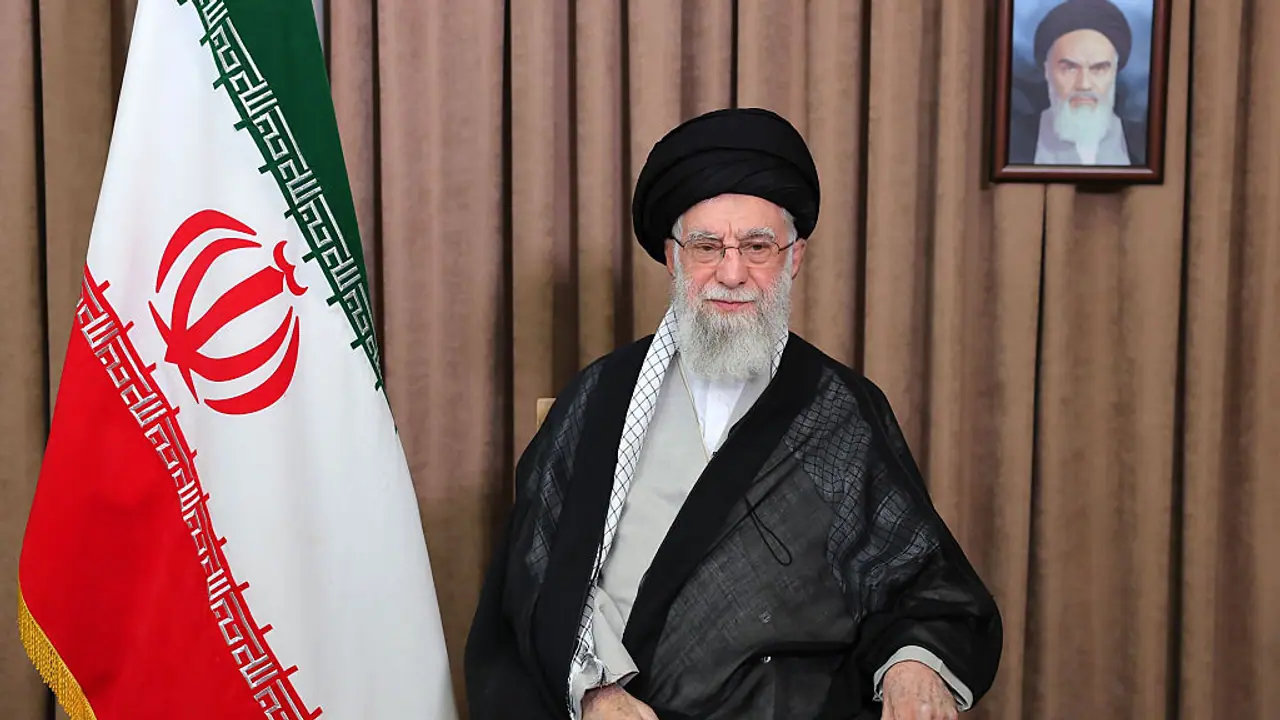
Two Israeli television networks reported that Khamenei was killed in US-Israeli attacks on Iran, while there was no confirmation from Tehran. "Ali Khamenei is dead," reported public broadcaster Kan on its X account.
In a dramatic escalation in the Middle East, Israeli television networks reported that Iran’s Supreme Leader Ayatollah Ali Khamenei had been killed during joint strikes carried out by Israel and the United States. The reports came as tensions surged across the region following a wave of coordinated attacks, retaliatory missile launches and mounting warnings of a wider war.
Two Israeli television networks said the Iranian leader may have died after strikes hit his compound in Tehran. However, there was no confirmation from Iran.
Related Articles

"Ali Khamenei is dead," reported public broadcaster Kan on its X account. Channel 12, citing a source, said: "Khamenei is dead."
Channel 12 reported that Israel Prime Minister Benjamin Netanyahu was shown an image of the body of Khamenei, after it was recovered by Iranian authorities.
"Senior Israeli officials were informed of Khamenei's elimination. His body was recovered from the rubble of his compound," reported public broadcaster Kan.
Even as the world awaits a confirmation from Iran on Khamenei's fate, the Supreme Leader's top aide Ali Larijani said, “We will make the Zionist criminals and the shameless Americans regret their actions. The brave soldiers and the great nation of Iran will deliver an unforgettable lesson to the hellish international oppressors.”
The reports surfaced shortly after Netanyahu suggested there were indications the Iranian leader may not have survived the attack.
"This morning, in a powerful surprise strike, the compound of the tyrant Ali Khamenei was destroyed in the heart of Tehran," Netanyahu said in a televised statement.
"For more than three and a half decades, this cruel tyrant has spread terror across the world while oppressing his own people, while working tirelessly and without pause on a plan to destroy Israel," he added.
"That plan is no more -- and there are many signs that this tyrant is no longer alive," Netanyahu said.
During the televised address, Netanyahu also said that the "decisive" US-Israeli operation would last "as long as necessary".
"This morning we eliminated senior figures in the ayatollahs' regime -- commanders in the Revolutionary Guards and senior officials in the nuclear programme -- and we will continue," Netanyahu said.
"In the coming days, we will strike thousands of targets of the terror regime," he added.
Netanyahu Urges Iranians to Rise Against Regime
In a direct appeal to the people of Iran, Netanyahu said the strikes could open a historic opportunity for change.
Addressing Iranians, he said they now had a "once in a generation chance" to overthrow the government.
"Take to the streets en masse" and "get the job done", he said.
It is "high time you come together" and "unite for a historic mission", he added.
Massive Joint Strikes Across Iran
The operation, announced by US President Donald Trump, marked one of the most extensive coordinated military actions against Iran in recent years.
According to the Israeli military, around 200 fighter jets took part in the strikes, hitting more than 500 targets across the country. Israeli officials said the attacks targeted missile launchers and locations where senior Iranian officials had gathered.
Retaliatory Missile and Drone Attacks
Iran responded quickly. The Islamic Revolutionary Guard Corps announced a large-scale retaliation targeting US and Israeli positions.
"The first wave of widespread missile and drone attacks by the Islamic Republic of Iran against the occupied territories has begun," the IRGC said in a statement.
Missiles were launched toward Israel, while US bases in the Gulf were also targeted. Israeli emergency services said at least one person was being treated for blast injuries after projectiles landed in northern areas.
Explosions Across the Gulf; Key Shipping Route Threatened
The conflict quickly spread beyond Iran and Israel, with explosions reported in several Gulf countries.
Missile interceptions and blasts were reported in Abu Dhabi, Dubai, Riyadh, Manama and Doha, as regional air defence systems activated. Jordan also said it had shot down ballistic missiles.
Iran’s Revolutionary Guards also warned vessels near the Strait of Hormuz that the waterway was "basically closed", raising fears over global oil supply disruptions.
World leaders reacted with concern as the crisis deepened. Emmanuel Macron called for an urgent United Nations Security Council meeting to address the escalation.
Several countries issued warnings about the possibility of a broader regional conflict, while airlines across the Middle East suspended or cancelled flights as airspace closures spread.
Russia condemned the strikes as a "dangerous adventure," while Pakistan called for an "immediate halt" to the escalation.