
Pakistan successfully mediated a 2-week ceasefire between the US and Iran, driven by its strategic interests in regional stability and preventing economic disruption. Army Chief Asim Munir led crucial backchannel diplomacy, building trust with both sides.
Pakistan’s unexpected emergence as a key mediator in the United States-Iran ceasefire has drawn global attention, raising an important question — why did two adversaries locked in a high-stakes conflict place their trust in Islamabad?
The two-week ceasefire, announced just hours before a US deadline for strikes, marked a critical turning point in the conflict. While multiple countries were involved in backchannel diplomacy, Pakistan’s role stood out, with both Washington and Tehran acknowledging its efforts in bringing the sides to the negotiating table.
Pakistan’s Strategic Position And Urgency
Pakistan’s push for mediation was not merely an attempt to expand its geopolitical influence but was driven by immediate strategic concerns. The ongoing conflict threatened to destabilise the region, particularly through disruptions in the Strait of Hormuz — a vital route for global oil supply and a key artery for Pakistan’s own energy needs.
Islamabad also faced the risk of regional spillover, given its proximity to Iran and its delicate balancing act between allies like the United States and Saudi Arabia. A prolonged conflict could have had direct economic and security consequences for Pakistan, making de-escalation a priority.
In this context, Pakistan positioned itself as a pragmatic intermediary — one that had stakes in peace but was not directly involved in the conflict. Its ability to engage both sides without appearing overtly partisan became a key factor in building trust.
Also Read: US, Iran to hold direct talks in Pakistan to end recent hostilities
Asim Munir’s Backchannel Diplomacy
At the centre of Pakistan’s mediation effort was its Army Chief, Field Marshal Asim Munir, whose role proved crucial in facilitating communication between the two sides. Munir maintained direct contact with senior US officials and Iranian leadership, helping bridge gaps at a time when formal diplomatic channels were strained.
Reports indicate that Pakistan was actively involved in shaping the ceasefire framework, often referred to as the “Islamabad Accord”, which proposed an immediate halt to hostilities followed by broader negotiations.
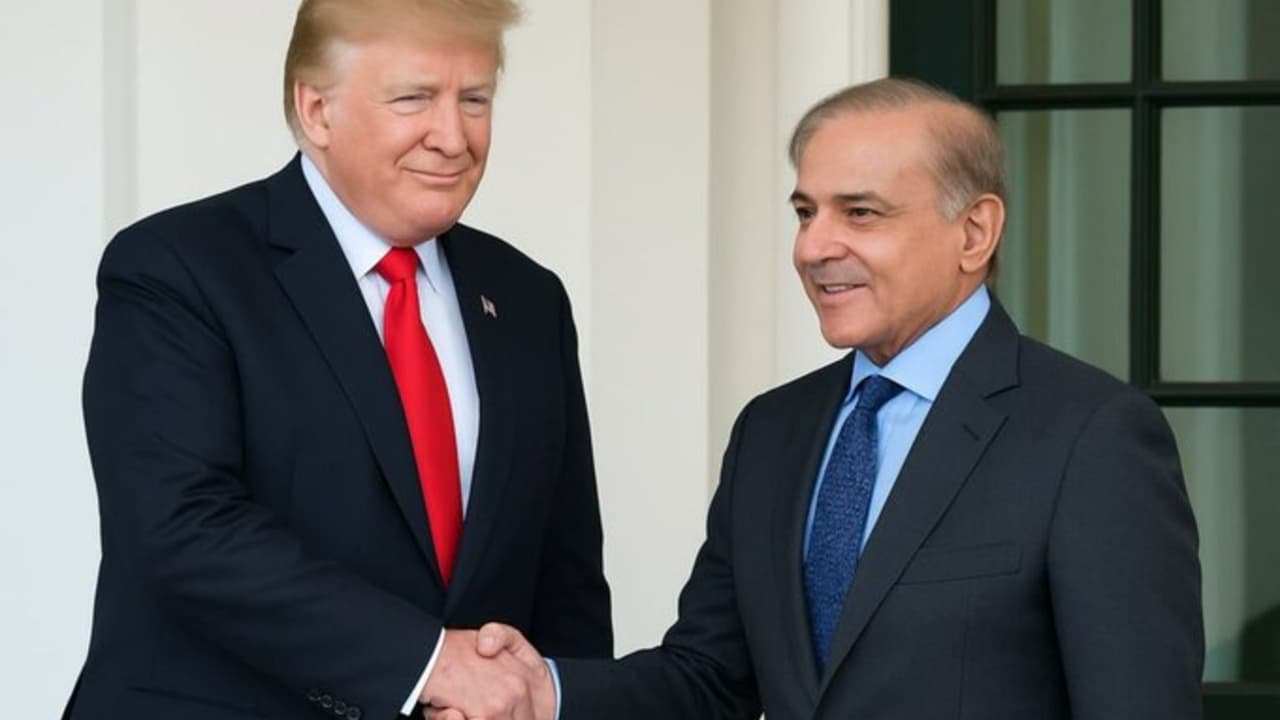
Prime Minister Shehbaz Sharif also played a visible role, publicly urging both sides to agree to a two-week ceasefire and to reopen the Strait of Hormuz as a goodwill gesture. His outreach to US President Donald Trump and Iranian leadership came at a critical juncture, just before Washington’s strike deadline.
Trump later confirmed that he agreed to suspend planned military action after discussions with Pakistani leadership, signalling Washington’s confidence in Islamabad’s mediation efforts.
Why Both Sides Trusted Pakistan
One of the key reasons for Pakistan’s acceptance as a mediator lies in its unique diplomatic positioning. Unlike traditional mediators such as Oman or Switzerland, Pakistan maintains working relationships with both the United States and Iran, despite their adversarial ties.
With the US, Pakistan has recently strengthened cooperation through security coordination and diplomatic engagement, rebuilding trust after years of strained relations. At the same time, Islamabad has maintained communication channels with Tehran, emphasising regional stability and dialogue.
Pakistan’s ties with China also added another layer of credibility. Beijing, which has strong economic links with Iran, is believed to have supported de-escalation efforts, indirectly reinforcing Pakistan’s mediation role.
Additionally, Pakistan’s outreach to multiple regional players — including Saudi Arabia, Turkey and Egypt — helped create a broader diplomatic framework that encouraged both sides to engage. This multi-pronged approach ensured that the mediation effort was not seen as isolated or one-sided.
Also Read: US-Iran Ceasefire: Did China Quietly Push The Truce? Trump Hints Beijing’s Role
A Calculated Diplomatic Gamble
Despite the success of securing a temporary ceasefire, Pakistan’s role is being viewed as a calculated diplomatic gamble. The ceasefire remains limited to two weeks and is part of a broader process rather than a final resolution.
Analysts note that while Islamabad has gained visibility on the global stage, sustaining this role will depend on whether the ceasefire holds and leads to meaningful negotiations. The region remains volatile, with underlying tensions — including security concerns and geopolitical rivalries — still unresolved.
There are also risks involved. Acting as a mediator in such a high-stakes conflict exposes Pakistan to potential backlash if talks fail or if either side perceives bias. However, for now, the country has succeeded in positioning itself as a key diplomatic player at a critical moment.
A Rare Moment Of Convergence
The ceasefire represents a rare moment where the interests of multiple stakeholders aligned. For the United States, it offered a pause in a costly and escalating conflict. For Iran, it provided breathing space amid sustained pressure. And for Pakistan, it was an opportunity to assert its relevance on the global stage.
As negotiations are expected to continue, possibly in Islamabad, the coming days will test whether this fragile truce can evolve into a lasting agreement.
For now, Pakistan’s role underscores a broader shift in global diplomacy — where emerging players, leveraging strategic positioning and backchannel engagement, can influence outcomes in even the most complex conflicts.
Also Read: ‘Draft’ Tag In Pakistan PM Shehbaz Sharif’s Iran Post Triggers ‘Scripted’ Message Debate
