
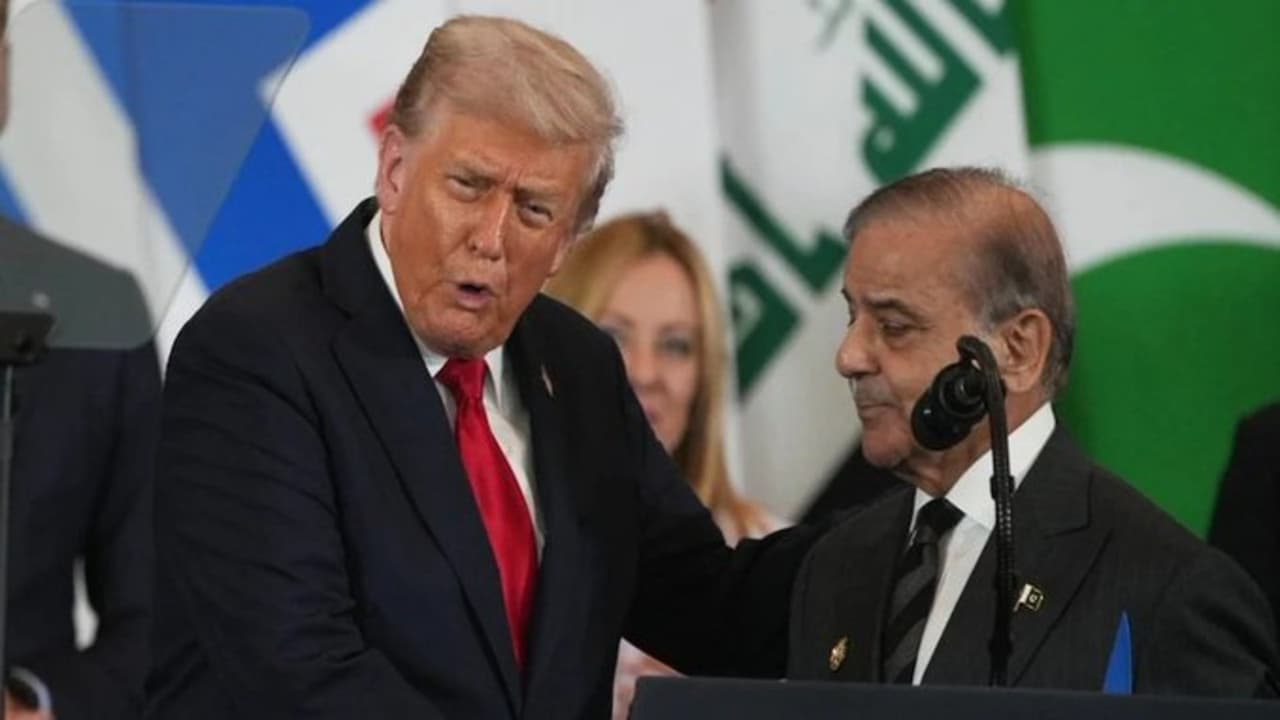
Pakistan's Prime Minister Shehbaz Sharif sparked controversy by posting a message on X about a US-Iran ceasefire that included a visible "Draft" label. This led to online speculation that the message was prepared externally, raising questions about Pakistan's role in the negotiations.
Pakistan Prime Minister Shehbaz Sharif has found himself at the centre of a diplomatic controversy after a social media post on the Iran ceasefire appeared to include a visible “draft” label, triggering widespread speculation and online debate over Pakistan’s role in the negotiations.
The post, shared on X (formerly Twitter), was intended to highlight Islamabad’s mediation efforts between the United States and Iran. However, users quickly noticed an unusual line at the beginning of the message: “Draft - Pakistan’s PM Message on X”. The apparent oversight raised questions about whether the statement had been copied and posted without proper editing — or possibly even prepared externally.
‘Draft’ Tag Triggers Online Speculation
The message itself urged de-escalation and called for a two-week window to allow diplomacy to succeed. It stated that “diplomatic efforts… are progressing steadily, strongly and powerfully” and appealed to US President Donald Trump to extend his deadline for military action.
Sharif also urged Iran to reopen the Strait of Hormuz as a “goodwill gesture” and called on all parties to observe a ceasefire during this period. The post tagged multiple senior US officials, including Trump and other key figures involved in the negotiations.
Also Read: US-Iran Ceasefire: Rep Meeks Welcomes Truce, Stresses Need for Peace
However, it was the presence of the word “Draft” and the phrasing “Pakistan’s PM” that drew the most attention. Critics argued that such wording is unlikely to be used internally by Sharif’s own team, fuelling speculation that the message may have originated outside Pakistan.
One viral reaction pointed out: “Very low chance… staff would refer to their boss as ‘Pakistan’s PM’.”
Another post mocking the incident said Sharif appeared to have copied the message “including ‘Draft - Pakistan’s PM Message on X’”, intensifying the backlash.
Also Read: Pakistan's role in US-Iran ceasefire: Mediator or China's mouthpiece?
Ceasefire Diplomacy And Pakistan’s Role
The controversy comes at a critical moment in Middle East diplomacy. Pakistan has positioned itself as a key mediator in efforts to de-escalate tensions between the US and Iran, proposing a temporary ceasefire framework to allow negotiations to continue.
Under the proposal, both sides agreed to a pause in hostilities, with the Strait of Hormuz reopening during the ceasefire window — a crucial step given its importance to global oil trade.
Sharif later posted a revised message announcing the breakthrough, stating he was “pleased to announce” that all sides had agreed to an immediate ceasefire. He also invited delegations from Washington and Tehran to Islamabad for further talks aimed at achieving long-term peace.
US President Donald Trump confirmed the temporary halt, saying he agreed to “suspend the bombing and attack of Iran for a period of two weeks” following discussions with Pakistani leadership.
Also Read: Israel Backs US-Iran Ceasefire, Vows to Continue Lebanon Offensive
Diplomatic Optics Under Scrutiny
While the ceasefire has been seen as a significant diplomatic development, the social media slip has shifted attention onto the optics of Pakistan’s involvement. Analysts say the episode highlights the increasing role of digital communication in global diplomacy — and the risks that come with it.
The incident has also sparked broader questions about whether Pakistan was independently shaping its messaging or aligning closely with external actors during the negotiations. However, there is no confirmed evidence that the draft originated outside Sharif’s office.
Despite the controversy, Pakistan continues to push for dialogue, with talks expected to build on the fragile ceasefire. The episode, however, has underscored how even minor errors in high-stakes diplomacy can quickly escalate into major talking points — especially in the age of social media scrutiny.
As negotiations move forward, the focus remains on whether the ceasefire will hold — and whether diplomatic efforts can translate into a lasting resolution to one of the region’s most volatile crises.
