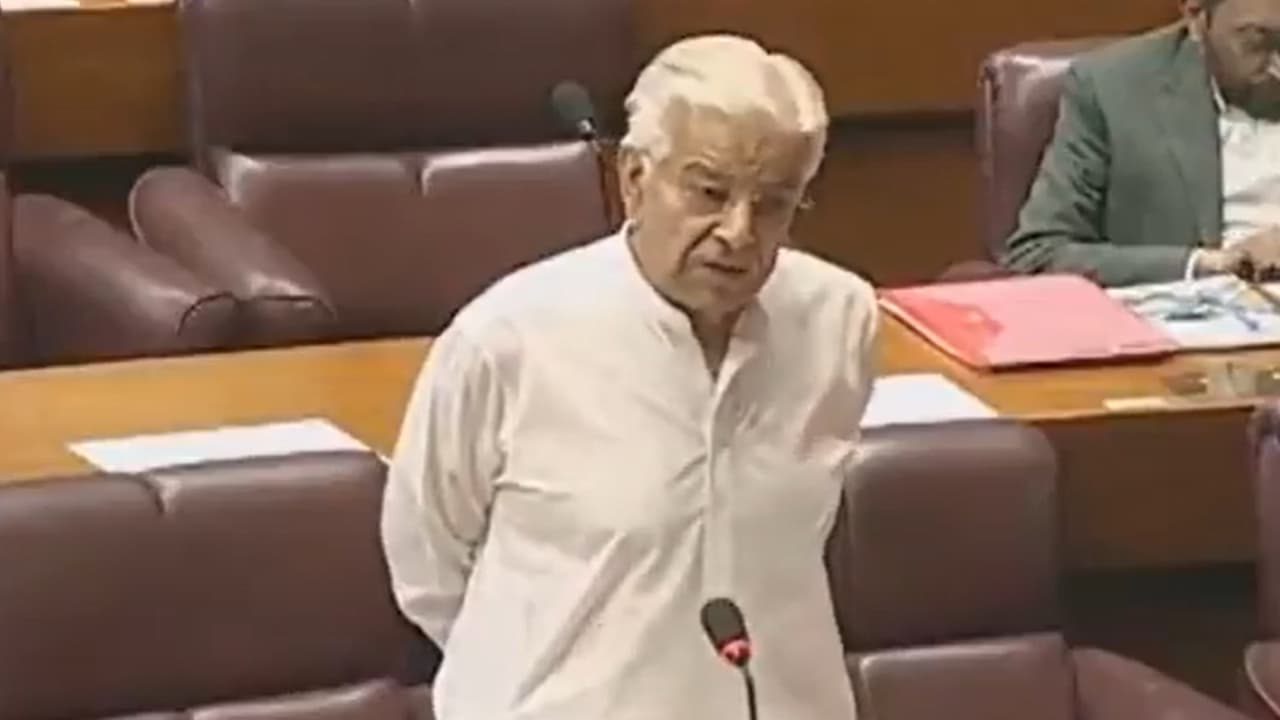
Pakistan's Defence Minister Khawaja Asif harshly criticized the country's historical alliance with the US in Parliament. He accused Washington of exploiting Pakistan for its strategic interests, particularly in Afghanistan, and then abandoning it.
Pakistan Defence Minister Khawaja Asif’s stark assertion that the United States “used and discarded” Pakistan like “toilet paper” has triggered an intense political and public debate, with reactions pouring in from across the country and beyond. His remarks, widely circulated on social media and news platforms, have reopened long-standing questions about Pakistan’s past alliances and the long-term costs of its strategic choices.
Domestically, Asif’s comments have found resonance among sections of the public and political analysts who view them as a rare acknowledgment of historical miscalculations. Supporters argue that Pakistan’s alignment with the US during key conflicts brought prolonged instability, internal violence, and economic strain, while delivering limited long-term benefits. Many see the remarks as validating public sentiment that Pakistan often bore the brunt of geopolitical power plays.
However, critics have accused Asif of oversimplifying complex diplomatic realities. Some commentators warn that such blunt rhetoric could strain Pakistan’s already delicate international relationships and undermine ongoing diplomatic engagement. Opposition voices have also questioned why such admissions are being made now, arguing that accountability should extend beyond rhetoric to policy reform.
Related Articles

International observers have interpreted the statement as a sign of growing skepticism within Pakistan’s leadership toward traditional power alliances. Analysts note that Asif’s language reflects broader frustration in parts of the Global South over transactional relationships with major powers. At the same time, some diplomatic experts caution that public criticism of past partners could complicate future negotiations.
The remarks have also reignited debate about recalibrating Pakistan’s foreign policy to prioritise strategic independence and regional stability. Whether viewed as overdue honesty or unnecessary provocation, Asif’s statement has undeniably struck a chord, forcing a renewed examination of Pakistan’s geopolitical past and the direction it should take moving forward.