
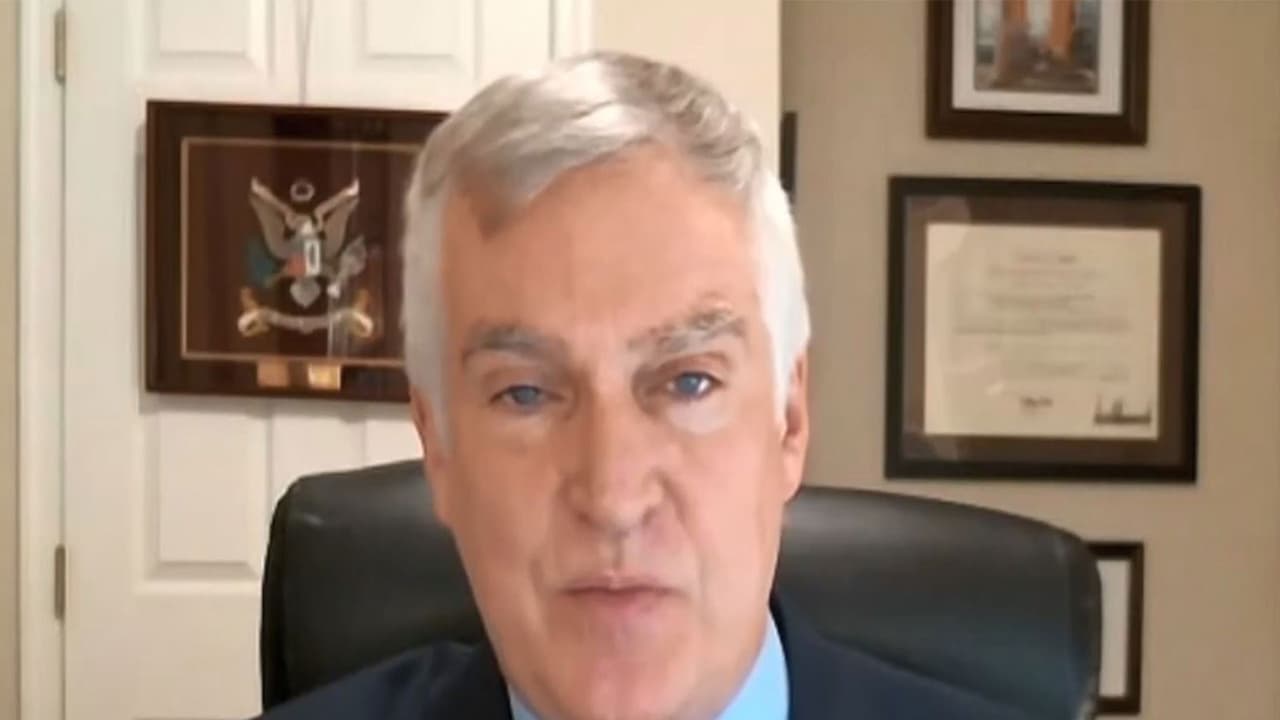
Former NSC Chief of Staff Fred Fleitz says the US will end military operations against Iran in 'two to three weeks.' A close Trump ally, Fleitz stated the administration will pivot to diplomacy if Tehran meets conditions for regional stability.
Former National Security Council Chief of Staff and CIA analyst Fred Fleitz has signalled that the United States is preparing to conclude its current military operations against Iran within weeks. Fleitz, a close ally of US President Donald Trump, indicated that the administration is pivoting toward a diplomatic resolution, provided Tehran meets specific conditions regarding regional stability.
In an interview with ANI, Fleitz detailed his recent discussions at the White House, expressing confidence in the current trajectory of the mission. "I was at the White House last night. I thought the president was in good form. He expressed confidence that the US has accomplished its goals in this operation and that he's going to keep his promise to the American people that this is not going to be an endless war quagmire. We're going to get out in two to three weeks," Fleitz stated. He added that while some objectives remain, the onus is now on Iran's leadership. "Iran's remaining leaders have some decisions to make. If they want peace, if they want to open the Strait of Hormuz, we want to talk. If not, the president's going to significantly escalate," he warned.
Operation's Strategic Goals Achieved
Addressing concerns over whether a swift withdrawal constitutes a victory, particularly given reports of Iran's increased influence over global oil supplies, Fleitz dismissed the notion of Iranian dominance as a "mirage." He argued that the core strategic threats have been neutralised. "The objectives of the operation were to stop Iran from making nuclear weapons. That's been accomplished. Its missile program and its power projection capabilities have been devastated. The internal structure, which is used to oppress and kill the Iranian people, has been severely undermined, which creates a possibility that the Iranian people will be able to overthrow this vicious terrorist regime," he noted.
Tensions with NATO Allies
The conflict has also placed significant strain on traditional alliances, with the White House reportedly frustrated over a lack of collective action. Fleitz acknowledged that President Trump's recent rhetoric reflected deep-seated grievances with NATO members. "The president expressed a great deal of frustration with NATO and with other states that depend on energy from the Strait of Hormuz, but didn't help us with the threat from Iran. The threat from Iran affects nations worldwide. Iran has sent assassination squads into Europe to kill dissidents. European states should be standing with us in this operation," Fleitz remarked, adding that while NATO will likely survive, these differences may "haunt the organisation for some years to come."
Potential for New Middle East Alliances
Despite these diplomatic tensions, Fleitz suggested the operation, known as 'Operation Epic Fury', could inadvertently foster new alliances in the Middle East. He claimed that many Gulf states, while initially wary of the war, have been alienated by Iran's actions. "It became clear that Iran had pre-positioned missiles to attack just about every state in the Middle East. I believe Iran has alienated itself more than ever by the way it has acted in this conflict. This could drive states to join the Abraham Accords. This could create a much more stable Middle East with a revolution in Iran, the destruction of this terrorist regime, and a new alliance for peace and prosperity," he said.
Iran Responsible for Conflict, Fleitz Asserts
Responding to criticism regarding the targeting of civilian infrastructure, Fleitz maintained that the responsibility for the humanitarian and economic fallout rests solely with the Iranian government. "I think Iran is facing significant military strikes from the United States if the regime does not stop firing missiles in the Strait of Hormuz. This was a war of choice by Iran. It's been the Iranian regime that's been at war with the United States for 47 years, that has killed thousands of American soldiers, and that sent assassination squads around the world, including into Europe," he asserted.
Challenges in Path to Negotiation
However, the path to a negotiated settlement remains complicated by the fractured nature of the Iranian state. Fleitz expressed concern that even if moderate voices emerge in Tehran, they may lack the authority to control hardline factions. "I believe what the administration is trying to do is to find Iranian leaders who want to end the war and want to chart a different course for the country. And I believe there are leaders like that in Iran who want peace and want to save their country. But we have a problem here. The government is not intact. It's fragmented. And I do worry that whoever we're negotiating with may have trouble getting other aspects of the government, other elements like the Revolutionary Guard, to go along with whatever is negotiated with the US," Fleitz added.
(Except for the headline, this story has not been edited by Asianet Newsable English staff and is published from a syndicated feed.)