The US has approved a potential $225 million sale of AIM-120C-8 AMRAAM missiles to Turkey, raising concerns in India due to Turkey's close defence ties with Pakistan.
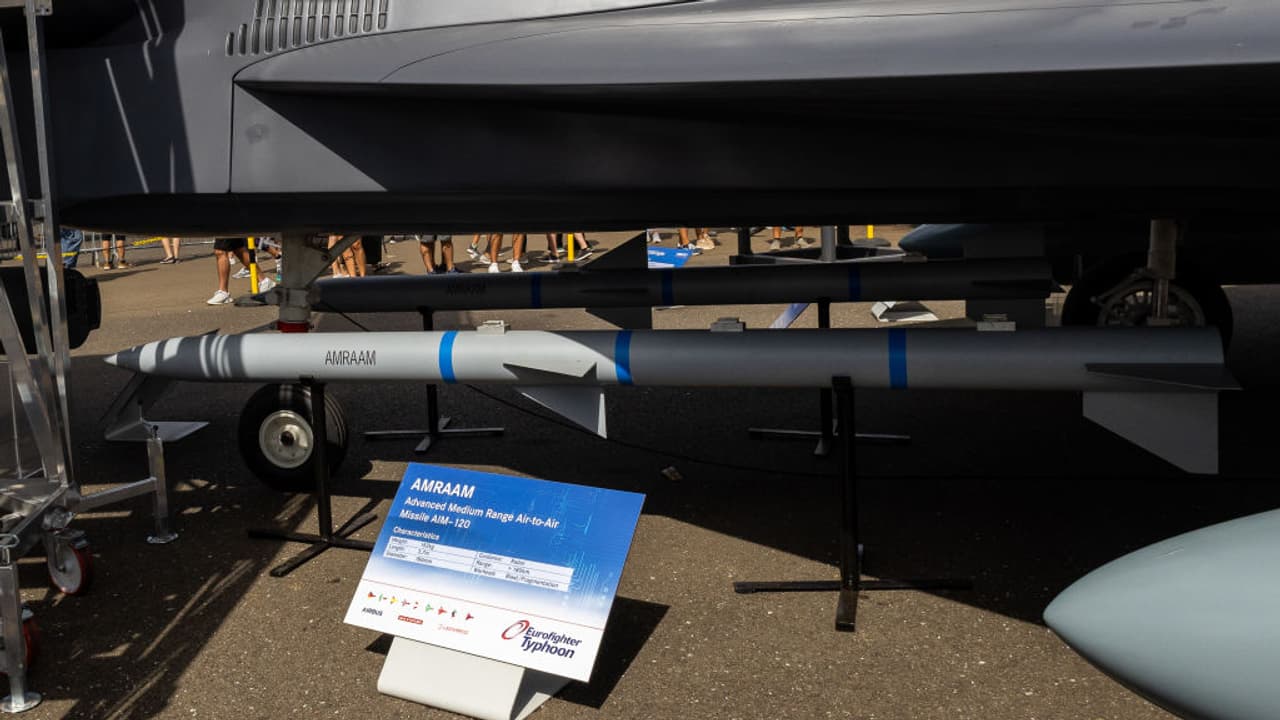
In a move that could further strain regional equations, the United States has approved a potential $225 million sale of advanced air-to-air missiles to Turkey, a NATO ally with increasingly close defence ties to Pakistan. As per a statement released by the Defene Security Cooperation Agency, the US has approved the possible sale for AIM-120C-8 Advanced Medium-Range Air-to-Air Missiles (AMRAAM) and associated logistics to Turkey.
As per the statement, Turkey requested to buy 53 AIM-120C-8 AMRAAMs and 6 guidance sections, as well as containers, support equipment, classified software, publications, transportation support, and other logistics services. RTX Corporation, based in Tucson, Arizona, will be the principal contractor for the sale.
“This proposed sale will support the foreign policy goals and national security of the United States by improving the security of a NATO Ally that continues to be a force for political and economic stability in Europe," the statement read.
Related Articles

“This proposed sale will provide Turkey with a critical air defense capability to assist in defending its homeland and US personnel stationed there," the statement added.
Concerns Over Turkey’s Military Ties with Pakistan
The decision has reignited concerns in India, with defence observers raising alarm that the weapons could eventually bolster Pakistan’s military capabilities—especially in light of Turkey’s overt support for Islamabad during recent cross-border tensions.
According to highly-placed sources, India’s defence and security agencies are closely scrutinising Turkey’s possible role in the large-scale drone offensive launched by Pakistan following India’s successful precision strikes under Operation Sindoor, which was conducted in response to the April 22 Pahalgam terror attack. Over 350 Turkish drones were said to be used by Islamabad, with sources not ruling out the possibility of Turkish military personnel's direct involvement during the May 7 to May 10 drone attacks.
On Wednesday, former Indian Ambassador to Turkey, Sanjay Panda, criticised Ankara’s strategic choices, particularly its military support to Islamabad during recent India-Pakistan tensions.
“The fact remains how Turkey looks at India...It's a major strategic miscalculation for Turkey, knowing very well how and where these products are going to be used. Turkey has to see what is in its national interest. Is it doing business with India or with Pakistan? I would rather call it a strategic miscalculation,” he told ANI.
Panda highlighted that Turkey has been Pakistan’s consistent backer on several issues, especially Kashmir. He attributed Turkey’s alignment with Pakistan to President Recep Tayyip Erdogan’s broader ideological ambitions.
“At this point in time, Turkey is with Pakistan, but it is part of the larger agenda of President Erdogan,” he said.
The former envoy explained that Erdogan's vision is centred around reviving the Ottoman Empire's glory and becoming the leader of the Islamic world.
He noted, "He's the only one who calls the shots in Turkey, and at this point, his vision is of reviving the days of the Caliphate glory and becoming the leader of the Islamic world. Not many people in Turkey are with Erdogan on this, but that's his dream. Anything which has to do with Islam, Turkey is there. On the Kashmir issues, it has sided with Pakistan," he added.
The former envoy also highlighted the Turkey and Pakistan relationship, describing it as an "all-weather friendship," where Turkey consistently supports Pakistan on key issues, including Kashmir.
Pakistan: Buyer, Not Beneficiary
While concerns persist about possible diversion of US weapons, Panda was careful to state that Turkey's military support to Pakistan is based on commercial transactions, not aid. “Let us get it very clear, it's not that it (Turkey) is gifting drones to Pakistan. Pakistan is a major buyer of Turkish drones," he claimed.
He also cited the sale of four MILGEM-class corvettes and other Turkish equipment to Pakistan, while downplaying the strategic impact of this partnership in comparison to Islamabad’s defense ties with China.
“Pakistan's support from Turkey or whatever it has got from Turkey is quite minuscule as compared to what it gets from China. Last year, it was about 5-6 million dollars worth of military equipment it procured from Turkey," he added.
United States: Strategic Balancing or Double Game?
The timing of the US approving a possible missile deal with Turkey, a known military supplier to Pakistan, while simultaneously projecting itself as a mediator between India and Pakistan, raises uncomfortable questions.
US President Donald Trump has claimed that his administration played a key role in brokering a ‘ceasefire’ between India and Pakistan.
"We stopped a nuclear conflict. I think it could have been a bad nuclear war. Millions of people could have been killed. I also want to thank VP JD Vance and Secretary of State Marco Rubio for their work. On Saturday, my administration helped broker an immediate cessation of hostilities, I think a permanent one between India and Pakistan the countries having a lot of nuclear weapons," Trump had said on Monday.
"I'm very proud to let you know that the leadership of India and Pakistan was unwavering and powerful... And we helped a lot, and we also helped with trade. I said, 'Come on, we're going to do a lot of trade with you guys. Let's stop it, let's stop it. If you stop it, we're doing trade. If you don't stop it, we're not going to do any trade," he added.
However, earlier this week India made it abundantly clear that Trump played no role in mediating a ‘ceasefire’ deal between the two neighbouring countries, stressing that New Delhi has always maintained that any issue pertaining to Jammu and Kashmir is addressed by the two countries bilaterally.
When asked about Trump’s claim that his administration brokered a deal between the two countries, MEA spokesperson Randhir Jaiswal said, “That stated policy has not changed. As you are aware, the outstanding matter is the vacation of illegally occupied Indian territory by Pakistan.”
There were also claims that Trump threatened to stop trade with the countries to get them to agree to a trade deal. “From the time Op Sindoor started on May 7 till the understanding on cessation of military action on May 10, there were conversations between Indian and US leaders on the evolving military situation. The issue of trade did not come up in any of these discussions,” MEA said.
Former Pentagon official and senior fellow at the American Enterprise Institute, Michael Rubin also offered a cautionary take.
“Donald Trump likes to claim credit for everything. If you ask Donald Trump, he single-handedly won the World Cup. He invented the Internet. He cured cancer. Indians should be more like Americans in this regard and not take Donald Trump literally," he told ANI.
With Trump’s assertions of "stopping a nuclear war" and Washington’s backing of Ankara through high-value arms deals, analysts may question whether the US is maintaining a delicate strategic balance — or playing a double game in South Asia.
Whether US' potential sale of AMRAAM, meant for Turkey’s defence, will eventually serve Pakistani interests remains speculative. But as tensions simmer and alliances shift, India will be watching closely.