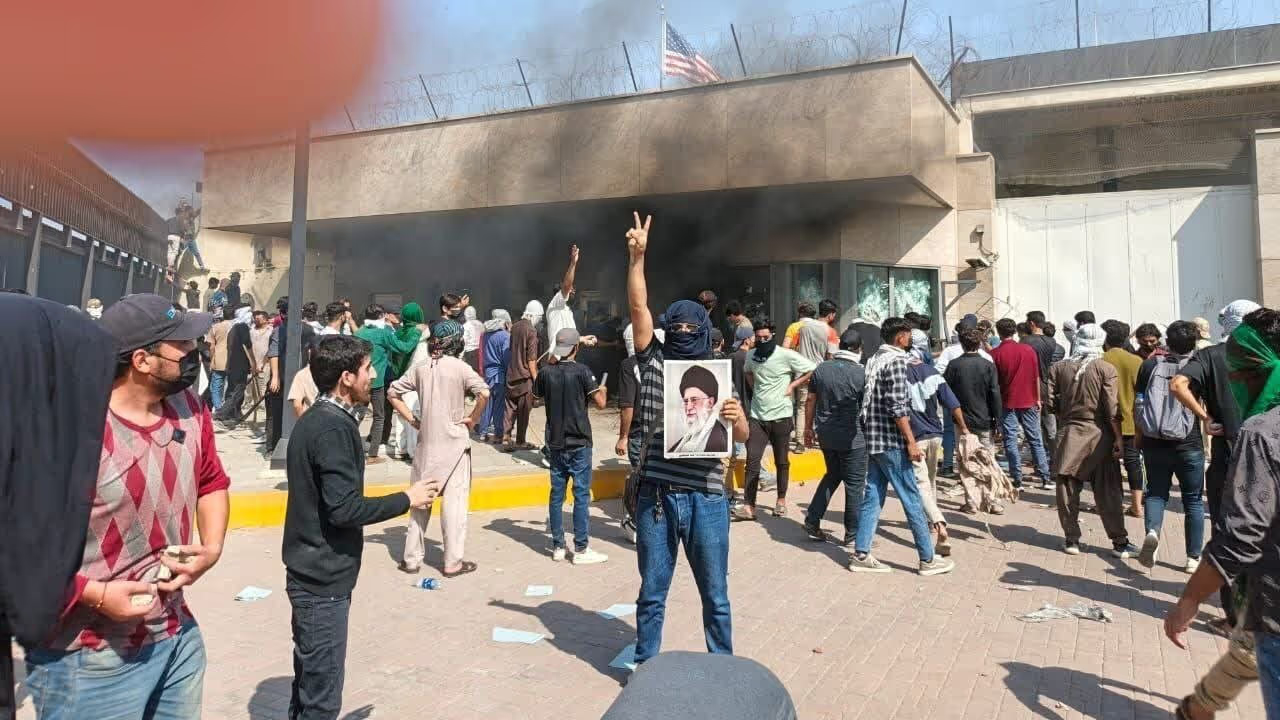
Pro-Iranian regime protesters storm the US Consulate in Karachi amid unrest after Khamenei’s death. Pakistani troops fire on crowds; embassy staff injured in chaotic scenes.
Tensions erupted in Karachi on Sunday as pro-Iranian regime protesters stormed the entrance of the US Consulate, setting fire to the guardhouse and breaking through security barricades. Eyewitnesses report that local security forces, including Pakistani troops, have opened fire to contain the unrest.
According to initial reports, eight protesters have been killed so far, while three US embassy staff sustained injuries during the chaos.
Also read: How Iran's Supreme Leader Khamenei, Who Ruled for 37 Years, Met His End - Key Dates
Related Articles

"We have moved at least eight dead bodies to Karachi's civil hospitals, while 20 others were injured in the consulate incident," said Muhammad Amin, a spokesman for the Edhi Foundation rescue service, adding most had bullet wounds.
Reports indicate that Pakistan’s army chief, Field Marshal Asim Munir, has ordered security forces to maintain strict control of the area amid growing tensions.
Protesters Rally in Response to Iranian Strikes
The protests in Karachi come in the immediate aftermath of a massive US and Israeli strike on Iran, which reportedly killed Supreme Leader Ayatollah Ali Khamenei, 86, along with other senior officials including Ali Shamkhani, a top advisor to Khamenei, and General Mohammad Pakpour of Iran’s Revolutionary Guards.
The strikes prompted retaliatory missile attacks across the Middle East, with explosions reported in Abu Dhabi, Dubai, Manama, and Tel Aviv. Iranian state media confirmed the death of Khamenei, describing it as a pivotal moment in Iran’s history.
“The brave soldiers and the great nation of Iran will teach an unforgettable lesson to the international oppressors,” said Ali Larijani, head of Iran’s Supreme National Security Council.
While celebrations erupted in parts of Tehran after the news of Khamenei’s death, other gatherings turned somber, with mourners in Enghlab Square chanting:
“Death to America.”
Regional Fallout and Escalation
The strikes have already caused casualties beyond Iran. In the UAE, two people were killed in Abu Dhabi and four injured in Dubai’s Palm area. In Israel, one woman died in a missile strike near Tel Aviv, with around 20 others wounded. Tehran responded by closing the Strait of Hormuz, though the enforcement of this measure remains unclear.
Airspaces across Iran, Iraq, Kuwait, Syria, the UAE, and Israel have been closed to civilian flights, with multiple airlines canceling services to the region.
Unprecedented US-Israel Operation
The scale of the US-Israel operation in Iran is described as unprecedented, with 27 US bases in the region and Israeli military facilities among the reported targets. Israeli army chief Lieutenant General Eyal Zamir commented that the operation is “taking place at a completely different scale” than previous engagements, including the 12-day June conflict last year.
US President Donald Trump emphasized that the campaign will continue until regime change is achieved in Tehran:
“This is the single greatest chance for the Iranian people to take back their Country,” he said, warning of further force should Iran retaliate.
Israeli Prime Minister Benjamin Netanyahu added: “This is your time to join forces, to overthrow the regime and to secure your future.”