
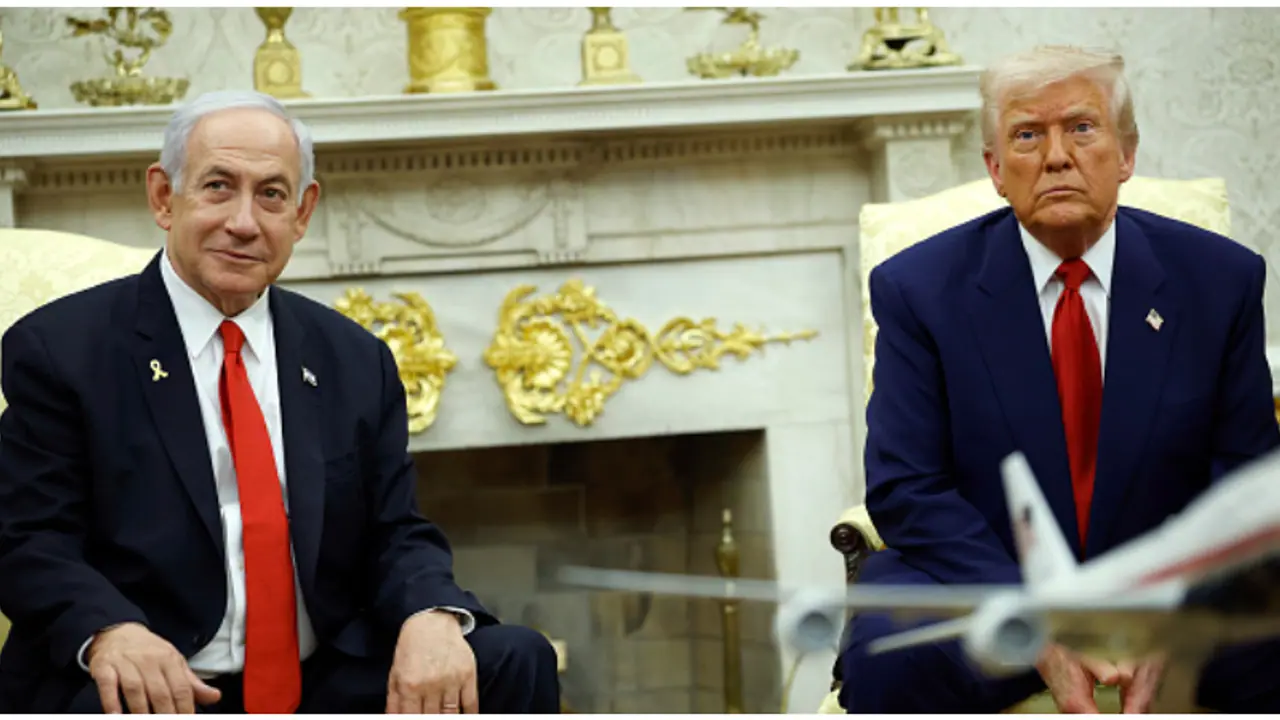
The US and Israel are allies against Iran but differ in strategy. The US prefers a limited conflict to weaken Iran’s military and avoid a prolonged war, while Israel may be pursuing broader goals, including possible regime change, to eliminate what it sees as an existential threat.
A United Front — At First Glance
The United States and Israel appear to be closely aligned in their ongoing military campaign against Iran, especially after the conflict escalated into open confrontation in early 2026. Both countries have targeted Iranian military infrastructure, leadership networks, and strategic assets. On the surface, this coordination suggests a shared objective: weakening Iran’s military capabilities and curbing its regional influence.
However, beneath this apparent unity, differences are emerging over how far the war should go and what the ultimate goal should be. Reports indicate that while both allies are engaged in the same conflict, they may not be fighting it with identical priorities or endgames in mind.
Diverging War Objectives
According to reporting by Axios, there is growing uncertainty within the US administration about Israel’s long-term intentions in the war. Some of President Donald Trump’s aides are unsure whether Israel is aiming merely to degrade Iran’s military strength or pursuing a broader goal, potentially including regime change in Tehran.
This distinction is critical. The US has historically been cautious about deep military entanglement in the Middle East, particularly after prolonged conflicts in Iraq and Afghanistan. While Washington supports strong action against Iran, it appears reluctant to be drawn into an open-ended war with unclear limits.
Israel, on the other hand, may view the current conflict as an opportunity to permanently neutralise what it sees as an existential threat. This difference in strategic outlook is at the heart of the emerging gap between the two allies.
Also Read: Israel drove US-Iran confrontation, says ex-intel chief Joe Kent
Trump’s Balancing Act
President Trump’s approach reflects this tension. While his administration has backed Israel militarily and politically, he has also signalled caution about escalating the conflict further. Reports suggest that the White House is trying to maintain flexibility—supporting Israel’s operations while avoiding commitments that could lead to a full-scale regional war.
As highlighted by Axios, internal discussions within the US government show concern over being pulled into a broader conflict driven by Israeli objectives that may not fully align with American interests. This has led to a careful, sometimes ambiguous stance from Washington, where all options are kept open but no definitive long-term strategy has been publicly outlined.
Military Strategy: Limited vs Expansive War
The divergence is also visible in military strategy. The US has largely focused on targeted strikes, intelligence operations, and protecting key shipping routes and allies in the region. Its approach suggests an attempt to contain the conflict while maintaining deterrence.
Israel’s operations, in contrast, have been more aggressive and far-reaching. Strikes on high-value targets, including senior Iranian officials and critical infrastructure, indicate a willingness to escalate pressure on Tehran significantly.
According to analysis cited by The Conversation, such differences are not unusual in alliances, especially when partners face varying threat perceptions and domestic pressures. Israel’s proximity to Iran and its security concerns naturally drive a more assertive posture, while the US must weigh global commitments and domestic political considerations.
Risk of Strategic Misalignment
This divergence raises an important question: can the US and Israel sustain a unified approach if their goals continue to differ? Experts warn that even small misalignments can grow into significant strategic tensions over time.
If Israel pushes for deeper escalation—such as broader strikes or attempts to destabilise Iran’s leadership—while the US seeks to limit the conflict, coordination could become increasingly difficult. This could affect military planning, diplomatic messaging, and crisis management during critical moments.
As noted in analysis referenced by The Conversation, alliances often face stress during prolonged conflicts, particularly when immediate military objectives give way to long-term political outcomes. The current situation reflects such a transition phase.
Also Read: ‘No More Israeli Attacks Unless…’: Trump Warns Iran After Qatar LNG Strike
Global and Regional Implications
The evolving dynamic between the US and Israel has implications beyond their bilateral relationship. A lack of clarity or coordination could embolden Iran, complicate diplomatic efforts, and increase uncertainty among regional allies.
At the same time, adversaries may seek to exploit any visible cracks in the alliance. Mixed signals about war aims could also affect global markets and geopolitical stability, especially as the conflict increasingly targets critical infrastructure like energy facilities and shipping routes.
For now, both Washington and Tel Aviv continue to cooperate closely. But the underlying differences in strategy suggest that the question is no longer just about how the war is being fought—but about how it is meant to end.
Conclusion: Same War, Different Endgames?
While the US and Israel remain partners in their confrontation with Iran, they are not necessarily fighting the same war in strategic terms. The United States appears focused on containment and controlled escalation, while Israel may be pursuing more ambitious objectives.
As highlighted by Axios and The Conversation, this gap does not yet amount to a split—but it does signal a growing complexity in one of the world’s most important military alliances.
How these differences evolve could shape not only the outcome of the conflict but also the future of US-Israel relations and the broader stability of the Middle East.
