
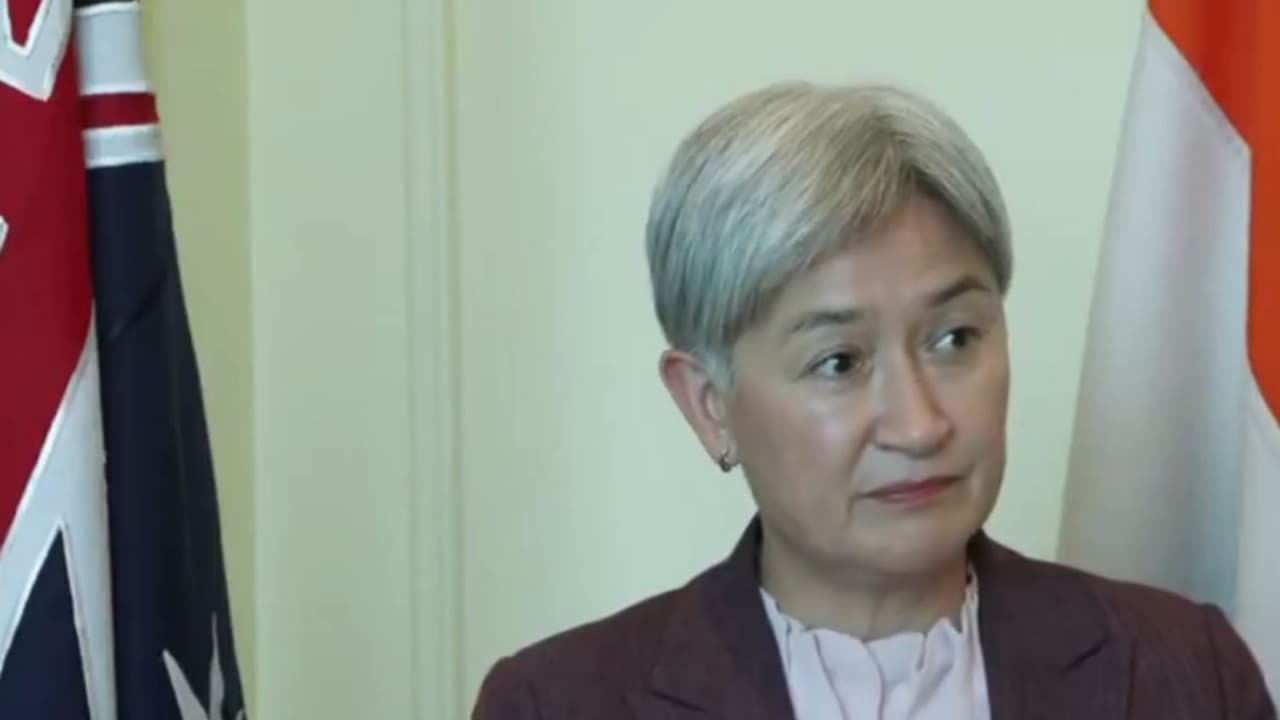
Australia's Penny Wong countered China's 'bloc confrontation' claims, asserting the Quad is a constructive force for regional security. The alliance expressed concerns over China's actions in the South China Sea and announced a new port project in Fiji.
Pushing back against China's sharp rhetoric, Australia on Tuesday re-anchored the core narrative of the Quadrilateral alliance, emphasising that the strategic partnership remains a positive, constructive architecture dedicated entirely to regional security.
Australia Defends Quad's 'Positive' Agenda, Brushes Off China's Allegations
Addressing reporters in New Delhi after the deliberations of the foreign ministers of the four members of the Quadrilateral grouping of countries, Wong firmly brushed aside China's allegations of "bloc confrontation". Focusing the spotlight on the Quad alliance's foundational objectives, Wong said. "I want to talk about what we are for. We are for peace, stability and prosperity in the Indo-Pacific, and that's what we're acting to deliver."
The Chinese Ministry of Foreign Affairs spokesperson Mao Ning today in Beijing, while addressing a regular press briefing said, "Cooperation between countries should be conducive to regional peace, stability and prosperity, and not target any third party. We oppose forming exclusive groupings or engaging in bloc confrontation."
Quad Ministers Flag 'Dangerous and Coercive Actions' in South China Sea
Quad Foreign Ministers' Meeting in their Joint Statement stated, "We remain seriously concerned about the situation in the East China Sea and the South China Sea. We reiterate our strong opposition to any destabilizing or unilateral actions including by force or coercion that threaten peace and stability in the region."
"We express our serious concerns regarding dangerous and coercive actions, including interference with offshore resource development, the repeated obstruction of freedom of navigation and overflight, and the dangerous manoeuvres by military aircraft and coast guard and maritime militia vessels, especially the unsafe use of water cannons and flares, and ramming or blocking actions in the South China Sea. We are seriously concerned by the militarization of disputed features," the Quad Foreign Ministers' Meeting Joint Statement read.
The four partner democracies - India, Australia, Japan, and the United States of America - anchored their ministerial summit in New Delhi around a highly collaborative blueprint. Central to their extensive deliberations across a spectrum of strategic portfolios was the long-term consolidation of a free and open Indo-Pacific.
During the summit, the alliance logged deep apprehensions regarding escalating geopolitical frictions, focusing extensively on dangerous and coercive actions across critical maritime corridors. The joint front specifically flagged regional challenges, including interference with offshore resource development, alongside hazardous tactical manoeuvres such as ramming or blocking actions in the South China Sea.
Quad Announces Joint Port Project in Fiji
The four Quad nations unveiled an ambitious push to strengthen energy security, resilient supply chains, and maritime cooperation across the Indo-Pacific amid ongoing disruptions in global energy markets. China has consistently opposed the Quad, viewing it as an exclusionary bloc aimed at containing its economic and military influence in the Indo-Pacific region.
The Quad ministers today also announced a landmark joint port project in Fiji to counter "deteriorating" strategic circumstances in the Indo-Pacific. Detailing the move, US Secretary of State Marco Rubio said in his statement that the Quad has decided to roll out a new initiative to boost port infrastructure in the Pacific Islands. "We're announcing plans to work with Fiji to advance that country's port infrastructure. It'll be the first time that the Quad partners work together on a port infrastructure project," Rubio said.
The US Secretary of State added that the initiative would be "a practical demonstration of our collective ability to deliver high-quality, resilient infrastructure". The development is significant given that Fiji had previously explored port and shipbuilding modernisation deals with China under its Belt and Road Initiative.
Strengthening Indo-Pacific Resilience and Security
The Quad grouping reaffirmed its shared vision for a "free and open Indo-Pacific" anchored in secure trade routes, stable energy systems, and stronger regional resilience. "Developments in key maritime regions have underscored the vulnerability of critical sea lanes and the risks posed to the uninterrupted flow of commerce. These challenges carry significant implications for the Indo-Pacific, which remains central to global trade and connectivity. Disruptions to maritime transport and supply chains have far-reaching consequences for global fuel, food and fertilizer security as well as the safety of seafarers," the joint statement read.
The joint statement said that the leaders highlighted the importance of regional initiatives to strengthen energy resilience. This infrastructure push includes financial assistance to Pacific island countries, including AUD30 million in budget support directly allocated to Fiji.
The high-profile Quad meeting was chaired by External Affairs Minister S Jaishankar and attended by US Secretary of State Marco Rubio, Australian Foreign Minister Penny Wong, and Japanese Foreign Minister Toshimitsu Motegi. During their discussions, the four leaders acknowledged that disruptions in global oil, gas, and petrochemical markets have disproportionately affected Indo-Pacific nations, particularly vulnerable developing countries and small island states in the Pacific.
Reaffirming Commitment to International Law
"We convene at a time of not only great challenges, but also unprecedented opportunities. In the midst of conflicts, geopolitical tensions, and strains on global supply chains, we reaffirm that peace, stability, and prosperity of the Indo-Pacific hinges on upholding international law, and the peaceful resolution of disputes. We reaffirm our commitment to defending the rule of law, sovereignty, and territorial integrity. We recognize the immense potential of innovation, emerging technologies, and trusted partnerships to drive economic prosperity across the Indo-Pacific and beyond. We strongly oppose any destabilizing or unilateral actions that seek to change the status quo, including by force or coercion, which escalate tensions and undermine regional peace and stability," the joint statement read.
The Quadrilateral Security Dialogue, or the Quad, remains a key strategic grouping of Australia, India, Japan, and the United States that is maintained through regular high-level talks among its members. The dialogue is widely perceived as a vital democratic diplomatic arrangement responding effectively to China's growing economic and political power. The grouping was first initiated in 2007 by the then Japanese Prime Minister Shinzo Abe, with the strategic support of Australian Prime Minister John Howard, India's then Prime Minister Manmohan Singh, and US Vice President Dick Cheney.
(Except for the headline, this story has not been edited by Asianet Newsable English staff and is published from a syndicated feed.)