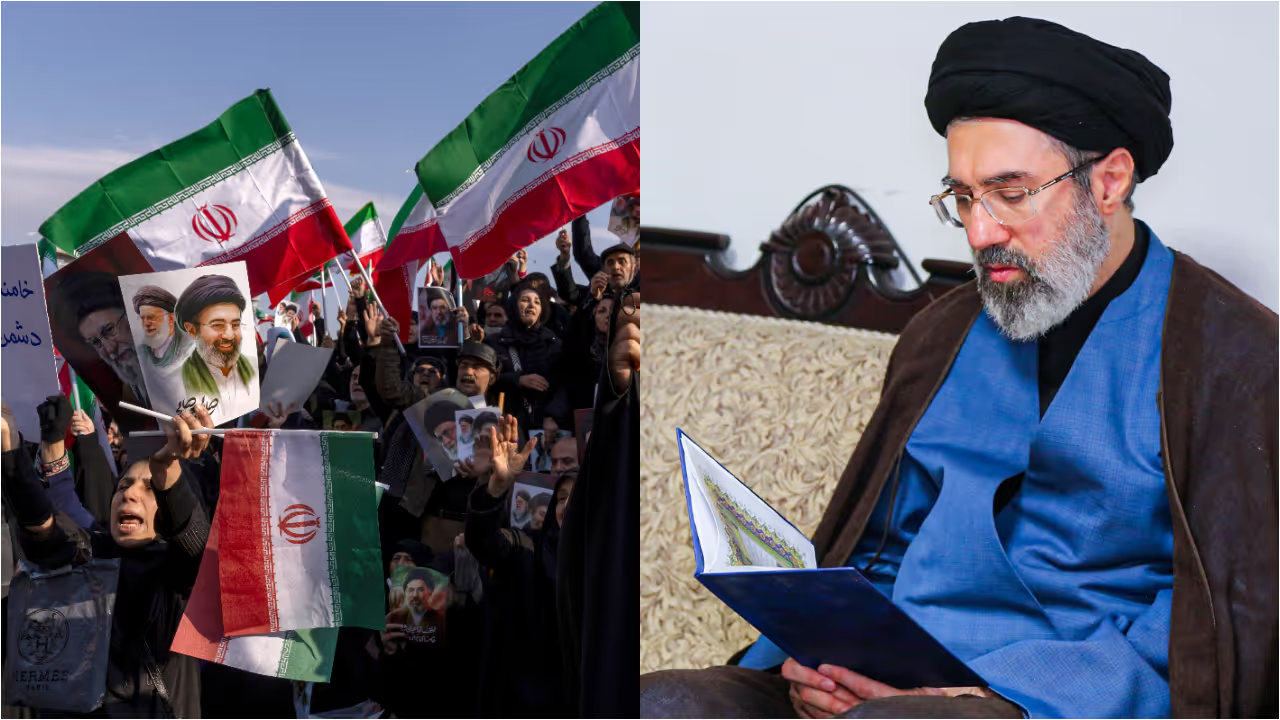
Iran’s new Supreme Leader Mojtaba Khamenei issued his first public message after taking over the country’s top leadership role. The statement, read on Iranian state television, said Iran should continue using the “lever of blocking the Strait of Hormuz”.
Iran’s new Supreme Leader, Mojtaba Khamenei, has issued his first public message since taking over the country’s top leadership role. The statement was read out by a presenter on Iranian state television. It marks the first time people have heard directly from him since he was selected to succeed his father, Ayatollah Ali Khamenei.
Officials and media outlets around the world are closely watching the message because it gives the first clear sign of how Iran’s new leadership plans to approach regional tensions and international relations.
Statement broadcast on Iranian state television
The message from Mojtaba Khamenei was not delivered by him directly on camera. Instead, it was read aloud by a presenter on Iranian state TV, according to BBC. The message mainly focused on Iran's position in the ongoing conflict in the Middle East and its stance toward foreign military presence in the region.
Related Articles

Call to continue pressure through Strait of Hormuz
In the statement, Iran's new Supreme Leader said that Iran should continue using what he described as the 'lever of blocking the Strait of Hormuz'.
The Strait of Hormuz is one of the most important shipping routes in the world. A large share of the world’s oil and energy supplies passes through this narrow waterway. By referring to the strait as a “lever”, the new leader suggested that Iran sees control over this route as a powerful tool in the ongoing conflict and diplomatic tensions.
The comments are likely to increase concerns in global energy markets because any disruption in this area can affect oil supplies worldwide.
Message to neighbouring countries
Mojtaba Khamenei, who was made new supreme leader of Iran on March 8, also spoke about country's relationship with countries in the region. He said Iran has a policy of 'friendship' with its neighbouring nations.
However, he advised these countries to close American military bases on their territory.
According to the translated statement, he warned that Iran would continue to target US bases in the region if tensions remain.
Warning over Minab strike and vow to avenge victims
Mojtaba Khamenei said the country would not hesitate to 'avenge the blood of Iranians' killed during the ongoing Israel-Iran conflict. He specifically referred to the deadly strike in the southern Iranian city of Minab, where Iranian authorities say a missile hit a school near a military facility. Tehran claims the attack killed 168 people, including around 110 children.
Iran says the building was struck by a US missile during military operations in the region. While Washington has said it does not intentionally target civilians and has launched an investigation into the incident, the strike has become one of the deadliest civilian events of the conflict so far.
Khamenei said the deaths of the victims, especially children, would not be forgotten and warned that Iran would respond to what it described as an attack on innocent people.
Significance of the statement
This first message from Iran’s new leader is being closely analysed by international observers. Experts say the remarks could signal how Iran plans to handle the current conflict in the Middle East and its relationship with the United States.
The focus on the Strait of Hormuz and US military bases suggests that Iran may continue using strategic pressure in the region as part of its approach.
Because the strait carries a large share of the world’s oil shipments, any move affecting the route could have major global economic effects.
Global attention on Iran’s new leadership
The appointment of Mojtaba Khamenei as Iran’s Supreme Leader has drawn global attention. He succeeded his father, Ayatollah Ali Khamenei, who held the powerful position for decades.
As the country’s top political and religious authority, the Supreme Leader has major influence over Iran’s military, foreign policy and overall direction.