Iran has urged the United Nations Security Council to intervene and help stop its war with Israel and US. During a media briefing, foreign ministry spokesman Esmaeil Baqaei said the Security Council has a clear duty to act if it chooses to do so.
Iran on Tuesday called on the United Nations Security Council to take action to stop its ongoing war with Israel and the United States. Speaking during a foreign ministry briefing, Iranian foreign ministry spokesman Esmaeil Baqaei said the Security Council has a duty to act. He stated that there is no obstacle preventing action, except the council’s own will to move forward.
Earlier, the United Nations urged all sides involved in the fast-growing Middle East conflict to stop and 'come to their senses'. Fear and panic are spreading across the region and even beyond it.
The UN High Commissioner for Human Rights, Volker Turk, said he was deeply shocked by the impact of the fighting on ordinary people. His spokeswoman, Ravina Shamdasani, told reporters in Geneva that the fear and anxiety felt by millions was clear and visible and could have been avoided. She warned that the situation is getting worse by the hour.
Related Articles

According to the UN, the violence began on Saturday with attacks by Israel and the United States on Iran. Iran then launched strikes across the region, and Hezbollah later joined the conflict. Turk has called on all sides to show maximum restraint, avoid further escalation and protect civilians and vital infrastructure. He said returning to talks is the only way to stop the killing and destruction.
Deadly Strike On Girls' School In Iran
Iran has claimed that 168 people were killed in a strike on a girls’ school in the southern town of Minab.
Volker Turk has demanded a prompt, independent and thorough investigation into the attack. The UN says the side that carried out the strike must investigate it properly, publish the findings and ensure accountability and justice for victims.
The UN human rights office also raised concerns about the safety of Iranian citizens. It pointed to Iran’s past record of using force against protesters. The office called for the immediate restoration of telecom services, as many Iranians are struggling to access the internet during the conflict. It also urged protection and release of hundreds of political prisoners who are said to be held arbitrarily.
Drones Hit US Embassy In Riyadh
The conflict spread further when drones struck the US embassy in Riyadh, Saudi Arabia. AFP reporters saw smoke damage on the embassy building. Saudi police sealed off the diplomatic area and blocked roads. Saudi Arabia described the attack as “heinous and unjustified”.
Explosions and sirens were also heard in Bahrain and Qatar. Iran’s armed forces said they had launched strikes on targets in Israel and at the major US air base at Al-Udeid in Qatar. Qatar said it had stopped attacks targeting its airport.
An Iranian Revolutionary Guards spokesman, Ali Mohammad Naini, warned that “the gates of hell will open” for the United States and Israel.
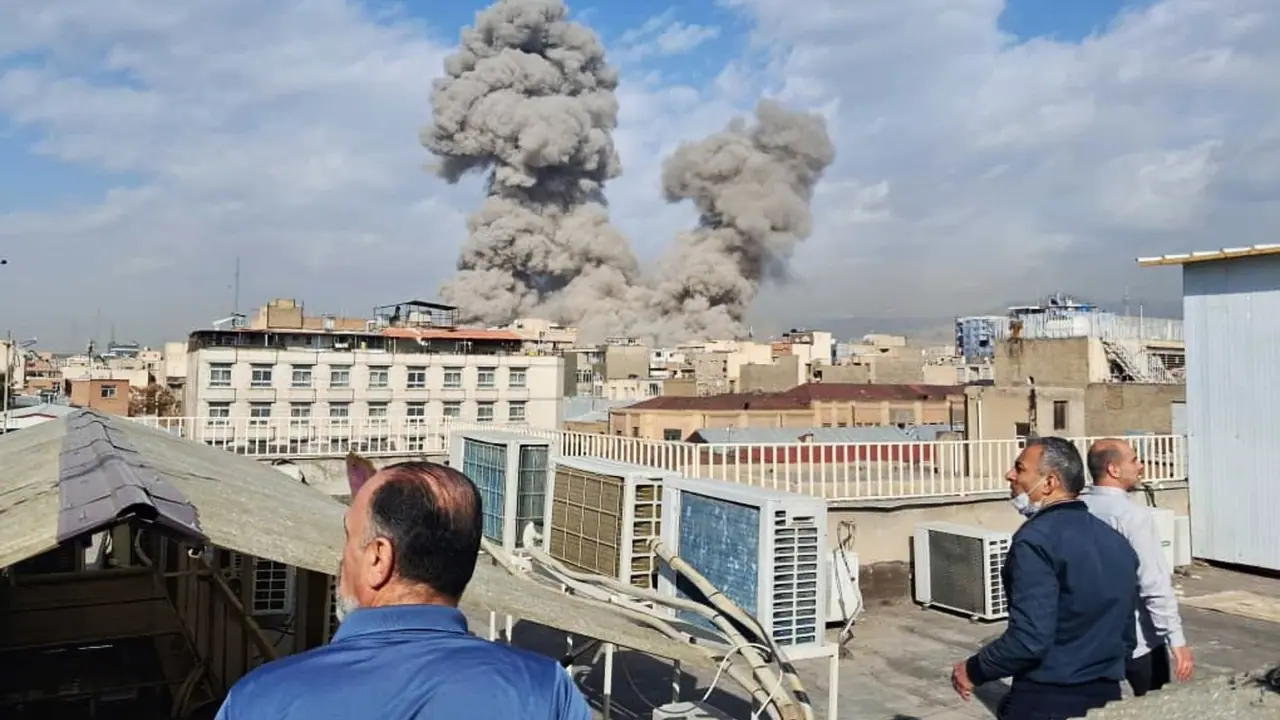
Satellite images reviewed by the UN nuclear watchdog showed what appeared to be recent damage at Iran’s Natanz enrichment plant. Meanwhile, loud explosions were heard overnight in Tehran as fighter jets flew over the capital.
US and Israel Expand Military Action
US President Donald Trump warned that the strikes could continue for weeks or even months. He said the United States has the ability to extend operations if necessary. In an earlier interview, he did not rule out sending US ground troops to Iran if required.
The US State Department urged Americans to leave Middle Eastern countries immediately due to serious safety risks.
Israel has also expanded its military activity in southern Lebanon after Hezbollah fired missiles in support of Iran. Defence Minister Israel Katz said Israeli forces were authorised to take control of additional strategic positions to prevent attacks on Israeli communities near the border. A Lebanese army source said Israeli troops advanced near Kfar Kila in what appeared to be an attempt to create a wider security zone.
Hezbollah said it had launched strikes on three Israeli bases. The Lebanese army reportedly pulled back some troops from the southern border after the escalation.
Civilians Displaced and Energy Markets Shaken
The UN refugee agency said around 30,000 Lebanese people have been displaced and are staying in shelters. Many others are sleeping in their cars by the roadside.
Iranian strikes have also hit oil and gas infrastructure in Gulf cities and in Oman’s port of Duqm. Oil and gas prices rose sharply for the second straight day. Qatar has halted LNG production, pushing up European energy prices. QatarEnergy has also stopped producing products such as urea, polymers and methanol for now.
In the United Arab Emirates, debris from intercepted drones caused a fire at an oil facility in Fujairah. The fire was later controlled and operations resumed.
An Iranian Revolutionary Guards general warned that any ship trying to pass through the Strait of Hormuz could be targeted, raising fears about global oil supplies.
Rising Death Toll and Conflicting Claims
The death toll across the region continues to rise. US Central Command confirmed that six US military personnel have been killed so far. Iranian media have reported hundreds of casualties inside Iran, including many civilians.
The US-based Human Rights Activists News Agency (HRANA) said there were 101 casualties inside Iran on the third day of the war, including 85 civilians and 11 military personnel. However, independent verification of casualty figures remains difficult due to the ongoing fighting.
The situation remains tense and unpredictable. The UN continues to urge dialogue, warning that without immediate efforts to de-escalate, the human cost will keep rising.
(With inputs from agencies)