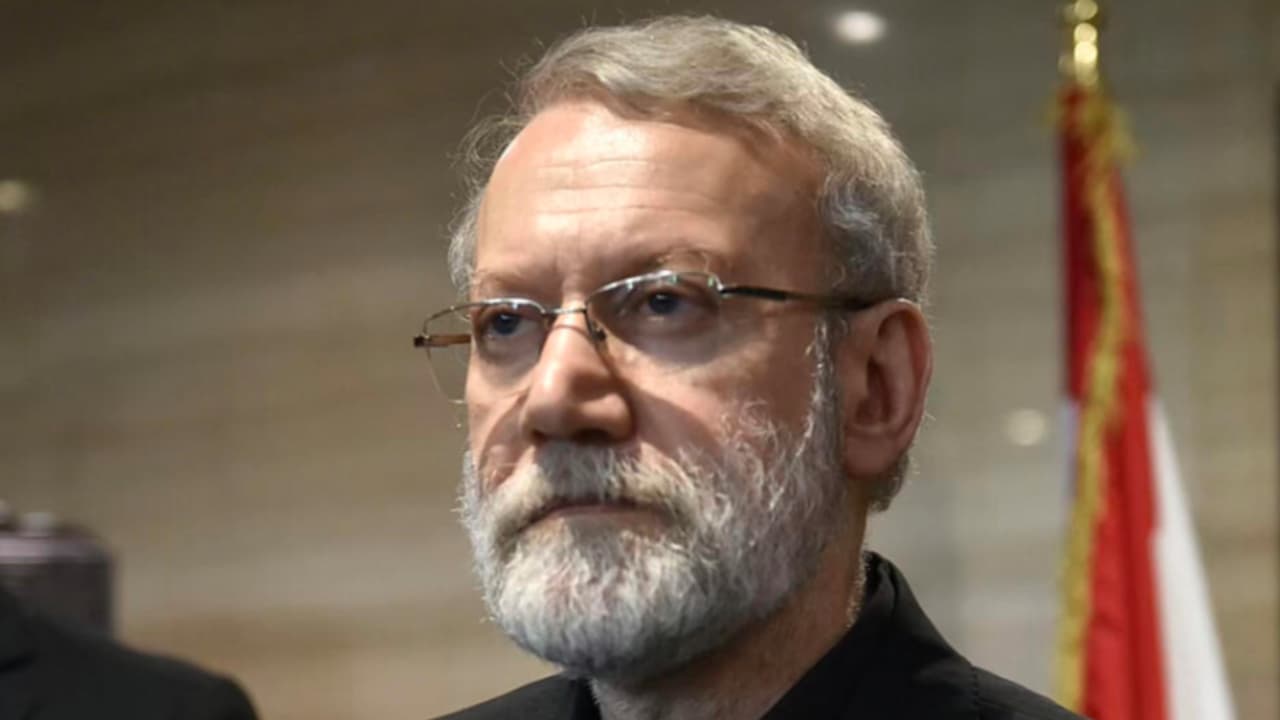
The killing of Iranian official Ali Larijani has created a diplomatic vacuum, hindering de-escalation efforts in the ongoing conflict. Larijani was seen as a pragmatic negotiator and a potential bridge between Iran’s political factions.
Diplomatic Vacuum Grows After Ali Larijani Killing
The killing of veteran Iranian political and security figure Ali Larijani has intensified uncertainty surrounding diplomatic prospects in the ongoing conflict involving Iran, Israel and the United States. As the war enters its third week with no signs of de-escalation, analysts and policymakers are increasingly questioning whether there remains any credible interlocutor in Tehran capable of negotiating a pathway toward reducing hostilities.
Larijani, widely regarded as a pragmatic conservative with deep institutional experience, had long been seen as a potential diplomatic bridge between Iran’s hardline security establishment and its more moderate political figures. His assassination in an Israeli strike has not only weakened Iran’s leadership structure but also complicated already fragile channels for dialogue. According to the report, the loss of such a seasoned negotiator could make it harder for external powers to identify a reliable counterpart in Tehran during a rapidly escalating conflict.
Hardliners Gain Ground As War Reshapes Tehran Power
The ongoing war has dramatically reshaped Iran’s internal political landscape. With several senior figures killed in targeted strikes, wartime decision-making is increasingly dominated by hardliners who are less inclined to support diplomatic engagement. The report notes that Larijani stood out among the country’s power brokers because of his longstanding connections with political currents associated with the presidency of moderate cleric Hassan Rouhani and the foreign policy approach represented by current Foreign Minister Abbas Araghchi.
Related Articles

This unique positioning had allowed Larijani to maintain credibility both within Iran’s security apparatus and among more pragmatic factions. As a result, his presence offered a potential channel for communication with Western governments even at times of heightened tensions. His absence now raises concerns that diplomatic options could narrow further, potentially prolonging the conflict and increasing the risk of miscalculation.
The war itself has already had far-reaching consequences for regional security and global economic stability. The conflict has triggered missile exchanges, targeted assassinations and military strikes across multiple locations, contributing to widespread fears about the possibility of a broader regional escalation. In such an environment, diplomatic engagement is widely viewed as essential to preventing further deterioration. Yet the report suggests that the shrinking pool of experienced negotiators in Tehran may complicate efforts to pursue dialogue.
US Faces Challenge Finding Reliable Interlocutors In Iran
Iran’s leadership structure has undergone significant changes since the outbreak of hostilities. A series of targeted strikes has eliminated several senior commanders and officials, disrupting established lines of authority. This has reinforced the influence of military-aligned hardliners, whose wartime priorities may focus more on retaliation and deterrence than on negotiation. Analysts cited in the report warn that this shift could make it increasingly difficult for external actors, including the United States, to identify figures with both the authority and willingness to engage in substantive talks.
At the same time, the broader political environment within Iran remains complex. While hardliners may dominate decision-making during wartime, the country’s political system still includes multiple institutions and power centres. The report notes that the foreign ministry and certain technocratic elements of the government may continue to play roles in shaping policy. However, the effectiveness of these actors as diplomatic intermediaries depends on whether they retain sufficient influence within the evolving leadership hierarchy.
The question of communication channels has become particularly pressing given the strategic stakes of the conflict. Beyond immediate military concerns, the war has implications for global energy markets, maritime security and international alliances. Diplomatic efforts aimed at de-escalation could therefore have significant consequences not only for regional stability but also for the broader international order.
Also Read: Israel kills Iran's Ali Larijani in major blow to Tehran's regime
For the United States, the challenge lies in balancing military objectives with the need to keep open avenues for negotiation. The report indicates that Larijani’s death has complicated this task by removing one of the few Iranian leaders with a track record of engagement on sensitive security issues. Without such figures, the prospects for back-channel diplomacy or confidence-building measures may diminish, increasing the likelihood of prolonged confrontation.
Moreover, the psychological impact of leadership losses can shape strategic calculations on all sides. Within Iran, the killings of senior officials may reinforce narratives of external aggression and strengthen domestic support for a hardline response. Conversely, they may also generate internal debates about the risks of continued escalation. Understanding these dynamics is crucial for any external actor seeking to engage Tehran in meaningful dialogue.
Despite the heightened tensions, the report suggests that diplomatic opportunities may still exist. Iran’s complex governance structure includes clerical bodies, elected institutions and security organisations, each with varying degrees of influence. Identifying interlocutors who command respect across these constituencies could prove key to any future negotiation process. However, doing so will require careful assessment of shifting power balances and the evolving priorities of Iran’s wartime leadership.
Also Read: Who Was Ali Larijani? Iran’s Security Chief and Key Figure in Middle East War
Ultimately, the killing of Ali Larijani underscores the challenges of pursuing diplomacy in the midst of an active conflict marked by targeted strikes and leadership upheaval. As the war continues to unfold, the search for credible communication channels remains a central concern for policymakers and analysts alike. Whether new figures will emerge to fill the diplomatic void left by Larijani’s death may play a decisive role in determining the trajectory of the crisis.
With the conflict showing no immediate signs of resolution, the need for dialogue remains urgent. The report highlights the uncertainty surrounding who, if anyone, can effectively represent Tehran in discussions aimed at reducing hostilities. In this context, the evolving political landscape within Iran will be closely watched by international observers seeking clues about the prospects for de-escalation and eventual peace.