
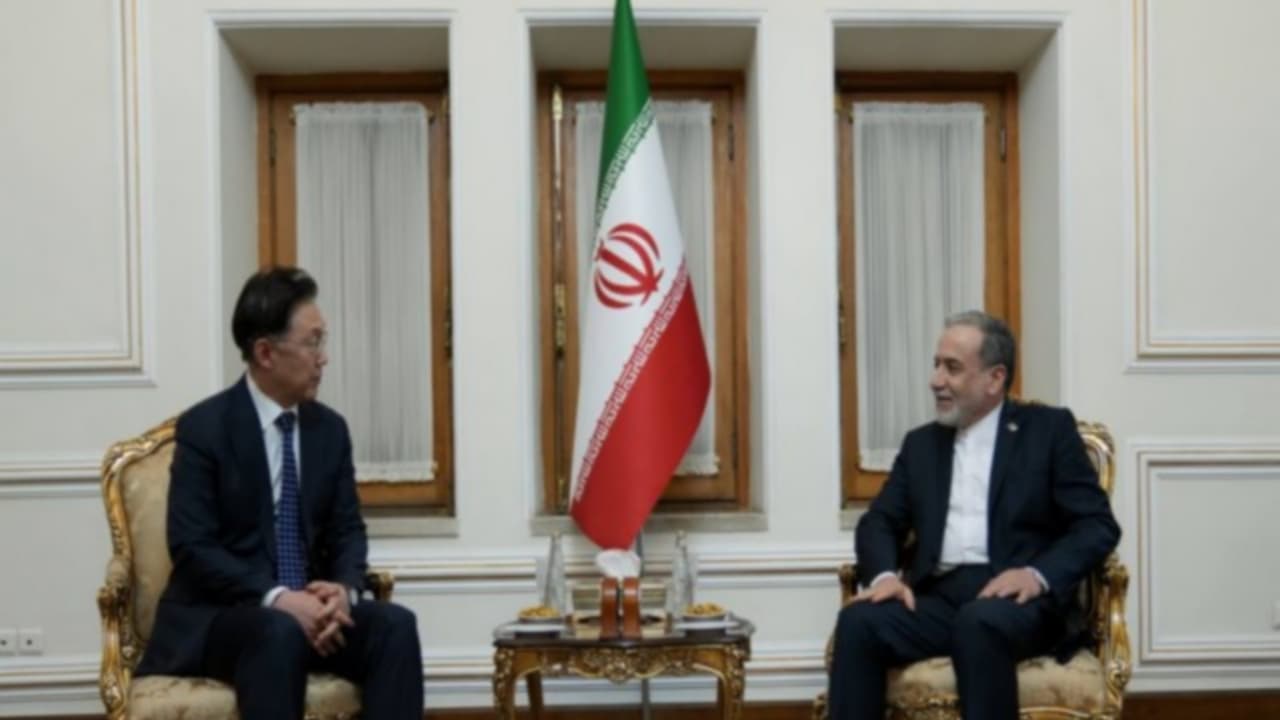
Iran's FM blamed US and Israel for Hormuz instability. Meanwhile, US President Trump urged diplomacy and extended a ceasefire, but Iran's President criticised Washington's 'hypocritical' behaviour while remaining open to dialogue.
Iran Blames 'Aggressors' for Hormuz Instability
Iran's Foreign Minister Abbas Araghchi has said that "aggressors" (US and Israel) are fully responsible for any instability in the Strait of Hormuz, amid the rising tensions in the Gulf region, as reported by Iranian state media Press TV.
According to Press TV, Araghchi made the statement during a meeting with the South Korea FM's Special Envoy Chung Byung-ha in Tehran on Wednesday, where he linked the current security situation to actions by the United States and Israel.
He said, "Iran, as a littoral state of the Strait of Hormuz, has adopted measures in accordance with international law and its domestic regulations to safeguard Iran's security and national interests against the US's and the Zionist regime's aggression and threats."
He added, "Naturally, responsibility for the consequences arising from this situation lies with the aggressing parties."
Araghchi also stressed that countries must take a firm stand, calling for condemnation of the "aggression and the brutal crimes committed by the aggressors against the Iranian people", as reported by Press TV. He further emphasised the importance of strengthening ties between Iran and South Korea, expressing Tehran's readiness to expand cooperation.
During the meeting, the South Korean envoy Chung Byung-ha voiced hope that continued diplomatic efforts would help end the "aggression" and restore peace and stability in the region, as reported by Press TV. He also conveyed greetings from South Korea's Foreign Minister Cho Hyun, describing enhanced relations with Iran as important.
Trump Calls for Diplomacy, Extends Ceasefire
Meanwhile, US President Donald Trump has issued a direct appeal to the Iranian leadership, calling for a diplomatic breakthrough to end the current standoff between Washington and Tehran.
In an interview with CNBC, the President suggested that the Islamic Republic could secure a prosperous future by committing to a new agreement. He expressed confidence that a diplomatic resolution would significantly benefit the country's regional and economic standing.
Trump remarked, "Iran can get themselves on a very good footing if they make a deal," noting the potential for a complete transformation of Tehran's current circumstances.
As the US continues to maintain a naval blockade and a conditional ceasefire, the President urged the Iranian government to approach the negotiating table with a clear and pragmatic strategy.
Highlighting the need for a change in rhetoric, Trump added, "They have to use reason and they have to use common sense, and they can get themselves into a great position to make themselves into a great country."
In a notable shift of strategy, President Trump has moved away from his aggressive posture by extending the current ceasefire indefinitely.
Iran Criticises US 'Hypocrisy' Amidst Diplomatic Push
Meanwhile, Iranian President Masoud Pezeshkian on Wednesday (local time) criticised the United States for what he termed "hypocritical" and contradictory behaviour, even as US President Donald Trump announced an extension of the ceasefire to allow time for negotiations.
Pezeshkian said Iran remains open to dialogue but accused Washington of undermining genuine talks through pressure tactics, including threats and sanctions.
In a post on X, Pezeshkian wrote, "The Islamic Republic of Iran has always welcomed and continues to welcome dialogue and agreement. Bad faith, siege, and threats are the main obstacles to genuine negotiation. The world is witnessing your hypocritical, empty talk and the contradiction between your claims and your actions.
According to The New York Post, Trump stated that a diplomatic breakthrough with Iran is "possible" within a window of 36 to 72 hours. However, the prospect of immediate negotiations remains unclear, as Iranian foreign ministry spokesperson Esmaeil Baqaei stated that Tehran has not yet reached a final decision on participating in the upcoming round of mediated talks.
(Except for the headline, this story has not been edited by Asianet Newsable English staff and is published from a syndicated feed.)