Stockholm institute’s 2026 yearbook records doubling of interstate armed conflicts, a record $2.9 trillion in global military spending, and the first known use of cyber warfare integrated into the India-Pakistan standoff
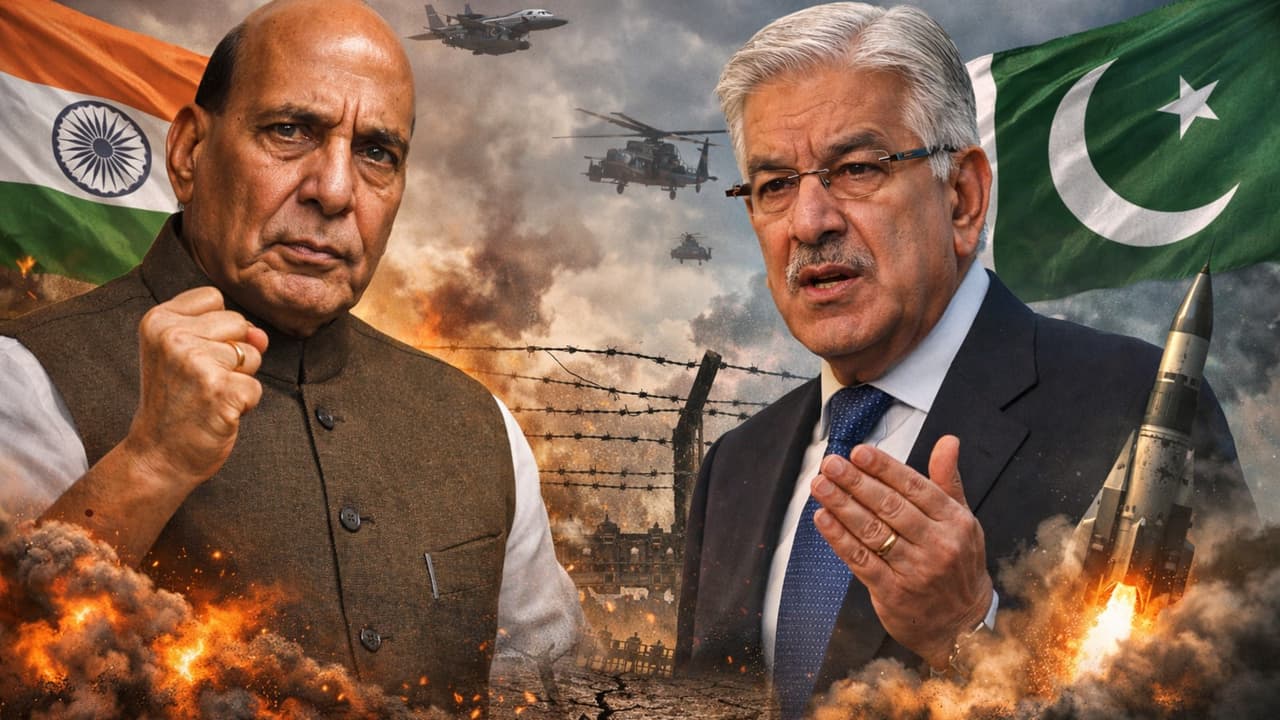
New Delhi: A military confrontation between India and Pakistan in May 2025 that marked the first known integration of cyber operations into an armed conflict between the two nuclear-armed neighbours has been flagged as a pivotal moment in South Asian security by the Stockholm International Peace Research Institute (SIPRI) in its annual yearbook published this week.
The SIPRI Yearbook 2026, one of the most closely watched assessments of global military trends, describes a world in which the erosion of arms control norms, intensifying great power competition and the rapid spread of new military technologies are combining to produce what it calls a “volatile strategic environment with few institutional guardrails remaining.”
The India-Pakistan crisis
The cross-border exchange of fire between India and Pakistan from May 7 to 10 represented the most serious military crisis between the two countries in more than two decades.
Related Articles

SIPRI identifies the confrontation as one of six interstate armed conflicts recorded globally in 2025, double the three recorded in 2024 and singles out the cyber dimension as a significant and troubling development.
The overt use of cyber operations alongside conventional military force marks a qualitative shift in how South Asian conflicts are likely to be fought. Security analysts have long warned that the integration of cyber capabilities into kinetic warfare complicates command-and-control structures and raises the risk of miscalculation, particularly between two states that maintain nuclear arsenals and historically limited back-channels.
India’s defence spending rose to $92.1 billion in 2025, an 8.9 percent increase in real terms, placing it fifth among the world’s largest military spenders.
Pakistan, meanwhile, ranked among the top five global arms recipients in the five-year period from 2021 to 2025, alongside Ukraine, India, Saudi Arabia and Qatar, a group that together accounted for 35 percent of all major arms imports worldwide.
China’s, expanding arsenal
China’s nuclear warhead stockpile grew from 600 to approximately 620 during 2025, SIPRI estimates, as part of a modernization and expansion programme that analysts say shows no sign of slowing.
Beijing remained the world’s second-largest military spender at an estimated $336 billion, a 7.4 percent real-terms increase over the previous year.
The report also highlights a growing naval nuclear dimension across the Indo-Pacific. Submarine-based nuclear delivery systems are proliferating among all four nuclear-armed states in the region, China, India, Pakistan and North Korea, a development SIPRI says raises the prospect of a naval nuclear arms race in waters already contested by overlapping territorial claims and strategic rivalries.
China’s military build-up takes place against the backdrop of intensifying competition with the United States across the technology, trade and security domains. Washington has responded by deepening defence ties with regional partners, including India, Japan, South Korea and Australia, and by reinforcing security commitments under the Quad framework.
These dynamics have reinforced a cycle of action and counter-action that SIPRI suggests is driving spending upwards across the region.
Record global spending
Global military expenditure reached $2.9 trillion in 2025, a record high and the eleventh consecutive annual increase. NATO members agreed at their June 2025 summit in The Hague to raise their collective spending target to 5 percent of GDP, a significant increase from the longstanding 2 percent benchmark that many had struggled to meet. European defence budgets as a whole surged 14 percent, driven in large part by the continuing war in Ukraine and by revised threat perceptions following Russia’s full-scale invasion in 2022.
SIPRI Director Karim Haggag, presenting the findings, said the combination of weakening arms control architecture, new military technologies and great power competition was generating instability that existing international institutions were ill-equipped to manage.
“The structural conditions for miscalculation and escalation are worsening,” he said, calling for renewed investment in multilateral arms control and risk-reduction mechanisms.
South Asia’s particular risks
South Asia presents a particular concentration of risk factors. India and Pakistan have fought three full-scale wars since independence in 1947 and numerous smaller military confrontations, including the 1999 Kargil conflict and the 2019 aerial exchange following the Pulwama attack. Both states have operationalized nuclear deterrence doctrines that retain elements of ambiguity, and the addition of cyber capabilities to the mix introduces new vectors for escalation that existing confidence-building measures were not designed to address.
India has sought to manage the threat from both Pakistan and China through a combination of military modernization, diplomatic diversification and strategic partnerships. Its defence budget trajectory reflects that dual-front calculus.
Even being constrained by severe economic difficulties, Pakistan has leaned heavily on arms transfers, predominantly from China, to maintain military parity.