
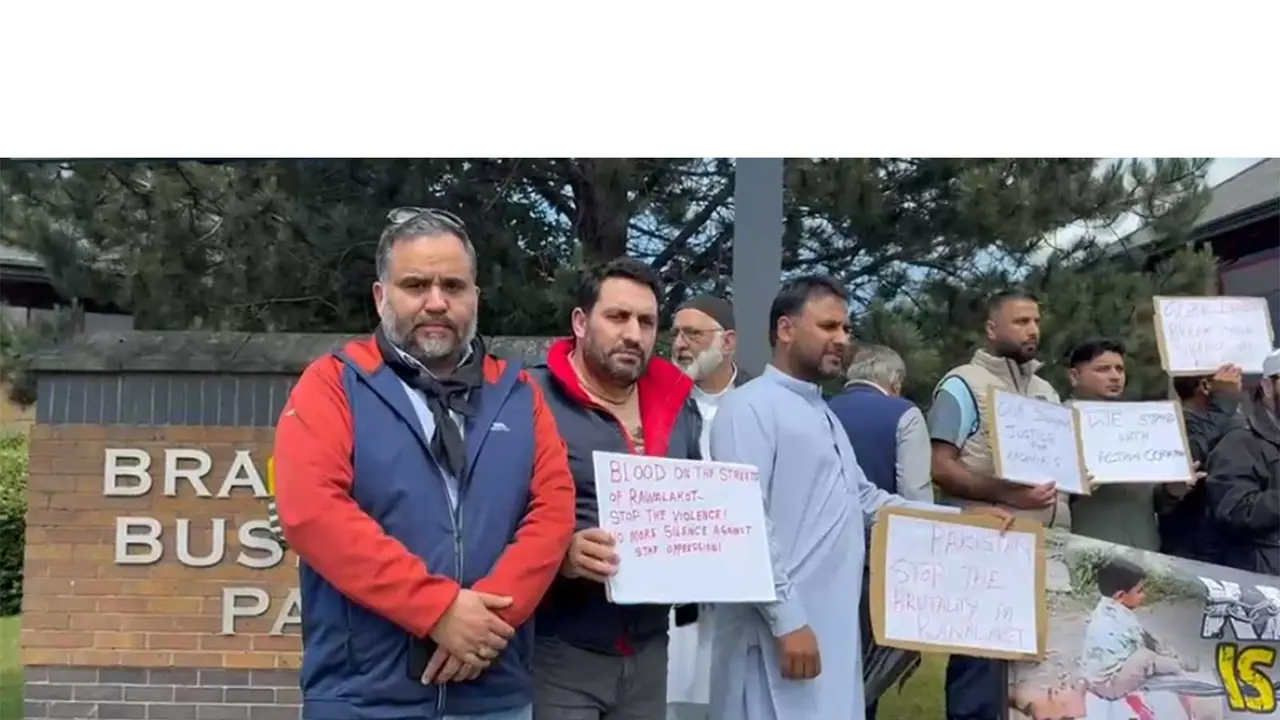
Kashmiri diaspora activists in the UK have condemned Pakistan's military and government for suppressing dissent in PoJK. They allege peaceful protests are met with force and restrictions, and have vowed to continue demonstrations until military interference ends.
Bradford [UK] June 19 (ANI) The ongoing unrest in Rawalakot and other parts of Pakistan- occupied Jammu and Kashmir (PoJK) has triggered strong reactions from the Kashmiri diaspora in the United Kingdom, with activists accusing the Pakistani military and government of suppressing peaceful dissent through force, restrictions and intimidation.
Activists Allege Widespread Suppression
United Kashmir People's National Party (UKPNP) Bradford President Sohail Talat condemned the deployment of barricades, fencing and military checkpoints in Rawalakot, warning that the situation is becoming increasingly tense. He said members of the Kashmiri diaspora would continue demonstrations until what he described as military interference in the region comes to an end. Talat alleged that recent actions by Pakistani authorities have left many Kashmiris fearful of expressing their views. He claimed that the people of the region are being denied the freedom to determine their own future and called on the international community to pay attention to developments in the territory. Describing the diaspora as a united force, he pledged continued support for protesters on the ground and accused Pakistan of treating Kashmiris as adversaries rather than partners.
Rizwan Latif, organiser of the Bradford branch of the UKPNP, also criticised Pakistan's handling of the situation. He accused the Pakistani state of presenting one narrative to the international community while pursuing a different policy inside PoJK. According to Latif, peaceful demonstrations demanding political and economic rights have been met with excessive force. He alleged that security personnel have entered homes, disrupted businesses and imposed severe movement restrictions across the region. He further claimed that communication blackouts and road closures had effectively isolated many communities.
Atmosphere of 'Fear and Uncertainty'
Both activists referred to the violence reported on June 6, alleging that civilians, including women and young people, were among those killed during the crackdown. They described the current atmosphere in Rawalakot as one of fear and uncertainty, comparing the region to a "prison" due to the extensive security measures and restrictions imposed by authorities. (ANI)
(Except for the headline, this story has not been edited by Asianet Newsable English staff and is published from a syndicated feed.)