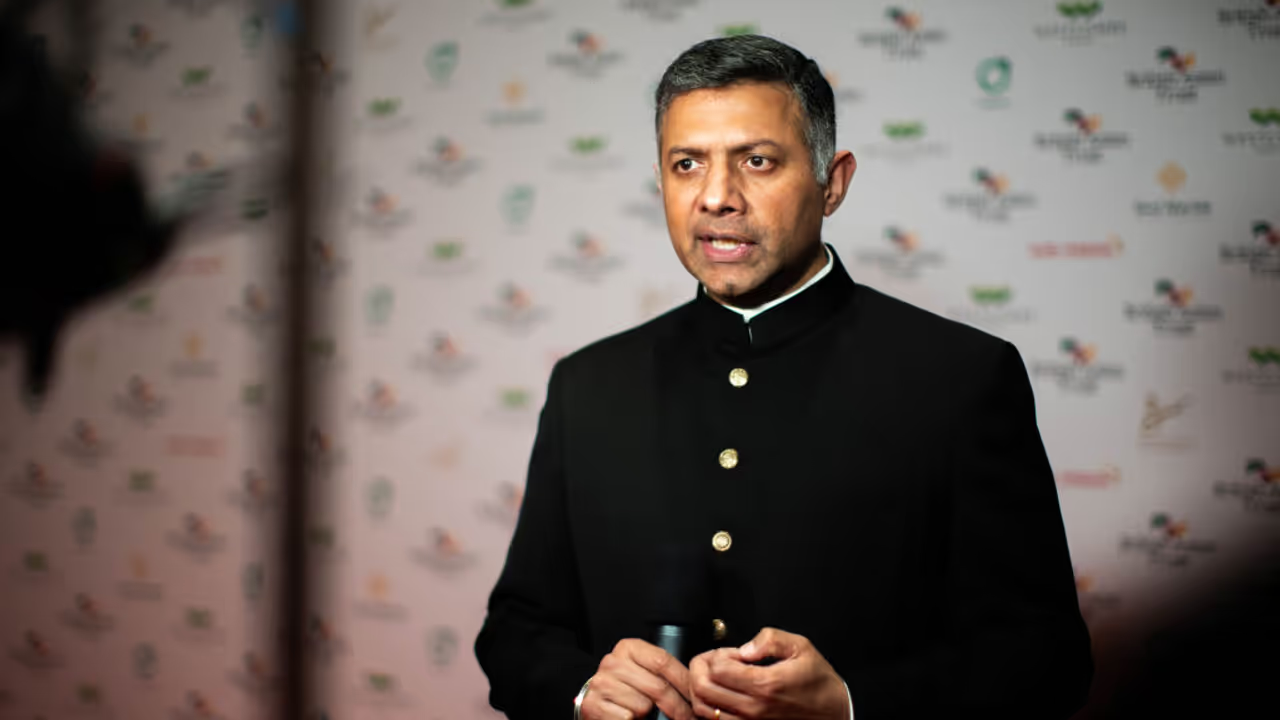
Vikram Doraiswami, the Indian High Commissioner to the UK, rejected the West's criticism of India's oil imports from Russia.
In a sharp and unapologetic rebuttal, Indian High Commissioner to the United Kingdom, Vikram Doraiswami, dismantled Western criticism regarding India's oil imports from Russia, underscoring the nation’s massive energy demands and its sovereign right to make pragmatic choices in global geopolitics.
During a candid conversation with the UK’s Times Radio last week, Doraiswami didn’t mince words when confronted about India's continuing energy ties with Moscow amidst the ongoing war in Ukraine. The diplomat responded firmly, highlighting India's sheer energy dependence: “What would you have us do? Switch off our economy?” he asked.
Related Articles

India, the world’s third-largest consumer of energy, relies on imports for over 80% of its needs. Doraiswami emphasized the hypocrisy in Western arguments, noting that while European nations may not be purchasing Russian oil, many still continue to procure rare earth elements and other energy-related products from the very nations they expect India to disengage from.
On India's perceived "closeness" to Russia
When questioned about India's perceived "closeness" to Russia and its President Vladimir Putin, Doraiswami laid out the strategic rationale: “We have a relationship that is based on a number of metrics. One of these is our long standing security relationship that goes back to an era in which some of our Western partners wouldn't sell us weapons, but would sell it to countries in our neighborhood that use them only to attack us.”
He further explained that India’s pivot towards Russian energy was not a political alignment but a logistical necessity. With Western nations crowding out India from traditional suppliers and driving up global costs, New Delhi was forced to diversify its energy sources. “We’ve been displaced out of the energy market largely and the cost have gone up,” he added.
Taking aim at the moral high ground often adopted by Western powers, Doraiswami said: “We also see around us relationships that other countries maintain for their own convenience with countries that are a source of difficulty for us. Do we ask you to come up with a little test of loyalty?”
On being asked whether EU sanctions on Russian oil have impacted Indian refineries, the diplomat reminded that India boasts the fourth-largest refining capacity in the world. Many European countries, ironically, still import refined oil processed in India.
The European Union’s latest sanctions, announced in July, include a ban on Russian crude-derived fuels, scheduled to take effect from January 21 next year. These restrictions, however, do not preclude European buyers from sourcing fuel that has passed through Indian refineries.