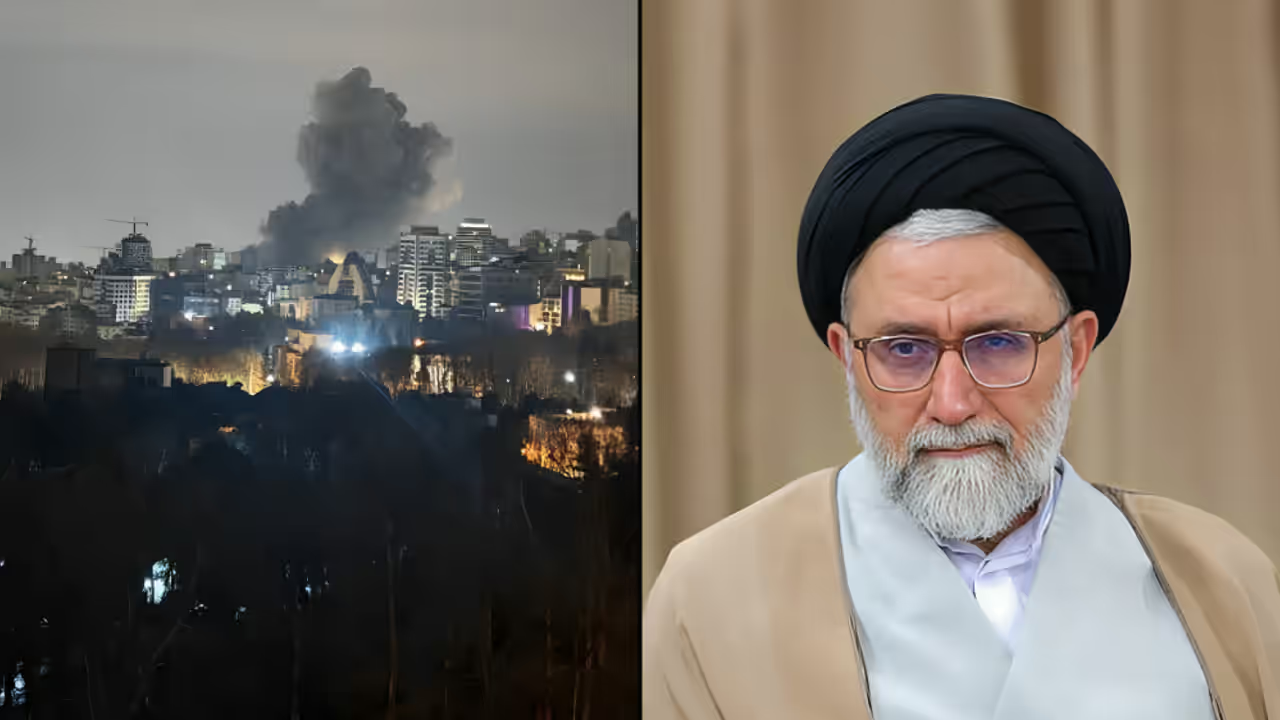
Israeli media reports say an overnight strike in Tehran targeted Iran’s Intelligence Minister Esmail Khatib. An Israeli official claimed the operation aimed at senior leadership, but Khatib’s condition remains unknown. The Israel Defense Forces has not confirmed the strike.
Israeli Defence Minister Israel Katz has said that Iran’s Intelligence Minister Esmail Khatib has been killed, according to Reuters. Katz made the statement on Wednesday amid several Israeli media reports claiming that an overnight strike in Tehran may have targeted Iran’s Intelligence Minister Esmail Khatib. The report, first shared by The Times of Israel, cited an Israeli official who said the operation was aimed at senior leadership. Officials said the result of the strike is still being checked. There has been no immediate confirmation or response from Iranian authorities regarding the claim.
Israel Defense Forces also posted on X that Iran's Intelligence Minister Esmaeil Khatib has been killed in a targeted strike in Tehran. In its statement, the IDF described Khatib as a key figure in Iran’s intelligence system and alleged that he was involved in actions against both Iranian citizens and foreign nationals. It claimed he played a major role during recent protests in Iran, including during the unrest linked to the Mahsa Amini protests, and accused him of overseeing arrests and killings of protesters.
The IDF also alleged that Khatib led intelligence and covert operations targeting Israelis and Americans worldwide. It further said that Iran’s intelligence ministry has wide-ranging capabilities, including surveillance, espionage and covert missions across different countries.
Related Articles

Part of wider conflict
The reported strike comes as tensions remain high between Israel and Iran. Israeli officials have earlier claimed to have targeted several senior Iranian figures since the conflict began.
Meanwhile, Iran is set to hold funerals in Tehran for senior figures killed in the conflict. These include Ali Larijani and Gholamreza Soleimani. Their deaths have increased anger in the country and raised fears of further escalation.
Strikes hit Beirut again
Fresh Israeli strikes hit central Beirut, especially the Zuqaq al-Blat area. This was the second strike on the crowded neighbourhood within hours and came without warning. Lebanon’s health ministry said at least 12 people were killed. The attacks come as fighting continues between Israel and the Iran-backed group Hezbollah.
Car targeted in southern Lebanon
Another strike hit a car in Sidon, the largest city in southern Lebanon. The blast took place near a civil defence centre and a seaside road where many displaced people are staying in their cars.
Israel has also asked people to leave four towns in southern Lebanon, warning of more strikes.
Blasts reported in Iraqi Kurdistan
At least four explosions were heard in Erbil, the capital of the Kurdistan region. It is not clear what was targeted. The city is important because it hosts a major US consulate and an airport used by coalition forces. The situation there remains unclear.
Oil exports partly resume
Iraq said it has restarted limited oil exports through the Turkish port of Ceyhan. Around 250,000 barrels per day are now being shipped. This comes after major disruption in the Strait of Hormuz, which Iran has effectively shut. The closure has affected global oil supply.
Oil prices fall despite tension
Oil prices dropped even as the conflict continued. The US benchmark, West Texas Intermediate, fell more than four percent to $92.11 in Asian trading. At the same time, stock markets in Asia and Europe rose, showing mixed reactions from global markets.
Iran executes alleged spy
Iran said it has executed a man accused of spying for Israel. Officials claimed he had passed information about sensitive locations to Israel’s intelligence agency.
This is the first such execution announced since the war began.
Iran warns of global impact
Iran’s Foreign Minister Abbas Araghchi said the war will affect the whole world. He warned that the impact would be felt by all countries, no matter their wealth or background.
Army chief Amir Hatami also threatened a strong response after the killing of Iranian leaders.
Missiles and drones across Gulf
Several Gulf countries reported intercepting attacks. A projectile landed near a military site in the United Arab Emirates. Saudi Arabia said it stopped a ballistic missile near Prince Sultan Air Base and later intercepted drones near its capital, Riyadh.
Kuwait and Qatar also reported stopping rockets and missiles. Explosions were heard in Doha.
Deaths reported near Tel Aviv
Missiles fired from Iran killed two people near Tel Aviv. Israeli medics said the total number of deaths from such attacks has reached 14.
Trump criticises allies
US President Donald Trump criticised NATO, saying it made a mistake by not supporting action to reopen the Strait of Hormuz. He also said he was disappointed with UK Prime Minister Keir Starmer, saying the UK had not been supportive enough.
(With AFP inputs)