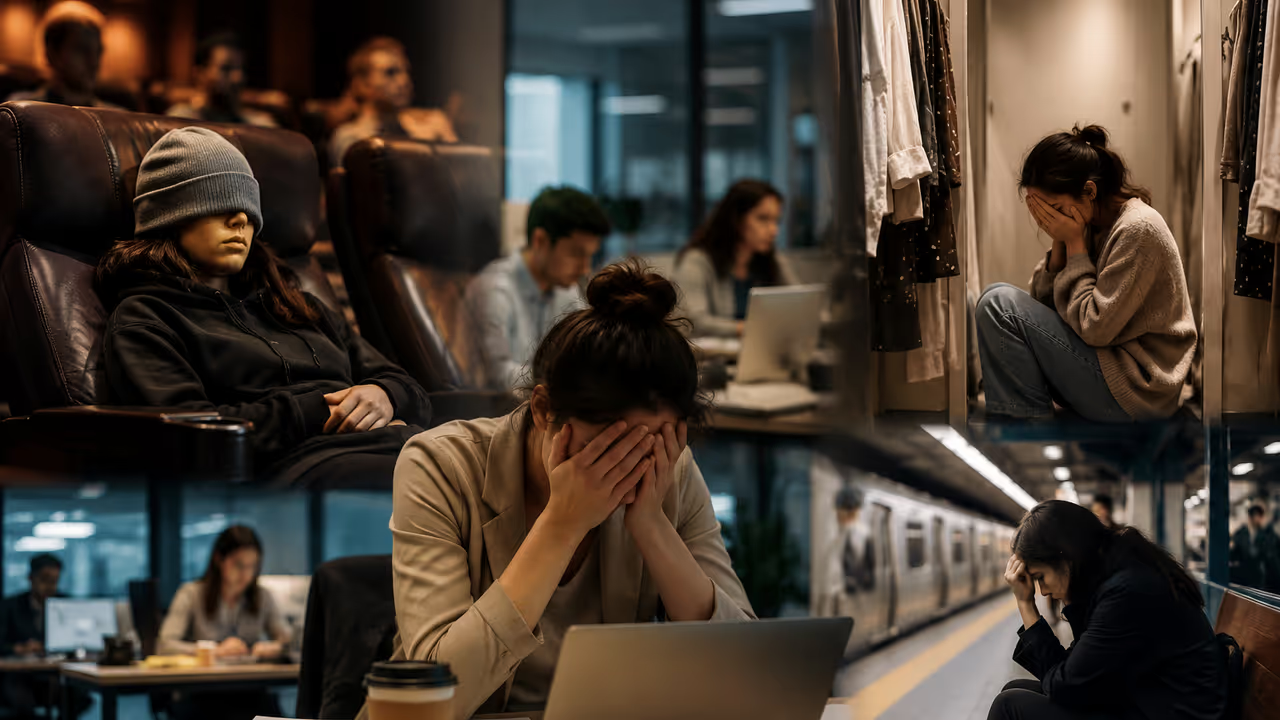
Gen Z employees are turning lunch breaks into survival missions, slipping away from their desks to movie theatres, train stations, subway platforms and even fitting rooms to catch a quick nap or quietly break down under the weight of workplace stress.
Gen Z employees are turning lunch breaks into survival missions, slipping away from their desks to movie theatres, train stations, subway platforms and even fitting rooms to catch a quick nap or quietly break down under the weight of workplace stress. For many young professionals, these unconventional hideouts have become temporary sanctuaries from the mounting pressure of corporate life.
According to a report in Fortune, Ben Sanderson, spent $15 on a movie ticket without any intention of watching the film. Instead, he headed straight to a reclining seat inside a New York cinema, pulled his beanie over his eyes and drifted off to sleep. After a 90-minute nap, he returned to work feeling completely refreshed.
“I had one of the best naps of my life,” Sanderson said. He described movie theatres as the “perfect place to nap in NYC” for commuters who live too far from home to return during office breaks.
Related Articles

Another TikTok creator revealed her favourite locations across New York where office workers could step away from their desks and cry in peace. Her list included subway stations, the Williamsburg Bridge and even the fitting rooms at Zara's Soho store.
“You can feel safe losing it there,” @posh_vip added.
Research shows that nearly half of Gen Z office workers have been brought to tears by workplace stress, highlighting the emotional strain many young employees experience.
The 'Soul-Sucking' 9-to-5 Debate Continues
The growing frustration echoes a viral TikTok from 2023, where a young employee broke down while talking about the challenges of adjusting to a traditional nine-to-five job. The clip, widely circulated under the narrative of "Gen Z girl finds out what a real job is like," attracted millions of views and sparked intense debate online.
While critics mocked the graduate, surveys suggest her feelings resonated with many in her generation. A significant number of Gen Z workers describe conventional office jobs as "soul-sucking," prompting many to rethink traditional career paths.
Rather than enduring workplace dissatisfaction, many young professionals are diversifying their income through freelance work, launching businesses, becoming full-time content creators or entering skilled trades, an industry witnessing renewed popularity among a generation determined to avoid the burnout experienced by millennials.
The trend is reflected in workplace data. Britain's largest 2025 survey of young recruits found that nearly 40% had seriously considered leaving their corporate jobs within their first year.
Toxic Workplaces Fuel Rising Burnout
For those who remain in corporate offices, workplace culture has become another major source of stress.
The return-to-office movement has not only revived long commutes but has also intensified reports of workplace hostility, including backstabbing, credit-stealing, finger-pointing and calculated sabotage.
One report found that American workplaces witnessed more than 208 million instances of office incivility every day during the first quarter of 2025.
The problem extends beyond colleagues. Research by Resume Now revealed that 61% of employees said they had been thrown under the bus at work, while nearly one-third reported witnessing such behaviour every week. One in four respondents claimed their manager had deliberately set them up to fail.
At the same time, Gen Z employees continue to face criticism for allegedly being the most difficult generation to work with. They are frequently accused of lacking workplace etiquette, dressing inappropriately for office environments and are increasingly warned that artificial intelligence could replace many entry-level roles.
A Generation Searching for Relief
Researchers have even observed changes in Harvard's long-established Flourishing Measure, which historically showed happiness peaking in youth before declining through middle age. Instead, younger generations now report consistently low levels of well-being until around the age of 50.
Despite widespread burnout, many Gen Z workers remain unable to leave their jobs as soaring living costs, a difficult employment market and AI-driven disruption continue to limit career options.