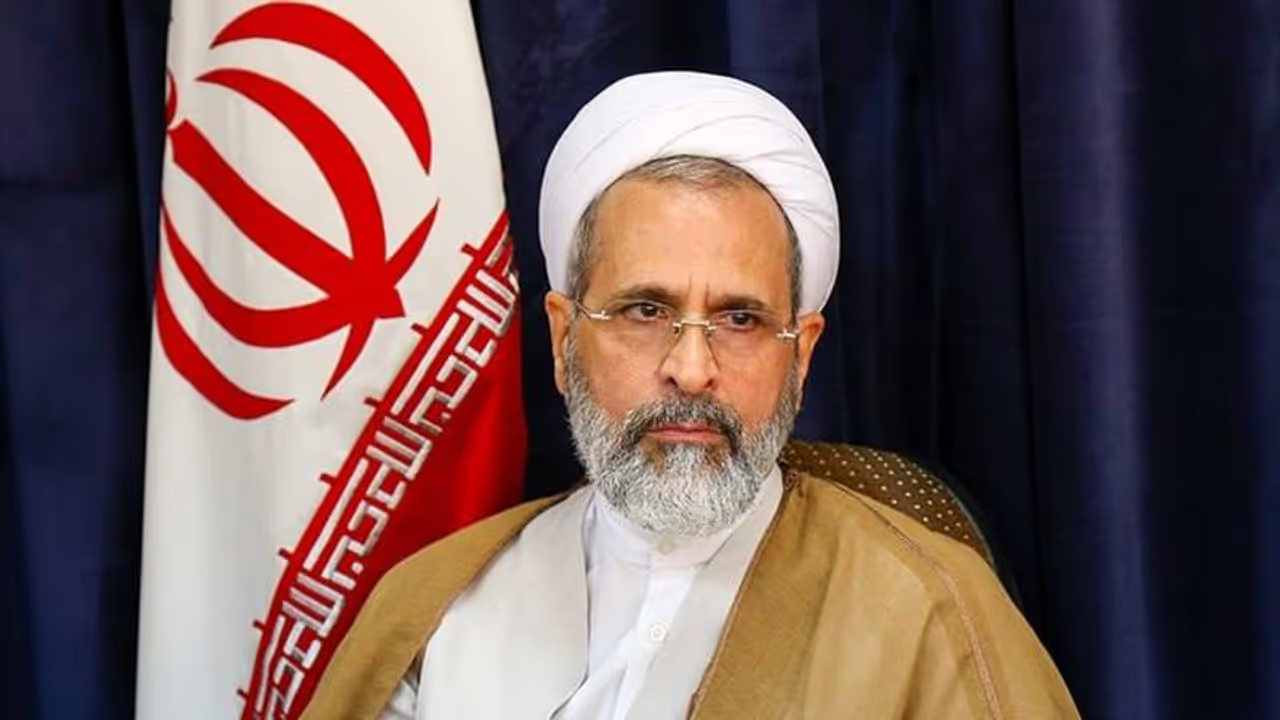
Senior cleric Ayatollah Alireza Arafi will serve as Iran’s interim Supreme Leader following the killing of Ali Khamenei, the state-linked ISNA news agency reported.
Senior cleric Ayatollah Alireza Arafi will serve as Iran’s interim Supreme Leader following the killing of Ali Khamenei in US-Israel strikes, the state-linked ISNA news agency reported. Ayatollah Alireza Arafi has been appointed as the jurist member of the interim leadership council responsible for carrying out the Supreme Leader’s duties during the transition period until a successor is chosen under Iran’s constitutional process.
Under Iran’s constitutional mechanism, the interim council includes President Masoud Pezeshkian, Chief Justice Gholam-Hossein Mohseni-Eje’i and a cleric from the Guardian Council. This body will jointly lead the country after Khamenei’s death as Iran enters a transition phase.
Who is Ayatollah Arafi?
Born in 1959 into a clerical family from Meybod in Yazd province, Arafi hails from a lineage that, according to Iranian accounts, traces its roots to Zoroastrians who converted to Islam in the 19th century. His father, Ayatollah (Sheikh Haji) Mohammad Ibrahim Arafi, was portrayed in state media as a close associate of Ruhollah Khomeini, the founder of the Islamic Republic after the 1979 revolution.
Related Articles

As the first generation of revolutionary clerics fades from the scene, figures like Arafi are increasingly viewed as part of the cohort with the credentials and connections to compete for higher authority in Iran’s evolving power structure.
Khamenei killed
US President Donald Trump announced on Sunday that Iran's supreme leader Ayatollah Khamenei was killed in the US-Israel strike, calling his death “the single greatest chance for the Iranian people to take back their Country”. Trump called Khamenei “one of the most evil men in history” and asserted that the cleric “was unable to avoid our Intelligence and Highly Sophisticated Tracking Systems”. He further warned that “heavy and pinpoint bombing” would continue “uninterrupted”, signaling a potentially prolonged and aggressive military campaign.
Meanwhile, Iran is observing 40 days of public mourning following the death of Ayatollah Ali Khamenei, Reuters reported, citing Iranian state media. In Shia Islam, the 40th day after death (Arba'een) holds immense spiritual weight.
The death occurred following strikes by the US and Israel (Operation Epic Fury/Lion's Roar) on Saturday.
The country's Supreme Leader's office has declared a period of national mourning, with flags flying at half-mast and public gatherings planned to pay respects, marking the closing of a 37-year chapter in the Islamic Republic's history.
At 86, Khamenei had ruled since 1989, making him the Middle East’s longest-serving head of state. His death marks only the second leadership transition since the 1979 Islamic Revolution led by Ruhollah Khomeini, who established the Islamic Republic. In 1989, Khamenei himself was elevated from the presidency to the supreme leadership after Khomeini’s death, consolidating power over decades through tight institutional control.