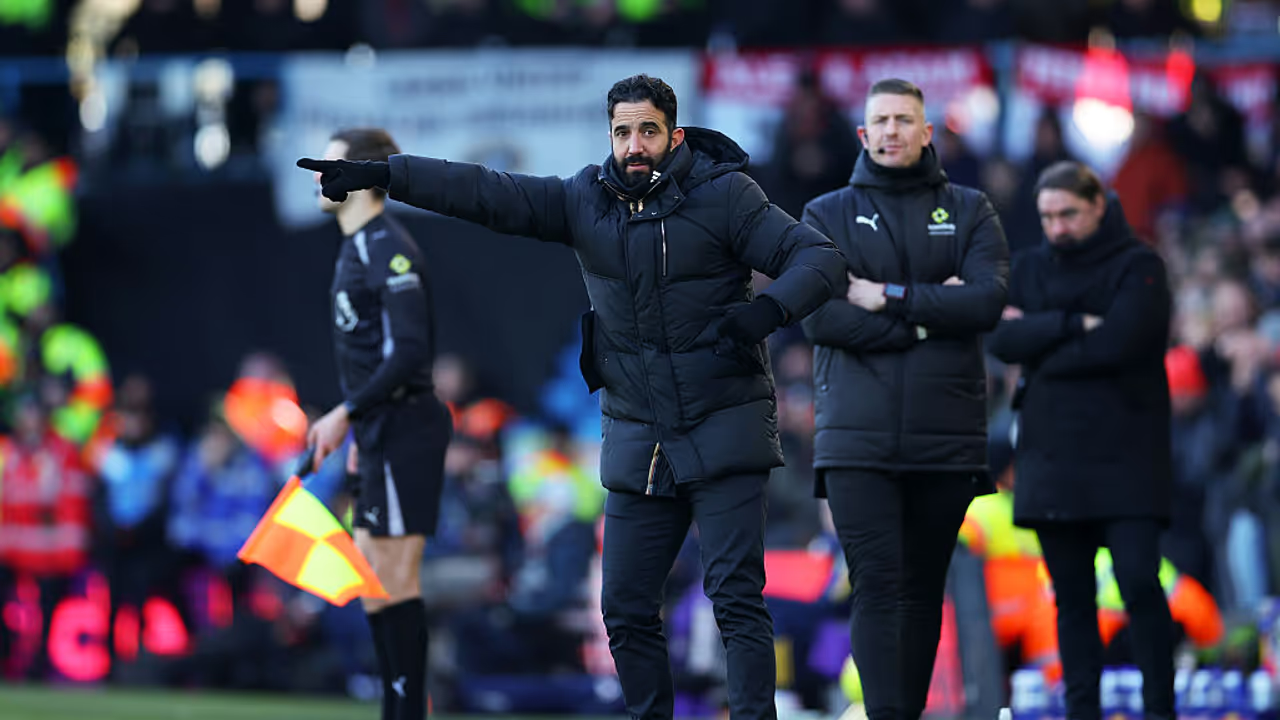
Ruben Amorim’s exit leaves Manchester United with deep tactical flaws and cultural issues for his successor to fix.
Manchester United are once again searching for stability after parting ways with Ruben Amorim, whose 14‑month reign ended in failure. The Portuguese coach arrived with high expectations following success at Sporting CP, but his tenure quickly unraveled, leaving behind glaring problems for his successor to address.
Amorim’s appointment in November 2024 was seen as a bold move, with hopes he could provide long‑term leadership. Instead, he departs as the club’s worst permanent manager of the Premier League era, unable to halt the decline left by Erik ten Hag. United now plan to take their time before naming a new boss, with Oliver Glasner, Kieran McKenna and Enzo Maresca among those linked.
One of the most pressing issues is tactical. Ruben Amorim’s loyalty to his 3‑4‑2‑1 system became a major point of contention. He refused to adapt, forcing key players such as Bruno Fernandes into unsuitable roles and sidelining promising talents like Kobbie Mainoo. His unwillingness to abandon the formation frustrated both executives and supporters, ultimately contributing to his dismissal.
Related Articles

A systemic overhaul will be essential for the next manager. Playing stars in their natural positions is a priority, with Fernandes needing freedom further forward, Amad Diallo unsuited to wing‑back duties, and Luke Shaw better deployed outside a back three. The squad requires a reset, even if short‑term results suffer, to build a foundation for long‑term success.
Youth integration is another challenge. Mainoo, once hailed as United’s brightest academy graduate, was starved of minutes under Ruben Amorim despite his rise to England’s Euro 2024 squad. Instead, Amorim leaned on veterans like Casemiro and former Sporting players such as Manuel Ugarte, blocking pathways for younger prospects. A successful rebuild must prioritize academy talent, with interim boss Darren Fletcher expected to encourage opportunities for emerging players, including his twin sons Jack and Tyler.
Beyond tactics and youth development, United’s internal culture remains problematic. The public stunt by Mainoo’s half‑brother, who wore a “Free Kobbie Mainoo” shirt at Old Trafford, highlighted the toxic atmosphere surrounding the club. Whether endorsed by the player or not, the incident showed the lack of cohesion and discipline within the dressing room.