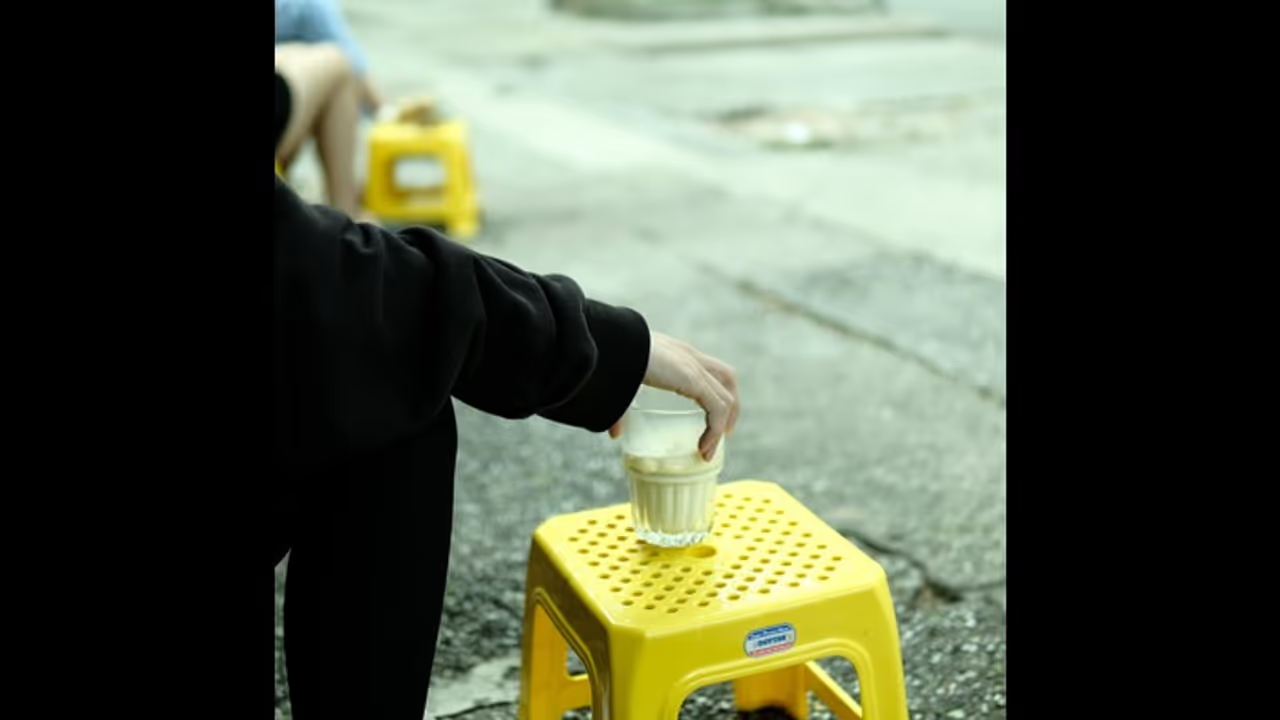
The hole in a plastic stool serves multiple practical purposes beyond simple design. It primarily prevents a vacuum from forming when stools are stacked, making them easy to separate, while also aiding in structural stress distribution, water drainage, and efficient manufacturing.
Plastic stools are a common sight in homes, shops, restaurants, hotels and gatherings. However, have you ever wondered why there is a little, round hole in the center of them? Although many would think it's only a design element or a way to make the stool simpler to carry, there are really a number of useful uses for the little aperture.
One of the key reasons for the hole is to prevent a vacuum from forming when multiple stools are stacked on top of one another. To conserve space, plastic stools are sometimes kept within or on top of one another. Air trapped between two tightly fitting stools may produce suction if the surfaces were totally sealed, making it challenging to separate them. By allowing air to move between the stools, the aperture lessens the suction effect and facilitates pulling them apart as necessary.
The hole may also be included into the structural layout of the stool. Carefully planned apertures can assist disperse stress throughout the construction, defying the notion that reducing material weakens a stool. The weight of a person sitting on a stool is transferred to their legs through the seat.
Related Articles

Instead of focusing this power in one area, the stool's thickness, form, and supporting ribs are intended to disperse it. However, the form of the stool determines the precise structural advantage of the hole. It is inaccurate to claim that a stool becomes stronger with each center hole.
Drainage is another straightforward practical advantage of the hole. Water may accumulate on a stool's surface if it is used outside, in a lavatory, or when cleaning. Instead of staying stuck on the seat, the aperture lets water drain away. Additionally, it might facilitate the cleaning and drying of the stool, especially when a lot of stools are cleaned and stored at once.
How Are Plastic Stools Prepared?
Injection moulding, which involves injecting molten plastic into a mould and cooling it, is a popular method for making plastic stools. Uneven cooling of a sizable, solid piece of plastic may result in warping, shrinkage, or other manufacturing flaws. To regulate how the material cools while preserving the necessary strength, designers employ holes, different wall thicknesses, and reinforcing ribs.
Material efficiency is another crucial factor. Because plastic stools are produced in enormous quantities, even a slight decrease in the quantity of plastic utilised per stool can yield substantial cost savings at scale. Manufacturers can save production costs and material consumption by eliminating unnecessary material while maintaining enough structural support throughout the remainder of the design.