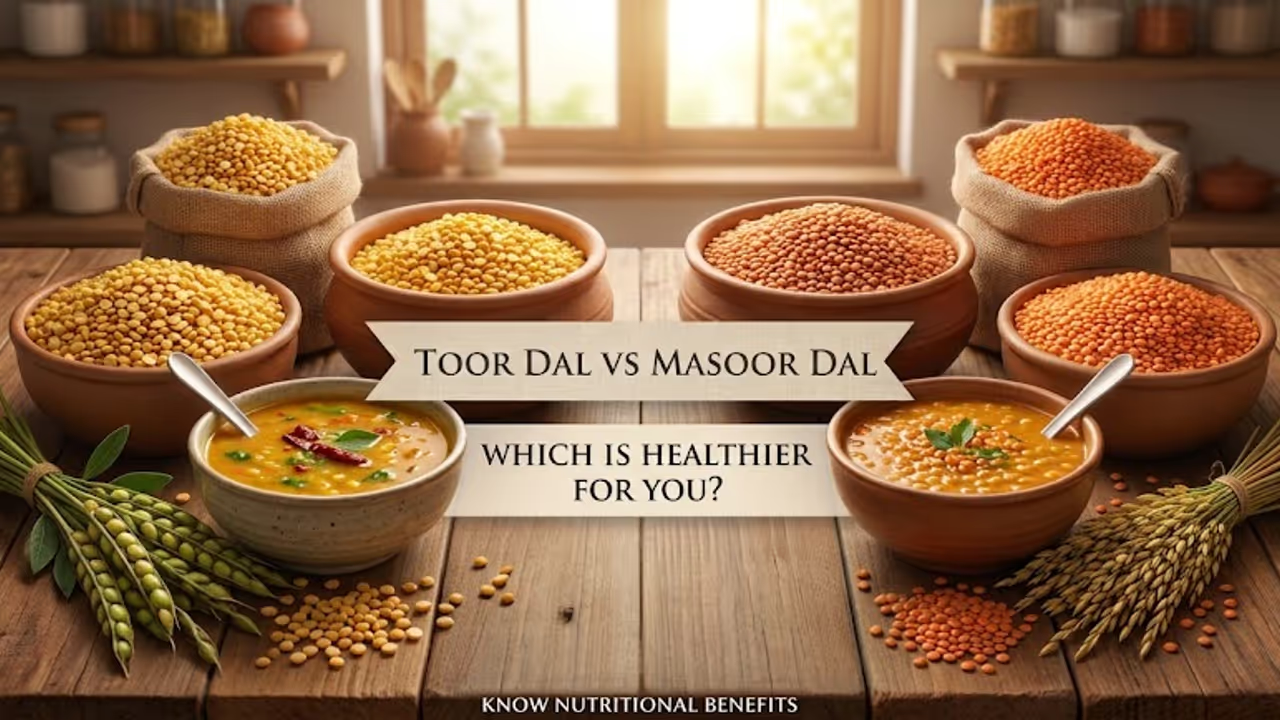
Comparing Toor Dal and Masoor Dal reveals both are highly nutritious, offering essential protein, fiber, and minerals. While Masoor Dal often has slightly higher protein and is easier to digest, both effectively support weight management, heart health, and more.
Which dal is healthier? It's a question many Indians ask. Toor Dal (pigeon pea) and Masoor Dal (red lentil) are kitchen staples across the country. Each boasts its own flavour, its own nutritional punch. But do they offer the same health benefits? Let's break down their nutritional profiles. We'll find both similarities and sharp differences, perfect for varying diets and health goals.
Two powerhouses for vegetarians. Both dals give us plant-based protein and dietary fiber. They form key parts of diets nationwide. Eating them helps our well-being, boosting digestion and even heart health.
Toor Dal: What's Inside?
Arhar dal — that's another name for Toor Dal. This stuff is a nutritional powerhouse. 21.7 to 22.86 grams of protein. That's what you get per 100 grams (dry). It also packs in 62.78 to 62.86 grams of carbs. Fat? Just 1.43 to 1.49 grams. For calories, expect 343 kcal (dry) or 108 kcal (cooked) per 100 grams. So, moderate calories.
Related Articles

Minerals? Toor Dal delivers. Expect 57-130 mg of calcium and 3.09-5.23 mg of iron. You also get potassium, magnesium, and folate. This legume also packs B complex vitamins — B1, B2, B3, B9. Plus, vitamins C, E, and K.
These rich nutrients bring many health benefits. Toor Dal helps diabetics greatly. Its low glycemic index, high protein, and fiber content regulate blood sugar levels. Trying to manage weight? The protein and fiber make you feel full. This cuts cravings. It supports weight loss. Your heart benefits too — Toor Dal has low saturated fat and zero cholesterol. Its fiber lowers LDL (bad) cholesterol. And potassium and magnesium help keep blood pressure in check.
Masoor Dal's Health Wins
Red lentils — that's Masoor Dal. This dal boasts a strong nutrient profile. 24 to 26 grams of protein. That's what 100 grams (dry) gives you. Cooked, Masoor Dal delivers 7.14 to 9 grams of protein. You also get 4.3 to 8 grams of fiber per 100 grams. Calories? Around 116 to 129. Fat content is very low; some even report 0 grams per 100 grams cooked.
This lentil is a good source of dietary fiber. It's key for digestive health. It regulates bowel movements and prevents constipation. Masoor Dal also gives us key minerals: iron, folate, potassium, magnesium, calcium, and phosphorus. Plus, it contains vitamins A, C, E, and B vitamins.
Many health benefits come from Masoor Dal. Its high fiber and low glycemic index manage blood sugar levels. This helps diabetics. For your heart, Masoor Dal's fiber reduces cholesterol. Potassium and magnesium keep blood pressure healthy. During pregnancy, we particularly recommend this dal. Its rich iron and folate content are vital for fetal development. They prevent birth defects. It also supports bone health with calcium, phosphorus, and magnesium.
So, Which Dal Wins?
So, Toor Dal versus Masoor Dal. Both are very nutritious. Masoor Dal often has a bit more protein per 100 grams (dry weight) than Toor Dal. But that difference isn't big enough. We can't declare one clearly better just on protein.
One key difference is digestion and cooking time. Masoor Dal cooks faster. We generally consider it lighter, easier to digest. That makes it a top choice for sensitive stomachs or quick, light meals.
Both dals help greatly with weight management. They also control blood sugar. Why? High fiber, good protein, low glycemic index. We highlight Toor Dal for its liver health benefits. Some even say it has possible anti-malarial properties. Masoor Dal, however, we specifically praise for its role in pregnancy. It's packed with iron and folate. These are vital. It also promotes skin and bone health.
No clear winner here. Both Toor Dal and Masoor Dal offer many health benefits. Your choice usually depends on personal taste, specific health needs, and how easily you digest them. A smart move? Eat different dals. That way, you get all the various nutritional advantages each one brings.