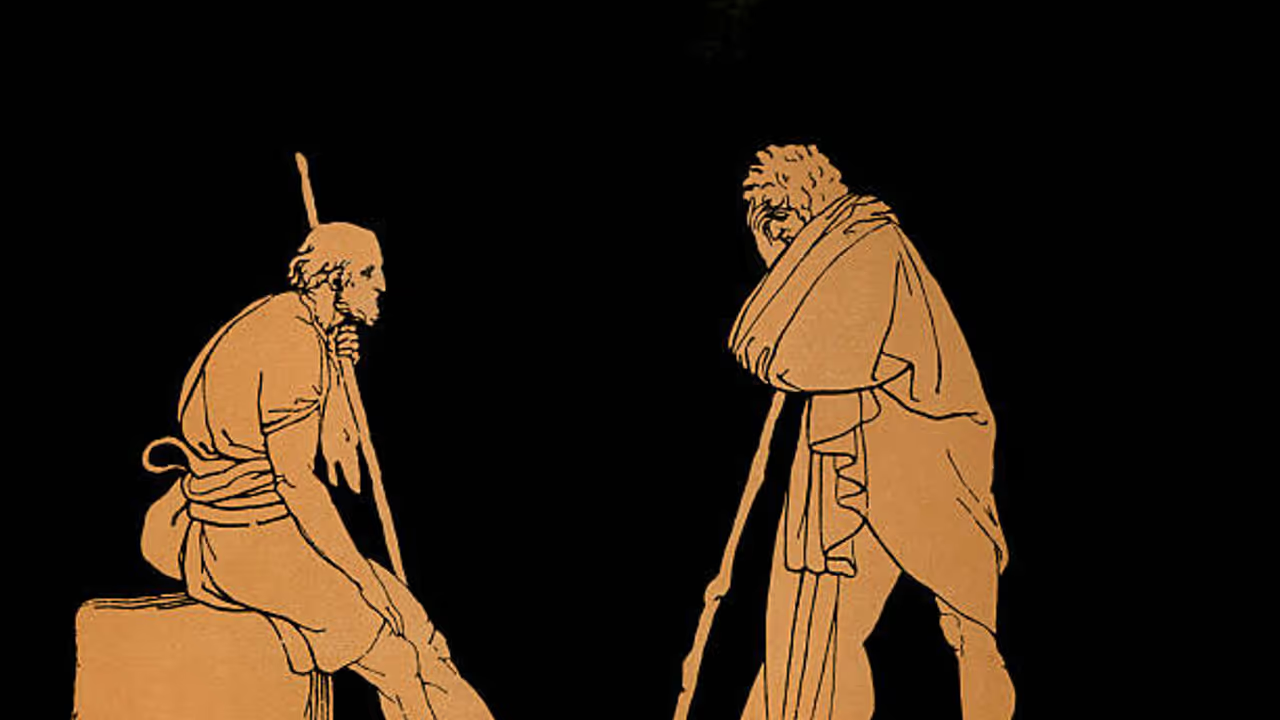
What can Homer’s Odyssey teach us about nicotine addiction? Explore the parallels between Odysseus’ encounter with the Sirens and the powerful pull of tobacco, cravings, dependence and the struggle to quit.
Homer's Odyssey is often remembered as a tale of monsters, gods and impossible voyages. Yet beneath the adventure lies a deeper story, the struggle of a man trying to find his way home while constantly being lured off course.
Tobacco addiction is much the same
Few people begin the journey intending to become addicted. Like Odysseus leaving Troy, they believe they remain in control. But addiction has many islands, many disguises and many monsters. In India, tobacco is not just smoked as cigarettes. It is chewed as gutkha, khaini, and betel quid with tobacco, inhaled as snuff, smoked as bidis or hookah, and sometimes used in more than one form simultaneously. Nicotine is the common thread that binds them all.
The first temptation in the Odyssey comes from the Lotus-Eaters. Those who consume the lotus lose all desire to return home.
Related Articles

Nicotine is today's lotus
Whether it comes from a cigarette, a bidi or a sachet of chewing tobacco, nicotine alters the brain's reward pathways, offering temporary calm, concentration or relief from stress. Over time, the brain begins to crave that feeling, and what started as a choice becomes a compulsion. Addiction quietly replaces freedom.
Then come the Sirens
Modern tobacco has its own Sirens. Some are even from Bollywood! The surrogate advertising and false marketing. . They whisper that smokeless tobacco is safer than smoking. That chewing tobacco is merely a habit. That bidis are "natural." That hookah smoke is filtered by water. That an occasional gutkha after meals cannot possibly matter.
As oncologists, we know these songs are dangerously misleading.
Smokeless tobacco is the most common form of tobacco use in India and is strongly associated with oral cancer, cancers of the oesophagus, cardiovascular disease and adverse pregnancy outcomes. Its nicotine delivery can rival that of cigarettes, making it every bit as addictive. India is one the leading country with oral cancers attributed to tobacco consumption.
Odysseus had himself tied to the mast before temptation arrived
That is precisely how quitting tobacco works. Successful quitting usually requires preparation, family support, counselling and, for many, nicotine replacement therapy or medications. Even then, relapse is common—not because the person lacks character, but because addiction changes the brain.
The third lesson in the Odyssey is the passage between Scylla and Charybdis.
On one side lurks a six-headed monster. On the other, a whirlpool capable of swallowing entire ships.
People trying to quit tobacco face their own Scylla and Charybdis.
One danger is continuing tobacco use, with its growing risk of cancer, heart disease, stroke and chronic lung disease. The other is the discomfort of withdrawal—irritability, anxiety, insomnia and intense cravings. Withdrawal can feel frightening, but it is temporary, unlike a cancer diagnosis. Is it not wiser to choose the lesser of the two evils?
It is a question i get asked often. Patients say that they have already smoked for years. Is there any point in quitting now? And the answer is an overwhelming YES. Studies show that lung functions improve dramatically and cancer risk plateaus after quitting tobacco.
Yet The Odyssey is ultimately not about getting lost. It is about finding the courage to return home..
Odysseus reached Ithaca not because the sea became calmer, but because he refused to abandon the journey.
For millions battling tobacco addiction, that may be the most important lesson Homer ever wrote.
-Thus article is authored by Dr Madhavi Nair, Consultant - Surgical Oncology, Manipal Hospital Varthur