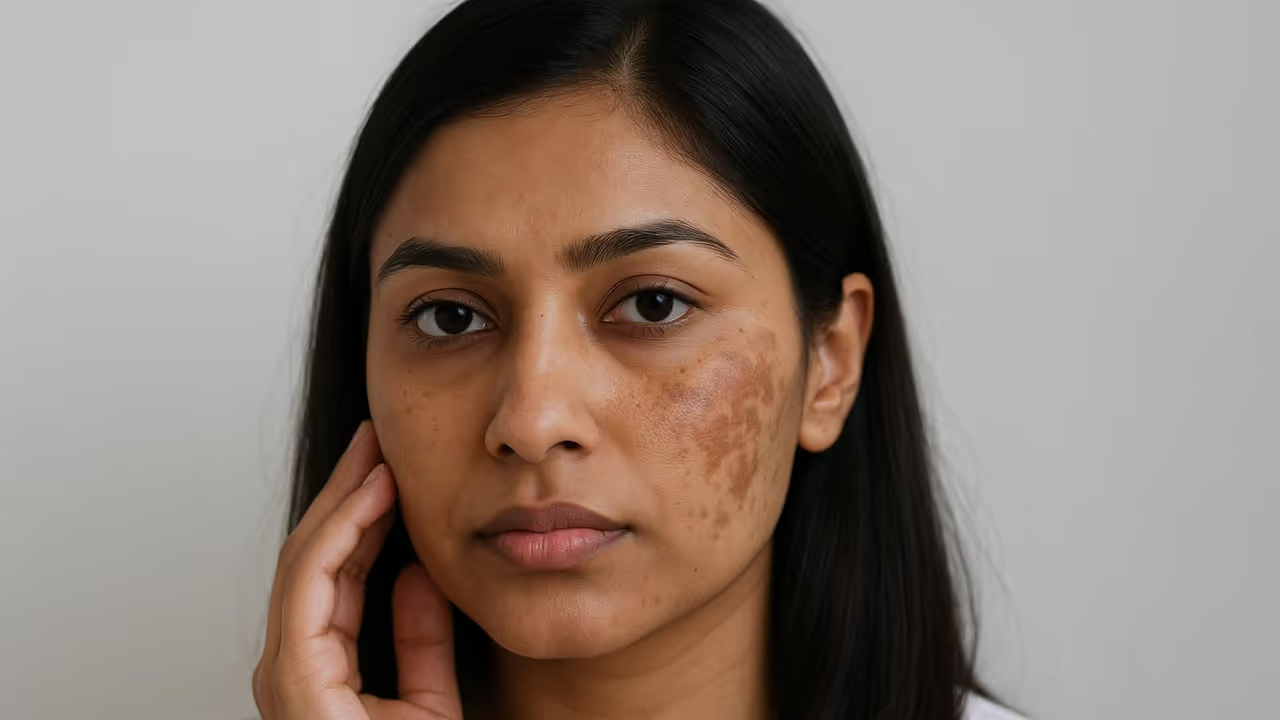
Why is fair skin often mistaken for healthy skin in India? Explore how melanin, sun exposure, acne and inflammation affect pigmentation, and discover why effective skincare should prioritise healthy, resilient skin over lighter complexions.
For generations, "good skin" in India has carried an unspoken qualifier: fair. That association has shaped not only beauty ideals but the clinical conversation itself, so that any variation in skin tone is quietly filed away as something to be corrected rather than understood. It is a habit of thought worth examining.
Melanin is not a defect. It is one of the skin's oldest and most reliable defences, present in every healthy complexion, simply in different measure. The proper aim is not a lighter tone but skin that is balanced, resilient and genuinely well. This matters particularly in India, where skin tones vary enormously, where sunlight is strong for much of the year, and where pigmentation is, as a result, among the most persistent concerns patients bring to a dermatologist.
Indian Skin Needs Understanding, Not Correction
There is no single definition of "Indian skin." Even within one family, two people can respond quite differently to sun exposure, to acne, to inflammation, or to the very same product. Genetics, lifestyle and environment each play their part, and no two patients arrive with identical histories.
Related Articles

One pattern I do see with real consistency, however, is how quickly deeper skin tones tend to mark after inflammation or injury. An acne spot, an insect bite, even a minor irritation, may heal within days, yet leave behind a dark patch that lingers for weeks or months. Conditions such as melasma and post-inflammatory hyperpigmentation remain among the most common reasons patients seek a dermatologist's opinion.
This is not evidence of weak or problematic skin. Quite the opposite. Melanin's function is to guard against ultraviolet radiation, and it performs that function well. The same pigment responsible for the depth and richness of Indian skin tones is also what makes pigmentation, once it appears, more visible and slower to fade.
The objective, then, is not to fight the skin's natural colour. It is to understand how that skin responds to sunlight, to inflammation and to the products we put on it, and to help it hold its balance.
When Inflammation Leaves A Memory
Post-inflammatory hyperpigmentation, in simple terms, is the skin darkening in the aftermath of inflammation or irritation.
Acne is the most familiar example. A pimple may resolve within days, yet the mark it leaves can outlast it by months. This occurs because inflammation activates melanocytes, the cells responsible for producing melanin. In more deeply pigmented skin, the resulting mark tends to be more pronounced and considerably slower to fade.
This is why treating pigmentation should not stop at fading a mark once it appears; it requires understanding what caused it in the first place. Acne that is picked or squeezed tends to generate further inflammation, and with it, further marks. The same holds for skin that is over-exfoliated or subjected to treatments too aggressive for what it can tolerate. Irritation, taken too far, creates the very pigmentation it was meant to treat.
Healthy skin is rarely the product of force. It comes from understanding what a particular skin requires, treating it gently, and allowing it the consistency to recover its own balance.
The Sun Does More Than Cause Tanning
Tanning and sunburn are usually the first association people make with sun exposure. But the relationship between sunlight and pigmentation runs considerably deeper.
Ultraviolet radiation stimulates melanin production and can make existing pigmentation harder to manage, a fact of particular consequence for anyone already contending with melasma or post-inflammatory marks. For Indian skin, sun protection is therefore not only a matter of slowing visible ageing. It plays a direct role in regulating pigmentation and maintaining an even complexion.
This is not a case for avoiding the sun altogether. It calls for sensible exposure: seeking shade when the sun is strongest, choosing protective clothing, and using sun protection suited to the skin in question. These measures serve their purpose best as part of an everyday routine, not as steps reserved for a holiday or a day at the beach.
As in most matters of skincare, consistency tends to outweigh complexity. The habits that endure are the ones that require little effort to sustain.
From Fairness To Skin Health
The more significant shift is not in any particular routine but in how skin itself is perceived. Fairness and healthy skin are not synonymous, and treating them as such has done real harm.
Healthy skin can be deep brown, olive, wheat-toned, medium or light. What matters is how effectively that skin protects itself, repairs itself, and withstands the stresses placed on it by environment and lifestyle.
For anyone dealing with pigmentation, the appropriate goal is skin that looks even and healthy, not skin that has changed colour. The pressure to appear fairer has, over time, pushed many toward bleaching agents and harsh exfoliating regimens ill-suited to their skin, and the consequences of that mismatch are seen regularly in clinical practice.
As our understanding of dermatology continues to advance, it is only right that our understanding of Indian skin advances with it. Pigmentation calls for patience rather than urgency, attention to inflammation and sun exposure, and respect for the skin's own physiology rather than constant attempts to override it.
The future of skincare should not be about becoming fairer. It should be about helping every skin tone become healthier, stronger and more at ease in itself.
Bottom Line
Indian skin does not need to be made fairer. It needs to be understood. Moving past outdated ideas of fairness, in favour of skin that is healthy, even and resilient, changes how skincare itself is understood. Good skincare was never meant to erase something that is part of who a person is. Its real purpose is to protect the skin, support its health, and help it remain strong and comfortable through every stage of life.
-This article is authored by Professor Dr. Gabriel Serrano, Dermatologist & Founder of Sesderma