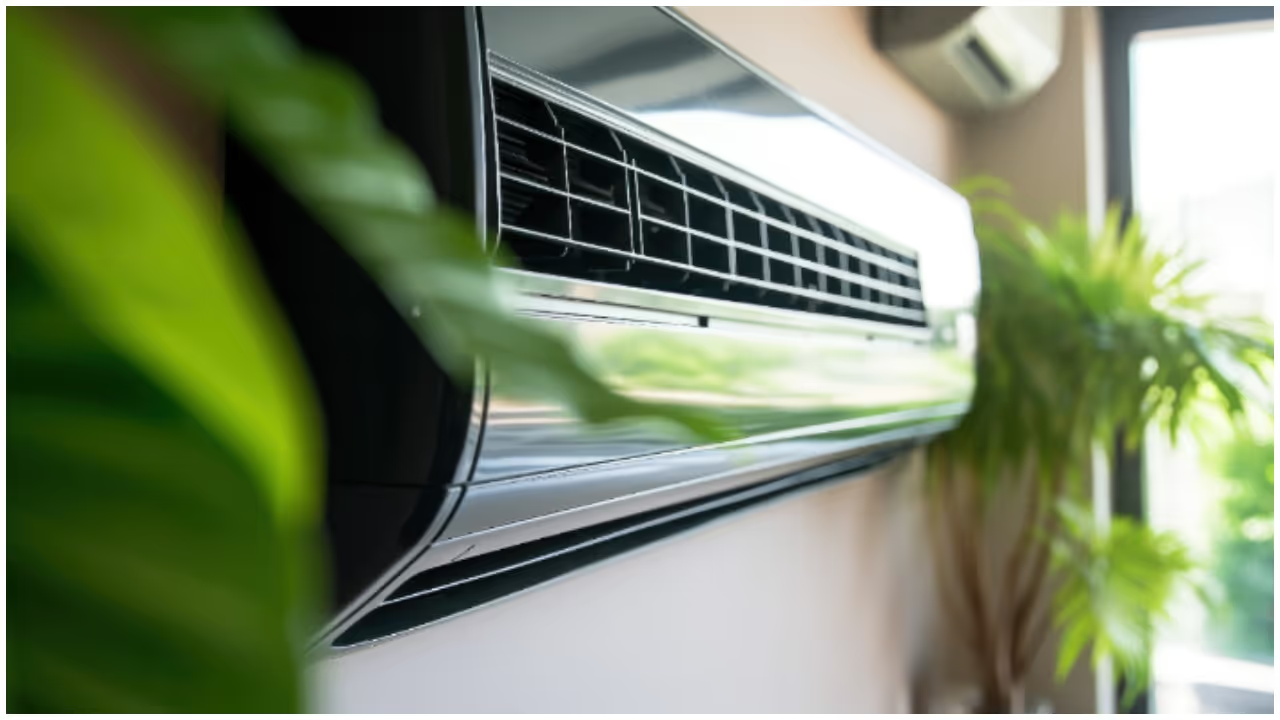
Before summer arrives, ensure your AC is properly serviced to avoid poor cooling and high electricity bills. This guide outlines six crucial checks your mechanic must perform, from cleaning filters and coils to checking refrigerant levels and electrical connections, to maximize your AC's performance and lifespan.
Summer is here, and that means our ACs will be working overtime. But before you switch it on after a long break, getting it serviced properly is a must. If not, you'll get poor cooling and a sky-high electricity bill.
When your AC mechanic arrives, it's a good idea to keep an eye on what they're doing. Here are 6 important things they must check to increase your AC's life and give you that chilly, refreshing air:
1. Cleaning the Air Filters
The AC's filters are one of its most important parts. If they are clogged with dust, air can't flow properly. This not only reduces the AC's performance but also circulates dirty air in the room. So, the first step is to make sure the mechanic cleans the filters completely.
Related Articles

2. Checking the Cooling Coils (Condenser and Evaporator)
Your AC has coils in both the indoor and outdoor units. If dirt builds up on these, the AC can't get rid of heat effectively. This means the AC will run for a long time but the room won't get cool. Ensure the mechanic removes all the sticky grime from these coils.
3. Checking the Gas Level (Refrigerant)
If the AC doesn't have enough refrigerant gas, you won't get any cooling, no matter how low you set the temperature. During the service, ask the mechanic to check for any gas leaks and to make sure the refrigerant level is correct.
4. Cleaning the Drain Pipe
The water that forms when the AC is running needs to exit through the drain pipe. If this pipe gets blocked with dust or algae, water will start leaking inside the AC unit itself. This can damage your walls and electrical parts. It's important to ask them to clear any blockages.
5. Checking the Electrical Connections
Sometimes, rats might have chewed on the AC's wires, or there could be a loose connection. This can lead to a short circuit. For your safety, it's super important that the mechanic checks all the wires and switches thoroughly.
6. Checking the Fan Blades and Motor
You should check if the AC's internal fan and motor are working smoothly. Listen for any strange noises or check if the speed has dropped. Catching these issues early can save you from a big expense later on.