
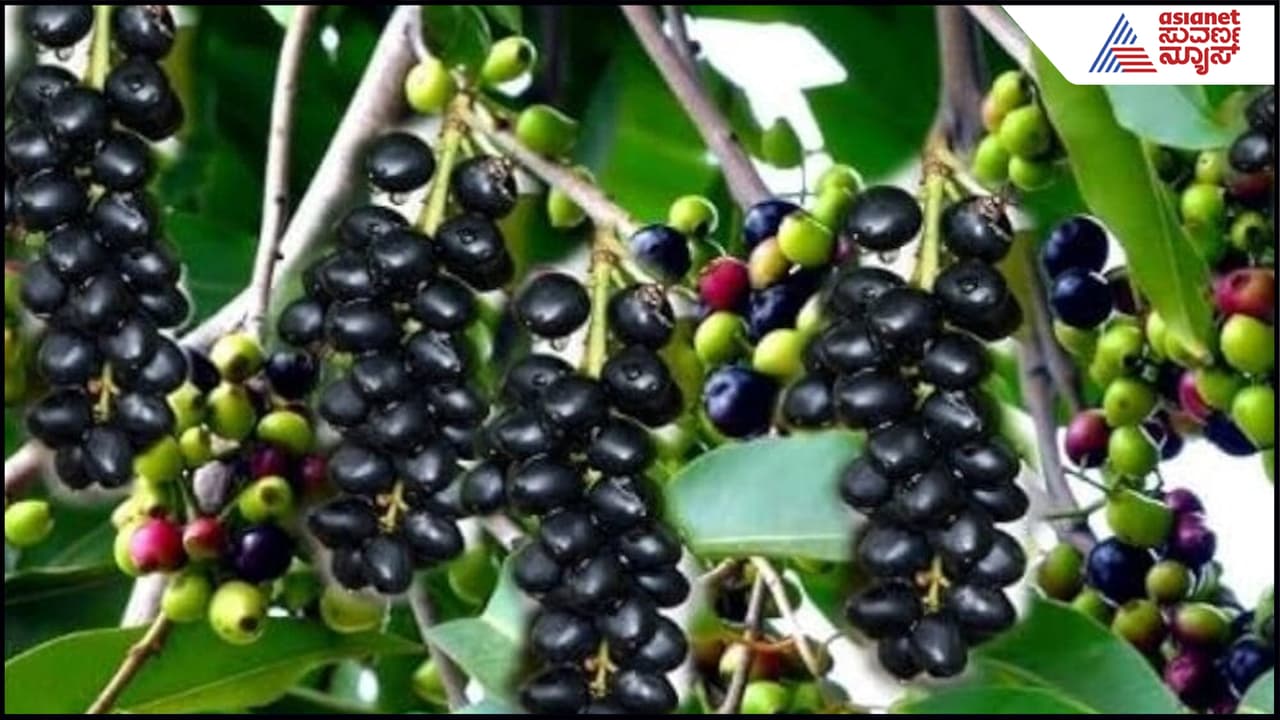
This year's unusually large Jamun harvest, the biggest in decades, has led to lower prices. An old belief links this bumper crop to a future drought. Scientists explain this phenomenon as "stress fruiting," where trees under environmental stress, like declining groundwater, produce more fruit as a survival mechanism.
This year, Jamun trees across many regions have produced an unusually large crop, with many people claiming it is the biggest harvest they have seen in 30 to 40 years. The fruit, known for its health benefits—especially for people managing diabetes—is now being sold at lower prices in several markets due to the abundant supply, although some vendors continue to charge premium rates.
Amid the excitement over the bumper harvest, an old belief passed down through generations has resurfaced. According to elders, whenever Jamun trees bear fruit in exceptionally large quantities, the year is likely to experience a drought. While many dismiss this as folklore, the idea has sparked widespread discussion on social media because it appears to have a basis in science.
Scientists describe this phenomenon as "masting" or "stress fruiting." In certain environmental conditions, trees produce an unusually large number of fruits and seeds in response to stress. The strategy is often viewed as a survival mechanism that helps ensure the continuation of the species even if the parent tree struggles to survive adverse conditions.
Experts explain that when trees sense environmental stress—such as declining groundwater levels, prolonged dry conditions, or significant climate shifts—they may divert their energy away from growth and toward reproduction. Instead of producing new leaves, shoots, or branches, the tree focuses on generating as many fruits and seeds as possible.
This is particularly relevant for Jamun trees because they possess deep taproots that extend far below the surface. These roots are among the first to detect changes in underground water availability. When groundwater levels drop significantly, the tree experiences water stress, which may trigger increased fruit production.
As a result, even trees that produced relatively few fruits in previous years can suddenly become heavily laden with Jamun. This response serves as an early warning sign that environmental conditions may be becoming more challenging.
While a bumper Jamun crop does not guarantee a drought, scientists acknowledge that stress fruiting can be linked to changing environmental conditions. This is why many people see a fascinating connection between traditional wisdom and modern science.
So, while enjoying the plentiful Jamun harvest this season, it may also be worth paying attention to nature's signals and using water and other natural resources responsibly.
