Kannada director Nagathihalli Chandrashekhar criticised rising corporate control in TV serials, saying it stifles creativity. He highlighted the decline in originality and impact on directors, writers, and viewers.
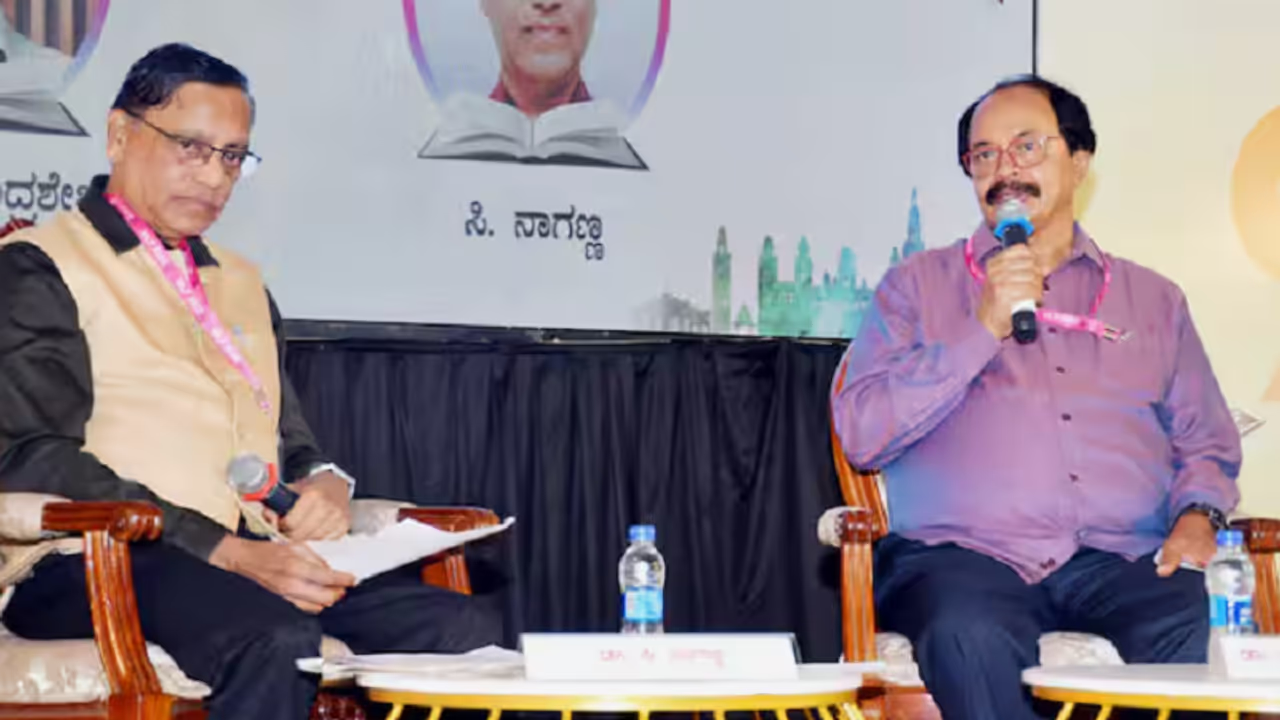
Mysuru: Kannada Director Nagathihalli Chandrashekhar voiced concerns over increasing corporate dominance in the television industry, stating it has stifled creative freedom for directors, writers, technicians, and actors. He was speaking at the 9th Mysuru Literary Festival 2025 on the topic ‘Literature, Cinema, and Rural Longing’.
Dubbing culture limits originality
He pointed out that most serials are dictated by external forces, often produced in other languages and dubbed for local audiences, which restricts originality. While he acknowledged that television remains a key entertainment medium, he cautioned against its excessive influence, noting that some viewers become overly dependent on it. In contrast, he recalled older television serials as being more tasteful and meaningful.
Reflecting on cinematic journey
Reflecting on his film journey, Nagathihalli cited ‘America America’ as an unexpected blockbuster, comparing its impact to Mount Everest. Even 25 years later, he said people still visit the film’s locations and recall its story with fondness. He expressed some disappointment that ‘Maathadu Maathadu Mallige’ did not receive the same acclaim, despite his high hopes.
Related Articles

Poetic lyrics with purpose
Chandrashekhar emphasised his deliberate selection of songs from renowned poets that seamlessly aligned with the narrative. He cited examples like ‘Yaava Mohana Murali Kareyito’ in ‘America America’ and ‘Aa Bettadalli’ in ‘Baa Nalle Madhuchandrakke’, both of which enhanced the emotional depth of the films.
Inspirations from Kuvempu and Tagore
He discussed the literary influence of Kuvempu and Rabindranath Tagore, noting that while Tagore had a global outlook and translated his works into many languages, Kuvempu remained rooted in Kuppali and Mysuru. Yet both, he said, provided timeless insights into human life and values. The session was moderated by critic Dr C Naganna.