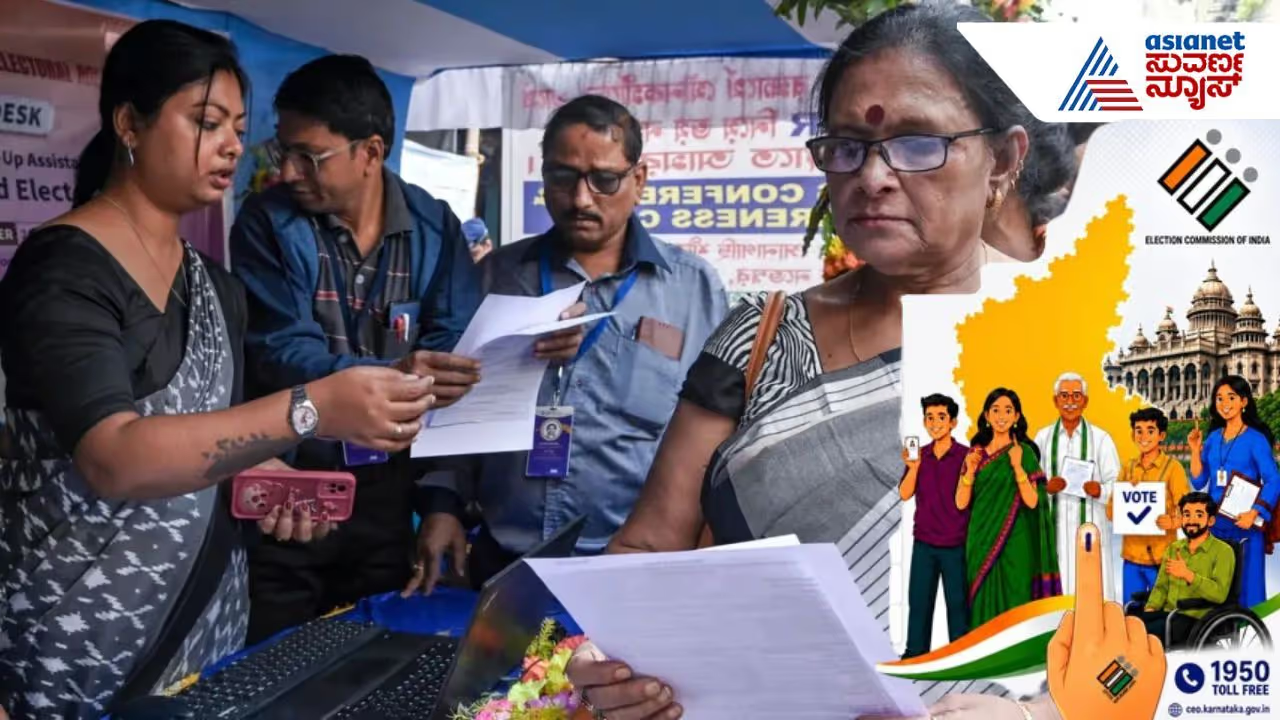
Karnataka's Chief Electoral Officer is preparing to issue SIR notices to 43.80 lakh voters whose records have been flagged as unmapped or containing anomalies. The draft electoral roll will be published on August 24, with the final list due on October 27.
The Chief Electoral Officer's (CEO) office in Karnataka is preparing to issue notices to 43.80 lakh voters following the completion of the first phase of the Special Intensive Revision (SIR) of the state's electoral rolls. The exercise has identified voters whose records require verification before the final electoral roll is published. While 1.07 crore voters have been classified under the ASDD (Absent, Shifted, Dead or Duplicate) category and will not feature in the draft roll, another 43.80 lakh voters included in the draft have been flagged as either ‘unmapped’ or having anomalies in their records.
Karnataka currently has 5.54 crore registered voters. During the SIR exercise, officials identified 1.07 crore voters under the ASDD category. Their names will not appear in the first draft of the electoral roll. The remaining 4.46 crore voters are expected to feature in the draft roll.
However, of these 4.46 crore voters, 43.80 lakh have been flagged for issues requiring verification. This includes 23.45 lakh ‘unmapped’ voters and another 20.35 lakh voters whose records contain anomalies or discrepancies. These voters will receive notices as part of the verification process.
Related Articles

For the 1.07 crore voters excluded from the draft roll under the ASDD category, those who have shifted or were marked absent will need to submit a fresh Form 6 along with the required documents to seek inclusion. Those turning 18 by October 1 can also submit Form 6 to enrol as voters. The final revised electoral roll is scheduled to be published on October 27.
How The Notice Process Works?
The CEO's office will publish the draft electoral roll on August 24. From August 24 to October 22, voters will be allowed to file claims and objections. During this period, notices will be issued to the 43.80 lakh voters whose records have been flagged.
The Electoral Registration Officer (ERO) or Assistant Electoral Registration Officer (AERO) will generate the notices, which will then be personally delivered to the concerned voters by Booth Level Officers (BLOs). The BLOs will also photograph the voter receiving the notice and upload the image to the BLO application as proof of delivery.
What Happens During the ERO Hearing?
The notice will mention the date, time and venue of the hearing. The ERO will conduct the hearing at a designated location, such as the local Gram Panchayat office or polling station.
Voters receiving notices will have to appear in person and submit the required documents for verification. Their attendance will be recorded in a register, and a group photograph will also be taken and uploaded to the ERO application.
Following the hearing, the ERO will forward the documents to the District Electoral Officer (DEO) for verification. Once the DEO confirms the documents, the ERO will take the necessary steps to include the voter's name in the electoral roll.
If a voter is unable to attend the hearing on the scheduled date, they can request another date. However, voters will get only one additional opportunity. If they fail to attend the second hearing, there will be no further opportunity, and their name may remain excluded from the draft electoral roll.
Chance To Appeal
If an ERO decides to exclude a voter's name, the voter can appeal against the decision before the DEO within 15 days.
If the DEO rejects the appeal, the voter can approach the Chief Electoral Officer within 30 days. The CEO's decision will be final.
11 Foreign Nationals Found With Karnataka EPIC Cards
During the SIR exercise, officials also reportedly found 11 foreign nationals in possession of Karnataka Electoral Photo Identity Cards (EPICs), raising concerns over the integrity of the electoral rolls.
What Should You Do If You Receive A Notice?
- Notices will be issued to 23.45 lakh ‘unmapped’ voters and 20.35 lakh voters whose records contain anomalies or discrepancies.
- The notice will specify the date, time and venue of the hearing, which may be held at a local Gram Panchayat office or polling station.
- Voters must attend the hearing in person and carry the required documents.
- Attendance will be recorded through a signature, while a group photograph will also be taken and uploaded to the ERO application.
- The ERO will forward the documents to the DEO for verification. If the documents are approved, the necessary process will be initiated to include the voter's name in the electoral roll.
- Voters who cannot attend the first hearing can request one additional opportunity.
- If a voter misses the second hearing, there will be no third opportunity, and the name may remain excluded from the draft electoral roll.