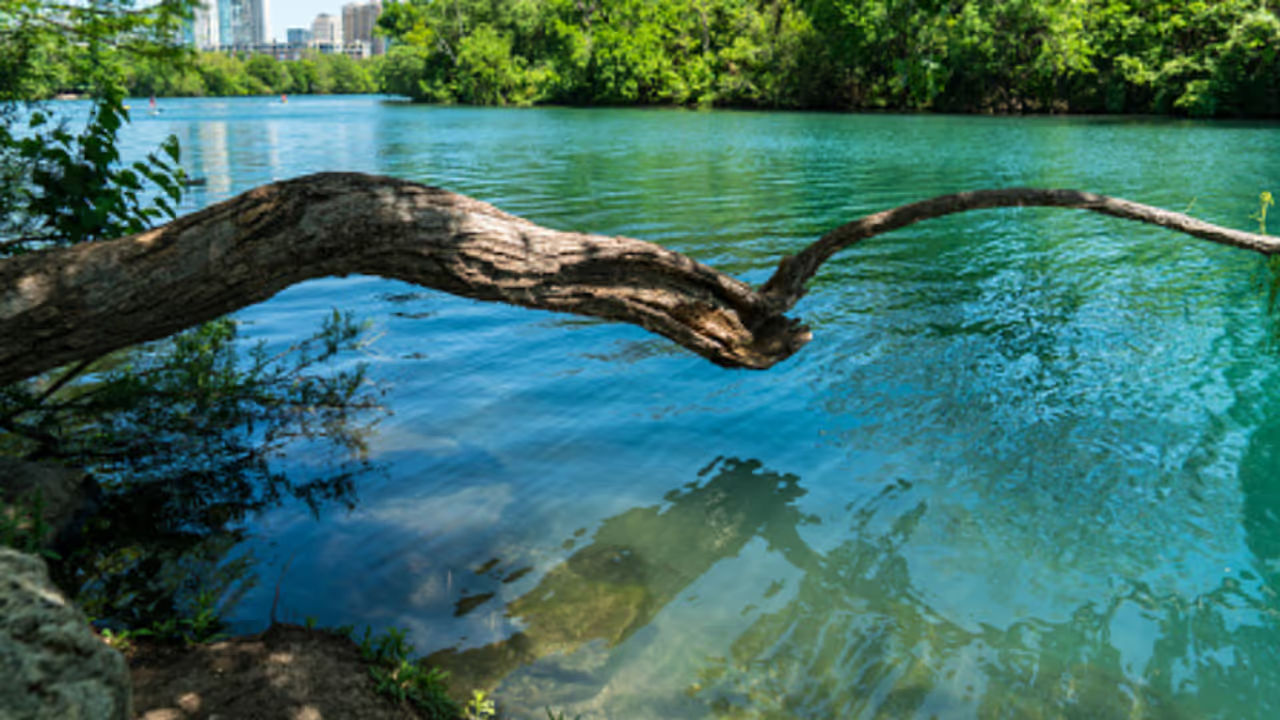
Karnataka has geotagged over 31,000 of its 41,875 lakes to enhance water conservation, prevent encroachment, and support climate resilience. The initiative also aids in legal action, drought planning, and daily monitoring of water bodies.
Bengaluru: Aiming to protect the state's water resources, the Karnataka government launched a comprehensive geotagging initiative in March 2024. The project, led by the Minor Irrigation and Groundwater Development Department in collaboration with the Survey, Settlement, and Land Records (SSLR) Department, seeks to geotag all 41,875 water bodies across Karnataka.
Over 31,000 Water Bodies Geotagged by April 2025
As of April 2025, 31,033 water bodies have been successfully geotagged. Local communities and gram panchayats have actively participated, treating the conservation of lakes as a collective mission.
Survey Uncovers Massive Encroachment
The government surveyed 34,651 lakes covering 7.7 lakh acres. During this process, encroachments were found on 42,678 acres of lake land. Of this, 28,750 acres have already been cleared and restored, while encroachment removal on the remaining land is underway.
Related Articles

District-Wise Progress: Hassan Leads, Ballari Trails
Hassan district has made the most progress in geotagging, while Ballari lags behind. Gram panchayats play a vital role by helping identify lake boundaries, settle disputes, and verify local records.
Geotag Data Enables Legal Action and Climate Resilience
Geotagging not only helps track encroachment but also enables legal action against violators. The data supports drought mitigation and groundwater recharge and aligns with major climate initiatives such as:
- Karnataka State Action Plan on Climate Change (KSAPCC)
- Bangalore Climate Action and Resilience Plan (BCAP)
- World Bank’s Water Resilience Project
Officials believe this integrated approach will boost flood control, water storage, and long-term water security for both urban and rural areas.
Map Data Updated Daily for Sustainable Water Management
Post-completion, each lake’s status will be monitored daily, offering seasonal insights and real-time updates to support sustainable water management. The project uses ArcGIS software, which integrates satellite imagery, geographic information, and location-based analysis for desilting, compliance checks, and detecting physical changes in water bodies.