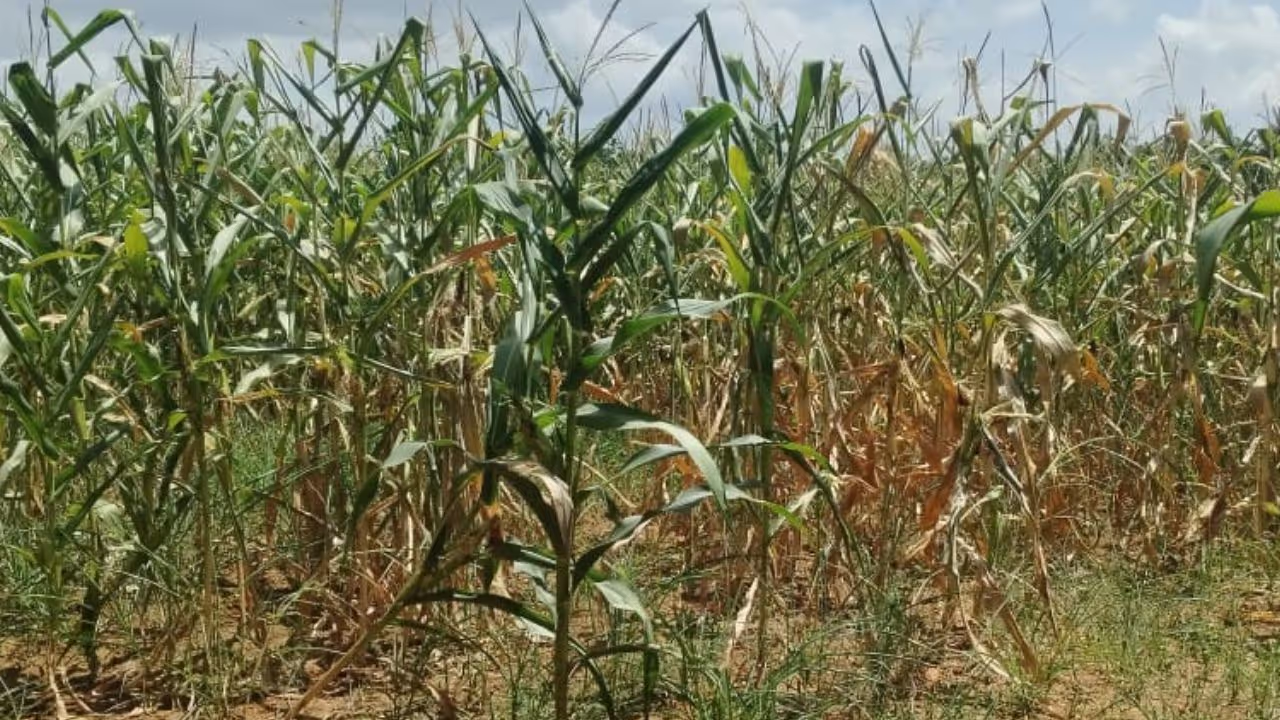
Karnataka farmers are facing a drought-like crisis as poor monsoon rainfall causes crops to dry up. Maize, paddy and jowar are affected, while water levels in the Bhadra and Linganamakki reservoirs have fallen sharply compared with last year.
Farmers across the district are facing a serious agricultural crisis as rainfall remains poor during the monsoon season. After sowing their crops in semi-wet soil with hopes of a good harvest, thousands of farmers are now watching their fields dry up amid drought-like conditions. Crops that should be progressing towards harvest are wilting under the scorching sun, leaving farmers worried about mounting losses, rising cultivation costs and the possibility of falling deeper into debt.
The prolonged dry spell has left farmers who depend on rainfall with few options. Maize growers are particularly concerned as the crop has reached the crucial cob-formation stage, while paddy and other crops are also beginning to show signs of water stress in areas that have received inadequate rainfall.
Rainfall Drops Below Normal
According to Agriculture Department data, the district recorded a 32% rainfall deficit in July and a 46% deficit in August.
Related Articles

The district had set a sowing target of 1,13,458 hectares for this year. Despite the dry spell, farmers managed to sow crops across 98,130 hectares. This included 31,660 hectares of maize, 63,885 hectares of paddy and 1,691 hectares of ragi.
Maize crops urgently need water as they are currently at the cob-formation stage. Standing maize crops are wilting under the intense heat due to the lack of rainfall. Farmers are making desperate efforts to pump water from nearby streams to save their fields, while some have turned to borewells. However, declining groundwater levels are adding to their concerns.
It has been more than a month since the district received significant rainfall. Jowar, paddy and other crops are drying up across several parts of the taluk.
Farmers had prepared their fields after heavy rains lashed the district in early May. They subsequently sowed different crops using the rainfall received in June and July. However, there has been little or no rain for nearly a month, while temperatures continue to rise.
Farmers say they are heartbroken to visit their fields and watch their crops wilt under the afternoon sun. They have already spent thousands of rupees on tractor ploughing, chemical fertilisers, daily wage labourers and costly seeds purchased from private dealers.
Many farmers acknowledge that agriculture is not always profitable but continue to depend on farming as their primary source of livelihood. Some also planted crops mainly to secure fodder for their cattle. With crops now drying up due to the lack of rainfall, farmers fear the situation could cause substantial financial losses and push them further into debt.
Water Shortage Hits Reservoirs
The rainfall received in July and August brought some relief to the district's reservoirs despite the overall dry conditions. However, rainfall declined sharply after the second week of August, and the intense heat is now causing water levels in the district's dams to fall steadily.
Only the Tunga reservoir is currently full, while no other major dam has reached its full capacity.
The sharp decline in water levels at the Bhadra and Linganamakki reservoirs compared with the same period last year has emerged as a major concern.
The Bhadra Dam has a maximum capacity of 186 feet. At the same time last year, the reservoir was full. However, its water level currently stands at 177 feet. The level has not even reached the 180-foot mark this year due to poor rainfall in the Bhadra catchment area.
Meanwhile, authorities are releasing a significant quantity of water to Chitradurga through the Upper Bhadra Project. Water is also being released into canals to meet the drinking water requirements of people and cattle in the Bhadra command area.
Farmers and residents fear a severe water shortage if the district does not receive rainfall in the coming days.
Linganamakki Reservoir Sees Sharp Drop
The water situation at Linganamakki, one of Karnataka's major reservoirs, is also a major concern.
The dam has a maximum water level of 1,819 feet, but the current water level stands at around 1,795 feet. The reservoir has a total storage capacity of 151 TMC and currently holds around 86 TMC, which is 56.72% of its capacity.
During the same period last year, Linganamakki had 143 TMC of water, equivalent to 94.58% of its total storage capacity.
The significant year-on-year decline has added to concerns among farmers and residents, particularly as the monsoon season progresses without sufficient rainfall.