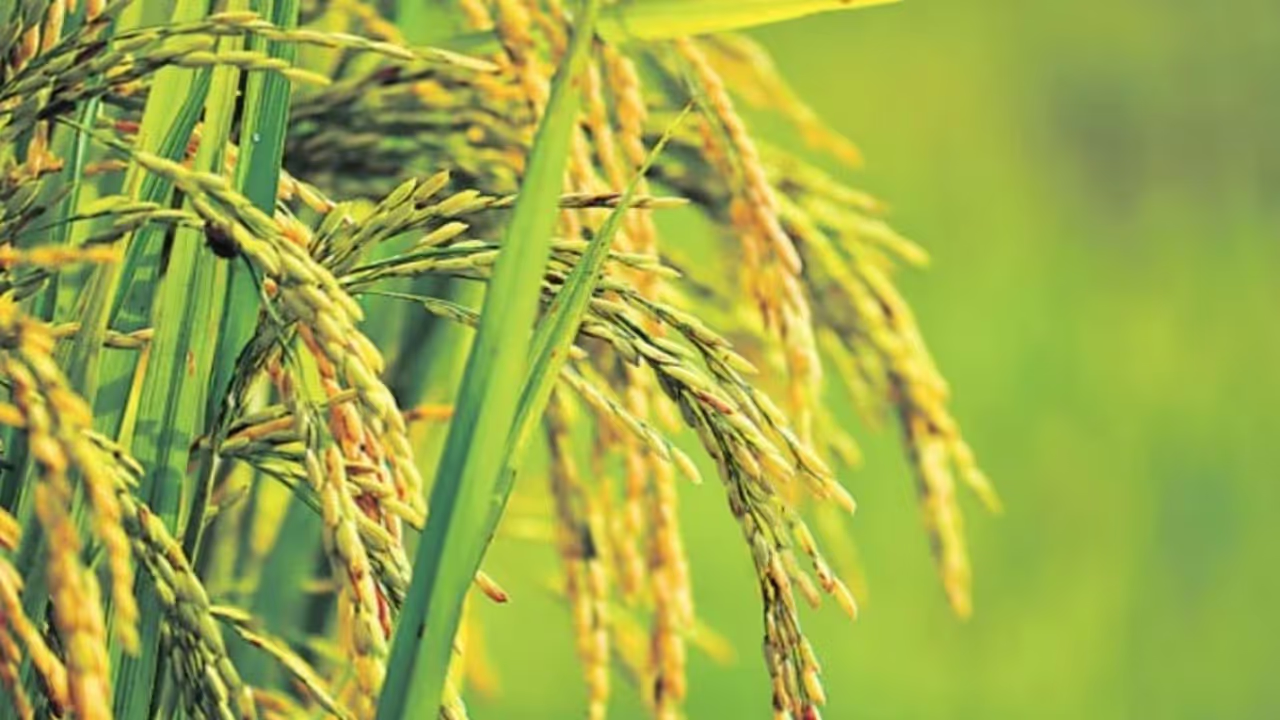
Two brothers from Davanagere have helped farmer and seed conservator Andanuru Anjaneya save 550–560 rare paddy varieties by providing land and irrigation facilities amid severe drought.
In a heartwarming example of farmers supporting one another, two brothers from Davanagere district have stepped forward to help preserve hundreds of rare paddy varieties threatened by severe drought. Recognising the efforts of a farmer who has spent three decades conserving traditional rice varieties, the brothers offered one acre of their agricultural land and arranged irrigation facilities to ensure the crops received an adequate supply of water. Their timely intervention has helped save around 550–560 paddy varieties, highlighting the importance of community support in protecting agricultural biodiversity and preserving traditional seeds.
P.H. Prashanth and P.H. Prakash, brothers and landowners from Halsabalu village near the Shivamogga bypass on the outskirts of Harihar, extended their support to Andanuru Anjaneya, a paddy variety conservator and researcher from Kumbaluru village. They provided one acre of their land and installed a sprinkler irrigation system to help him protect the rare paddy varieties from the effects of drought.
30 Years Of Preserving Rare Paddy Varieties
Andanuru Anjaneya has dedicated the past 30 years to researching, cultivating and conserving traditional paddy varieties. Over the years, he has collected and worked with more than 620 varieties, including indigenous rice varieties, varieties from Northeastern states and medicinal paddy strains.
Related Articles

However, his conservation efforts recently faced a major challenge due to severe drought conditions. The paddy crops he had cultivated were deprived of adequate water, while the supply from the Bhadra Dam was insufficient to meet their irrigation requirements.
As the situation worsened, Anjaneya became concerned about losing the varieties he had painstakingly preserved over several decades.
Brothers Offer Land And Irrigation Support
Recognising the seriousness of the situation, Prashanth and Prakash offered one acre of their agricultural land in Halsabalu village for cultivating the paddy varieties.
Although their own three large farm ponds had dried up due to the drought, the brothers arranged a sprinkler irrigation system and ensured a continuous supply of water to the crops for six months.
Their timely assistance proved crucial in protecting the collection. Although Anjaneya had initially planted 620 paddy varieties, only around 550–560 survived the adverse conditions.
The brothers' intervention played an important role in preventing the loss of hundreds of traditional rice varieties that could otherwise have been destroyed due to the water shortage.
I Nurtured Them Like My Own Children: Anjaneya
Speaking about his efforts to conserve the paddy varieties, Anjaneya said his primary goal had always been to protect the seeds, regardless of the challenges involved.
"My only goal was to conserve these varieties. I didn't worry about what would happen later. I cared for them just like children. Placing my faith in God, I reached out to the brothers, Halasabalu Prakash and Prashanth, and thanks to them, these varieties have survived. Without their support, I wouldn't have been able to save a single variety," he said.
Drought Poses Challenges For Seed Conservators
Anjaneya also highlighted the difficulties faced by those involved in preserving traditional paddy varieties. According to him, there are around seven to eight such seed conservators across Karnataka. However, the widespread drought has made it difficult for many of them to protect their collections.
With water shortages affecting agricultural activities across the state, several conservators have struggled to sustain their efforts.
In this situation, the support extended by Prashanth and Prakash has made a significant difference. Their willingness to share their land and arrange irrigation facilities has helped safeguard hundreds of rare paddy varieties.
Their gesture is an example of how farmers supporting one another can make a meaningful contribution to preserving traditional farming practices, indigenous seeds and Karnataka's agricultural heritage.