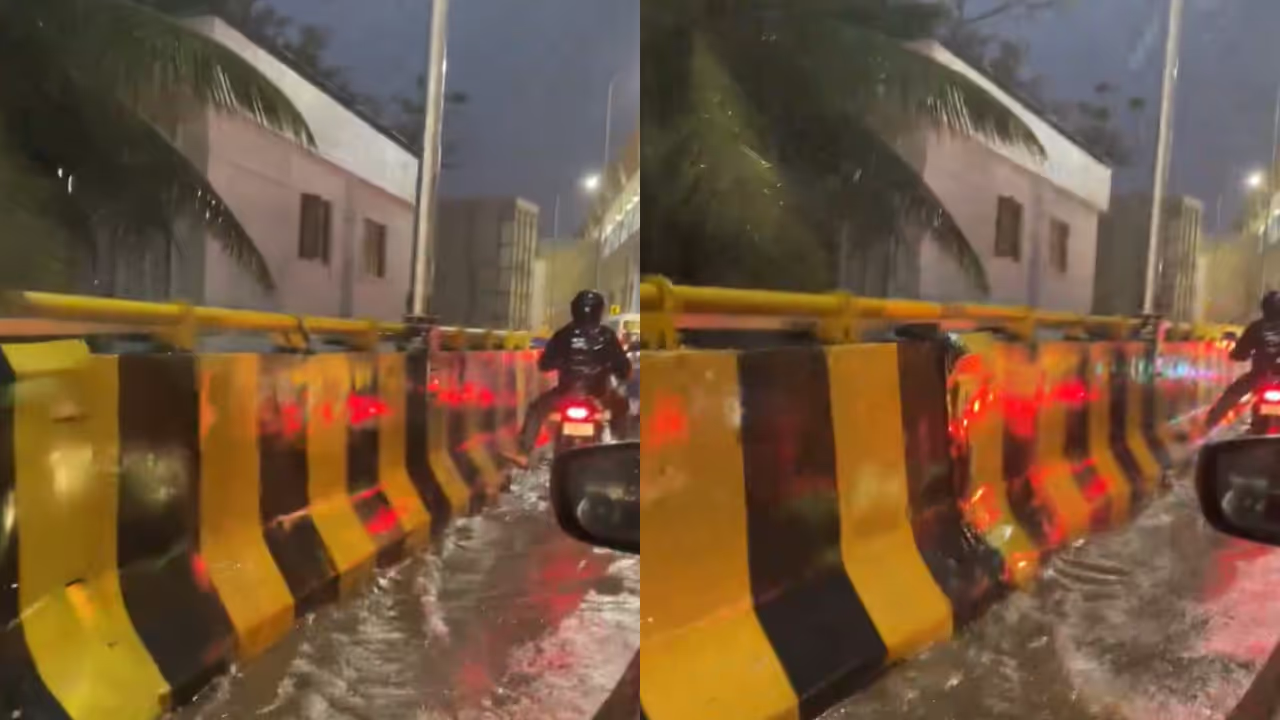
Bengaluru’s 5.12-km double-decker flyover near Silk Board flooded after an hour-long rain, turning into a “swimming pool.” Videos went viral, sparking criticism of its drainage system despite being called an “engineering marvel at best.”
Bengaluru’s 5.12-km double-decker flyover, which was inaugurated in July 2024, faced severe flooding on Monday evening after nearly an hour of rain, causing significant traffic disruption and drawing criticism from residents. The flyover, built to ease congestion near the Silk Board junction, experienced waterlogging that rendered parts of the structure almost unusable for commuters. Social media platforms were flooded with videos and photos showing water accumulation, raising questions about the flyover’s drainage design and construction quality.
Waterlogging Causes Commuter Chaos
The flooded stretch of the flyover near Silk Board quickly went viral on social media platform X, as residents shared videos highlighting the challenges faced by commuters. Many pointed out that poor slope maintenance and limited drainage on one side contributed to water accumulation. Users sarcastically criticized the project, calling it an “engineering marvel at best” and comparing the situation to previous flooding episodes in May.
Related Articles

Structural Concerns Highlighted
Several residents noted that waterlogging occurred at a specific section of the flyover where no proper drainage had been installed. Photos and videos also captured stagnant water beneath the flyover near the Silk Board metro station, causing commuters to wade through flooded areas. The incident exposed vulnerabilities in Bengaluru’s infrastructure and prompted calls for immediate corrective action.
Flyover Design And Construction
The double-decker flyover stretches 5.12 km from Ragigudda to Central Silk Board and is South India’s first rail-cum-road structure. Built by the Bangalore Metro Rail Corporation Limited (BMRCL) at a cost of ₹449 crore, it features four lanes of road traffic on the lower deck and the Namma Metro Yellow Line running above.
Opened to vehicles in July 2024, the flyover was designed to decongest one of Bengaluru’s busiest traffic junctions. However, several connecting ramps, including a 1.37-km stretch linking HSR Layout, Ragigudda, and BTM Layout, are still under construction, limiting the structure’s full effectiveness.
Rainfall Data And Flooding Impact
Monday’s downpour, which lasted nearly an hour, brought significant rainfall across Bengaluru. According to the Karnataka State Natural Disaster Monitoring Centre (KSNDMC), Vidyapeeta recorded 34.5 mm, Kengeri 33 mm, and Rajarajeshwarinagar 32 mm of rainfall, while other areas received between 10 and 30 mm. The sudden heavy rain exposed drainage shortcomings on the flyover, highlighting the need for enhanced water management measures.