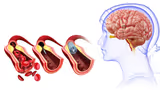
New research suggests a strong link between air pollution and Alzheimer's disease in older adults. Discover how polluted air may directly harm the brain and raise dementia risk.
New study suggests that air pollution may raise the risk of Alzheimer's disease in older adults. The research led by Yanling Deng from Emory University, published journal PLOS Medicine, found that older individuals living in areas with high levels of air pollution are more likely to develop Alzheimer's.
Alzheimer's is the most common type of dementia, affecting around 57 million people globally. For a long time, scientists have known that polluted air is linked to several health issues, including high blood pressure, strokes, and depression, all of which are also associated with dementia. However, it was unclear whether air pollution increases the risk of Alzheimer's by making these conditions worse or if it has a more direct impact on the brain.
How Was the Study Conducted?
The researchers analyzed data from over 27.8 million US Medicare beneficiaries aged 65 and older, covering the period from 2000 to 2018. They examined each person's exposure to air pollution and compared it with new diagnoses of Alzheimer's, taking into account other long-term health conditions. The results showed that higher exposure to polluted air was associated with a greater likelihood of developing Alzheimer's. This risk was especially evident among people who had previously had a stroke. However, conditions like high blood pressure and depression did not seem to increase the risk linked to air pollution.
Related Articles

Health Risks
These findings suggest that air pollution may harm the brain directly, rather than only through other health problems. People who have had a stroke may be more susceptible, showing that some people face higher risks. The study underscores the importance of reducing air pollution as a way to protect brain health and potentially lower the risk of dementia in older adults. Cutting down on pollution could be a key public health strategy, especially for those already at a higher risk due to past strokes.